Episodic memory
Episodic memory: function, development and impairment
Episodic memory: function, development and impairment
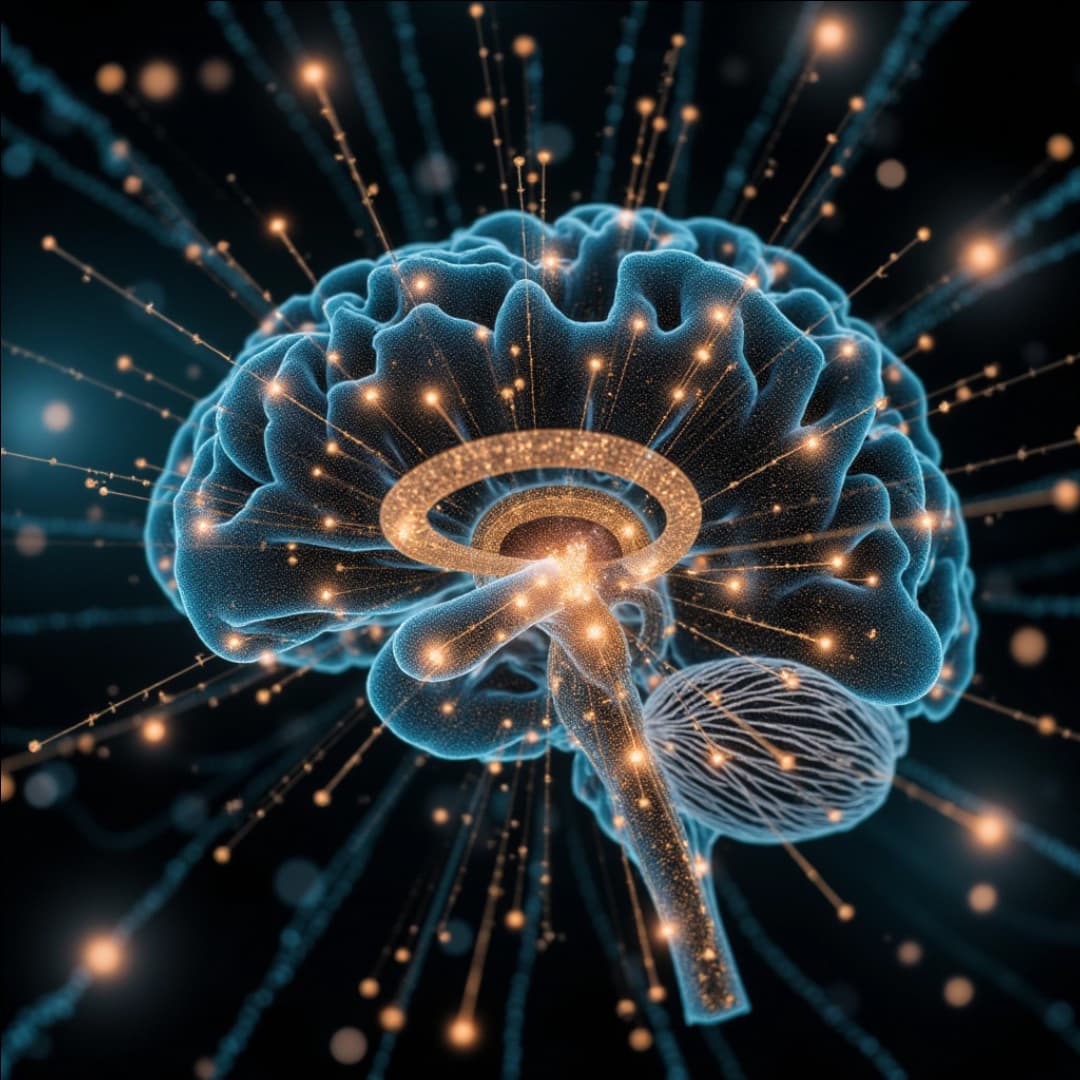
DESCRIPTION:
Learn more about episodic memory: its function, development and possible impairments.
Episodic memory and memory disorders: Why our memory constantly rewrites the past
Imagine if your memory were like a video camera that recorded every experience exactly and played it back later, one-to-one. Reassuring, isn't it? Unfortunately, our episodic memory works completely differently – and this has far-reaching consequences for psychotherapy, the courts and our self-image.
A recent study by the University of East Anglia dispels this persistent myth.
What it's about:
· Every time we remember something, we reconstruct the past.
· Our memory is not an archive, but a living, constantly changing system.
What does "episodic memory" actually mean?
Canadian psychologist Endel Tulving coined the term "episodic memory" in 1972. He uses it to describe a part of declarative long-term memory that allows us to remember personally experienced events in their temporal and spatial context.
Episodic memory does not just store facts. It preserves entire scenes: the smell of coffee that morning, the feeling of nervousness, the colour of the sky. While semantic memory knows that Paris is the capital of France, episodic memory remembers your last visit to Paris – with all the details that make this episode unique to you.
This form of memory allows us to travel through time in our minds. We can transport ourselves back to past moments and, in a sense, relive them. Autobiographical memory, which represents our own life story, is based on this episodic system. Both systems only develop fully in adulthood and depend on complex neural networks.
In contrast to procedural memory, which stores motor skills such as riding a bicycle, episodic memory is part of the declarative system. This distinction is important because memory disorders can affect different systems to varying degrees.
The hippocampus: the key to our memories
The hippocampus plays a central role in the retrieval of episodic memories. This small structure in the medial temporal lobe functions like an organiser, piecing together various fragments of information into a coherent whole. Hippocampal connectivity with other brain regions – the amygdala for emotions, the prefrontal cortex for cognitive control, sensory areas for perception – makes this integration possible.
The latest research shows that when we recall an episode, the hippocampus reactivates the original neural patterns. But – and this is crucial – they are never identical. Each time we remember something, these hippocampal engrams are slightly altered. The plasticity of the hippocampus makes our memory adaptable, but it also causes memories to diverge from their original form.
Each recall is also a new encoding. This process is called reconsolidation. What at first sounds like a flaw in the system is actually a neurologically valuable feature: it allows us to adapt memories to new situations and learn from experience.
Why memories change every time they are retrieved
The University of East Anglia study makes it clear that episodic memory works fundamentally differently from computer memory. When you remember your wedding, you are not activating a stored file. Instead, environmental stimuli or internal cues awaken latent memory traces that usually lie dormant in the brain.
This active memory representation comes from three sources. First: the encoded information is initially about the event itself. Second: general semantic knowledge about similar situations (how weddings usually unfold). Third: your current context when recalling the memory – your current mood, where you are, and who you are talking to.
In concrete terms, this means that when you think back today – perhaps somewhat wistfully – to your wedding ten years ago, you reconstruct this memory from your impressions at the time, your current knowledge about marriage and your current emotional state. The memory is not wrong. But it differs from the episode as you experienced it at the time.
Especially in the case of events that took place a long time ago, memory undergoes several recoding processes. Every time we remember, talk about, or think about it, the memory is modified and stored anew. This creates a chain from the original experience to the currently accessible trace. In this way, details can be changed, added or omitted.
Latent and active memory traces: the difference
Current memory research distinguishes precisely between latent and active memory representations. Latent traces exist as structural and functional changes in neural networks. They are present – but not consciously accessible. One could say that they are waiting to be used.
Only when a specific stimulus activates these latent traces do active, conscious memory representations arise. A smell, a particular context, a word – suddenly the memory is there. This transition is not a simple retrieval process, but a complex construction process.
Encoding specificity, a principle described by Tulving, states that the more similar the retrieval situation is to the original encoding situation, the more efficiently the retrieval works. That is why we remember what we have learned better when we are in the same environment in which we initially absorbed it.
It is also essential to distinguish between neural and cognitive representations. Neural representations are the measurable, physical activity patterns in the brain. Cognitive representations describe the subjective, phenomenal experience of memory – how it feels to remember. These two levels are closely linked, but not identical.
What does "causal connection" mean in memories
A central concept in modern memory research: for a mental representation to be considered a genuine memory, it must be causally traceable to an authentic experience. Even if the retrieved version differs significantly from the original, as long as there is a traceable causal chain, it remains a memory.
This causal perspective distinguishes genuine memories from imagination or confabulation. Think of complex everyday experiences: when you remember an essential conversation, details may have been altered by semantic knowledge or later experiences. Nevertheless, as long as the causal connection to the original discussion remains recognisable, it is a memory, not a pure invention.
This distinction has practical consequences. Memories "uncovered" in therapy must be treated with extreme caution. The causal connection may be fragile or interrupted. What feels like a clear memory may have been influenced or even constructed by the therapeutic process itself.
Encoding specificity also plays a role here: the greater the overlap between the encoding and retrieval contexts, the more stable the causal link remains. This is why context-related retrieval aids often work so well – they reconstruct the original encoding context, thereby strengthening the causal chain.
How semantic knowledge colours our memories
Episodic and semantic memory work hand in hand, even though they fulfil different functions. Semantic knowledge automatically flows into episodic retrieval. An example: you remember a visit to a restaurant. Your memory combines specific details (you sat by the window, your partner wore a red shirt) with general knowledge about restaurants (typical procedures, usual furnishings).
This integration explains why memories often seem too smooth. The brain fills in gaps with plausible information from semantic memory. Usually, this is adaptive – it enables coherent autobiographical narratives. But it can also lead to memory distortions.
Research shows that as the distance from the event increases, the semantic component of a memory increases, while specific episodic details fade. Old memories become increasingly "semanticised." They lose their vivid, immersive quality and become more abstract structures of knowledge about one's own life. This is normal – a natural aspect of memory development over the lifespan.
For example, when you think back to your school days, you probably remember individual episodes very vividly. But much of it has become general knowledge: "At school, it was mostly like this and like that." This is the knowledge stored in semantic memory, distilled from many originally episodic experiences.
What memory plasticity means for therapy
The realisation that memory is fundamentally plastic and reconstructive fundamentally changes psychotherapeutic work. Traumatic memories are not immutable records. Every therapeutic exploration is also a re-encoding.
This opens up opportunities: traumatic memories can be modified by repeatedly recalling them in a new, safe context. Modern trauma therapies make targeted use of this reconsolidation process. The memory remains, but its emotional charge and meaning can change.
At the same time, this carries risks. Suggestive questioning or therapeutic beliefs can influence memories in ways that distort the causal connection to the actual event. The concept of "recovered memories" must be viewed critically in light of this background. Not all events remembered later are false – but extreme caution is required, primarily when these memories serve as the basis for legal or family decisions.
Schema therapy, mentalisation-based therapy and trauma-focused approaches consciously work with this plasticity. The aim is not to restore the "true" memory, but to create an adaptive memory representation that enables healthy functioning.
Why witness statements are scientifically problematic
The justice system relies heavily on eyewitness accounts. Memory research shows that these are often less reliable than assumed. People are subjectively convinced of the accuracy of their memories – even though these are modified with every recall, every questioning, every reflection.
Repeated questioning is particularly problematic. Each questioning re-encodes the memory, thereby changing it. Suggestive questioning techniques can introduce false details. These are then experienced as supposedly genuine memories when recalled later. The person is not lying – they remember something that never happened.
Simulating events – for example, by presenting photos or descriptions – can lead to confusion about sources. Imagined or suggested details are remembered as personal experiences. Episodic memory does not represent objective truth, but rather a subjective reconstruction.
Spatial and temporal details, which are often crucial for legal statements, are particularly susceptible. Studies show that distances, time sequences and the order of events are usually remembered inaccurately – even when witnesses are certain. A deficit in episodic memory does not necessarily mean a lie. It reflects the normal functioning of our reconstructive memory system.
How episodic memory develops
The ability to perform episodic memory tasks develops gradually. Children under the age of three typically show little episodic memory – a phenomenon known as childhood amnesia. No one remembers their birth or the first years of their life because the neural systems are not yet mature.
The complete maturation of episodic memory extends into young adulthood. It depends on the development of the hippocampus and prefrontal networks. In adulthood, performance remains relatively stable but shows individual variability.
Factors such as stress, sleep, emotional distress and cognitive stimulation influence encoding and retrieval. Interestingly, emotional events are often stored in privileged ways, which makes sense from an evolutionary perspective but can also serve to consolidate traumatic memories.
Changes become apparent with increasing age. Older adults often report difficulty recalling specific details, while semantic memory is usually well preserved. This reflects structural changes in the ageing hippocampus as well as changes in connectivity between brain regions. Important: Normal ageing leads to gradual changes, not severe memory impairment.
Understanding episodic memory disorders
Memory disorders that specifically affect the episodic system manifest themselves in different ways. In amnesia caused by hippocampal damage, the formation of new episodic memories (anterograde amnesia) is typically impaired, while old memories are often partially preserved. The hippocampus is particularly critical for initial encoding.
Alzheimer's dementia severely impairs episodic memory early on, as the disease typically begins in the medial temporal lobe. Patients have difficulty remembering new experiences and exhibit characteristic spatial and temporal disorientation. Interestingly, procedural memory often remains intact for longer – patients can perform familiar actions even if they cannot remember specific episodes.
Depression and other mental disorders also affect episodic memory performance, but this is usually reversible. The autobiographical memory of depressed patients shows an overemphasis on negative memories. This pattern can be both a cause and a consequence of depression. Cognitive behavioural therapy and other interventions can address these distortions.
It is essential to distinguish between pathological disorders and normal fluctuations. Everyone forgets things sometimes. That is normal. Only when episodic memory significantly impairs everyday life is there a possible disorder that requires treatment.
Can episodic memory be trained?
In principle, plasticity enables training and improvement. Practical memory training focuses on encoding strategies: deep semantic processing, elaboration, visualisation and meaningful connections have been shown to improve later recall. Encoding specificity can be exploited by consciously setting contextual markers that later serve as retrieval aids.
Physical exercise, especially aerobic activity, has been shown to promote hippocampal neurogenesis and improve episodic memory performance. Adequate sleep is essential for consolidation. During sleep, episodic content is transferred from the hippocampus to neocortical networks – this process is crucial for long-term memory.
These biological factors are often more effective than purely cognitive exercises. Memory training on the computer may help in the short term, but regular exercise and good sleep have greater effects on long-term memory.
Realistic expectations are essential: we cannot make our memory work like a camera, nor is that desirable. Its reconstructive nature allows for flexibility, generalisation and mental simulation of future events. Memory training should aim to harness the system's natural strengths, not transform it into something it is not.
Conclusion
• Memory is reconstruction, not reproduction – Episodic memory does not function like a camera. It actively reconstructs memories from various sources each time they are retrieved.
• The hippocampus as the central organiser – This brain structure coordinates the encoding and retrieval of episodic information by orchestrating distributed activity patterns.
• Every retrieval changes the memory – Re-encoding creates causal chains from the original event to the current memory trace. Changes are inevitable.
• Semantic knowledge supplements episodic details – Gaps are automatically filled with plausible general understanding. This leads to coherent but not necessarily accurate narratives.
• Causal connection defines real memories – A memory trace is only a real memory if there is a traceable causal connection to the actual event.
• Caution is advised in therapy and the administration of justice – Plasticity requires critical reflection when working with memories in therapy and when legally evaluating witness statements.
• Normal ageing is not a disease – Age-related changes in episodic memory performance are fundamentally different from dementia or other memory disorders.
• Plasticity enables intervention – The changeable nature of memory offers therapeutic possibilities, but at the same time requires a responsible approach to memories.
RELATED ARTICLES:
DESCRIPTION:
Learn more about episodic memory: its function, development and possible impairments.
Episodic memory and memory disorders: Why our memory constantly rewrites the past
Imagine if your memory were like a video camera that recorded every experience exactly and played it back later, one-to-one. Reassuring, isn't it? Unfortunately, our episodic memory works completely differently – and this has far-reaching consequences for psychotherapy, the courts and our self-image.
A recent study by the University of East Anglia dispels this persistent myth.
What it's about:
· Every time we remember something, we reconstruct the past.
· Our memory is not an archive, but a living, constantly changing system.
What does "episodic memory" actually mean?
Canadian psychologist Endel Tulving coined the term "episodic memory" in 1972. He uses it to describe a part of declarative long-term memory that allows us to remember personally experienced events in their temporal and spatial context.
Episodic memory does not just store facts. It preserves entire scenes: the smell of coffee that morning, the feeling of nervousness, the colour of the sky. While semantic memory knows that Paris is the capital of France, episodic memory remembers your last visit to Paris – with all the details that make this episode unique to you.
This form of memory allows us to travel through time in our minds. We can transport ourselves back to past moments and, in a sense, relive them. Autobiographical memory, which represents our own life story, is based on this episodic system. Both systems only develop fully in adulthood and depend on complex neural networks.
In contrast to procedural memory, which stores motor skills such as riding a bicycle, episodic memory is part of the declarative system. This distinction is important because memory disorders can affect different systems to varying degrees.
The hippocampus: the key to our memories
The hippocampus plays a central role in the retrieval of episodic memories. This small structure in the medial temporal lobe functions like an organiser, piecing together various fragments of information into a coherent whole. Hippocampal connectivity with other brain regions – the amygdala for emotions, the prefrontal cortex for cognitive control, sensory areas for perception – makes this integration possible.
The latest research shows that when we recall an episode, the hippocampus reactivates the original neural patterns. But – and this is crucial – they are never identical. Each time we remember something, these hippocampal engrams are slightly altered. The plasticity of the hippocampus makes our memory adaptable, but it also causes memories to diverge from their original form.
Each recall is also a new encoding. This process is called reconsolidation. What at first sounds like a flaw in the system is actually a neurologically valuable feature: it allows us to adapt memories to new situations and learn from experience.
Why memories change every time they are retrieved
The University of East Anglia study makes it clear that episodic memory works fundamentally differently from computer memory. When you remember your wedding, you are not activating a stored file. Instead, environmental stimuli or internal cues awaken latent memory traces that usually lie dormant in the brain.
This active memory representation comes from three sources. First: the encoded information is initially about the event itself. Second: general semantic knowledge about similar situations (how weddings usually unfold). Third: your current context when recalling the memory – your current mood, where you are, and who you are talking to.
In concrete terms, this means that when you think back today – perhaps somewhat wistfully – to your wedding ten years ago, you reconstruct this memory from your impressions at the time, your current knowledge about marriage and your current emotional state. The memory is not wrong. But it differs from the episode as you experienced it at the time.
Especially in the case of events that took place a long time ago, memory undergoes several recoding processes. Every time we remember, talk about, or think about it, the memory is modified and stored anew. This creates a chain from the original experience to the currently accessible trace. In this way, details can be changed, added or omitted.
Latent and active memory traces: the difference
Current memory research distinguishes precisely between latent and active memory representations. Latent traces exist as structural and functional changes in neural networks. They are present – but not consciously accessible. One could say that they are waiting to be used.
Only when a specific stimulus activates these latent traces do active, conscious memory representations arise. A smell, a particular context, a word – suddenly the memory is there. This transition is not a simple retrieval process, but a complex construction process.
Encoding specificity, a principle described by Tulving, states that the more similar the retrieval situation is to the original encoding situation, the more efficiently the retrieval works. That is why we remember what we have learned better when we are in the same environment in which we initially absorbed it.
It is also essential to distinguish between neural and cognitive representations. Neural representations are the measurable, physical activity patterns in the brain. Cognitive representations describe the subjective, phenomenal experience of memory – how it feels to remember. These two levels are closely linked, but not identical.
What does "causal connection" mean in memories
A central concept in modern memory research: for a mental representation to be considered a genuine memory, it must be causally traceable to an authentic experience. Even if the retrieved version differs significantly from the original, as long as there is a traceable causal chain, it remains a memory.
This causal perspective distinguishes genuine memories from imagination or confabulation. Think of complex everyday experiences: when you remember an essential conversation, details may have been altered by semantic knowledge or later experiences. Nevertheless, as long as the causal connection to the original discussion remains recognisable, it is a memory, not a pure invention.
This distinction has practical consequences. Memories "uncovered" in therapy must be treated with extreme caution. The causal connection may be fragile or interrupted. What feels like a clear memory may have been influenced or even constructed by the therapeutic process itself.
Encoding specificity also plays a role here: the greater the overlap between the encoding and retrieval contexts, the more stable the causal link remains. This is why context-related retrieval aids often work so well – they reconstruct the original encoding context, thereby strengthening the causal chain.
How semantic knowledge colours our memories
Episodic and semantic memory work hand in hand, even though they fulfil different functions. Semantic knowledge automatically flows into episodic retrieval. An example: you remember a visit to a restaurant. Your memory combines specific details (you sat by the window, your partner wore a red shirt) with general knowledge about restaurants (typical procedures, usual furnishings).
This integration explains why memories often seem too smooth. The brain fills in gaps with plausible information from semantic memory. Usually, this is adaptive – it enables coherent autobiographical narratives. But it can also lead to memory distortions.
Research shows that as the distance from the event increases, the semantic component of a memory increases, while specific episodic details fade. Old memories become increasingly "semanticised." They lose their vivid, immersive quality and become more abstract structures of knowledge about one's own life. This is normal – a natural aspect of memory development over the lifespan.
For example, when you think back to your school days, you probably remember individual episodes very vividly. But much of it has become general knowledge: "At school, it was mostly like this and like that." This is the knowledge stored in semantic memory, distilled from many originally episodic experiences.
What memory plasticity means for therapy
The realisation that memory is fundamentally plastic and reconstructive fundamentally changes psychotherapeutic work. Traumatic memories are not immutable records. Every therapeutic exploration is also a re-encoding.
This opens up opportunities: traumatic memories can be modified by repeatedly recalling them in a new, safe context. Modern trauma therapies make targeted use of this reconsolidation process. The memory remains, but its emotional charge and meaning can change.
At the same time, this carries risks. Suggestive questioning or therapeutic beliefs can influence memories in ways that distort the causal connection to the actual event. The concept of "recovered memories" must be viewed critically in light of this background. Not all events remembered later are false – but extreme caution is required, primarily when these memories serve as the basis for legal or family decisions.
Schema therapy, mentalisation-based therapy and trauma-focused approaches consciously work with this plasticity. The aim is not to restore the "true" memory, but to create an adaptive memory representation that enables healthy functioning.
Why witness statements are scientifically problematic
The justice system relies heavily on eyewitness accounts. Memory research shows that these are often less reliable than assumed. People are subjectively convinced of the accuracy of their memories – even though these are modified with every recall, every questioning, every reflection.
Repeated questioning is particularly problematic. Each questioning re-encodes the memory, thereby changing it. Suggestive questioning techniques can introduce false details. These are then experienced as supposedly genuine memories when recalled later. The person is not lying – they remember something that never happened.
Simulating events – for example, by presenting photos or descriptions – can lead to confusion about sources. Imagined or suggested details are remembered as personal experiences. Episodic memory does not represent objective truth, but rather a subjective reconstruction.
Spatial and temporal details, which are often crucial for legal statements, are particularly susceptible. Studies show that distances, time sequences and the order of events are usually remembered inaccurately – even when witnesses are certain. A deficit in episodic memory does not necessarily mean a lie. It reflects the normal functioning of our reconstructive memory system.
How episodic memory develops
The ability to perform episodic memory tasks develops gradually. Children under the age of three typically show little episodic memory – a phenomenon known as childhood amnesia. No one remembers their birth or the first years of their life because the neural systems are not yet mature.
The complete maturation of episodic memory extends into young adulthood. It depends on the development of the hippocampus and prefrontal networks. In adulthood, performance remains relatively stable but shows individual variability.
Factors such as stress, sleep, emotional distress and cognitive stimulation influence encoding and retrieval. Interestingly, emotional events are often stored in privileged ways, which makes sense from an evolutionary perspective but can also serve to consolidate traumatic memories.
Changes become apparent with increasing age. Older adults often report difficulty recalling specific details, while semantic memory is usually well preserved. This reflects structural changes in the ageing hippocampus as well as changes in connectivity between brain regions. Important: Normal ageing leads to gradual changes, not severe memory impairment.
Understanding episodic memory disorders
Memory disorders that specifically affect the episodic system manifest themselves in different ways. In amnesia caused by hippocampal damage, the formation of new episodic memories (anterograde amnesia) is typically impaired, while old memories are often partially preserved. The hippocampus is particularly critical for initial encoding.
Alzheimer's dementia severely impairs episodic memory early on, as the disease typically begins in the medial temporal lobe. Patients have difficulty remembering new experiences and exhibit characteristic spatial and temporal disorientation. Interestingly, procedural memory often remains intact for longer – patients can perform familiar actions even if they cannot remember specific episodes.
Depression and other mental disorders also affect episodic memory performance, but this is usually reversible. The autobiographical memory of depressed patients shows an overemphasis on negative memories. This pattern can be both a cause and a consequence of depression. Cognitive behavioural therapy and other interventions can address these distortions.
It is essential to distinguish between pathological disorders and normal fluctuations. Everyone forgets things sometimes. That is normal. Only when episodic memory significantly impairs everyday life is there a possible disorder that requires treatment.
Can episodic memory be trained?
In principle, plasticity enables training and improvement. Practical memory training focuses on encoding strategies: deep semantic processing, elaboration, visualisation and meaningful connections have been shown to improve later recall. Encoding specificity can be exploited by consciously setting contextual markers that later serve as retrieval aids.
Physical exercise, especially aerobic activity, has been shown to promote hippocampal neurogenesis and improve episodic memory performance. Adequate sleep is essential for consolidation. During sleep, episodic content is transferred from the hippocampus to neocortical networks – this process is crucial for long-term memory.
These biological factors are often more effective than purely cognitive exercises. Memory training on the computer may help in the short term, but regular exercise and good sleep have greater effects on long-term memory.
Realistic expectations are essential: we cannot make our memory work like a camera, nor is that desirable. Its reconstructive nature allows for flexibility, generalisation and mental simulation of future events. Memory training should aim to harness the system's natural strengths, not transform it into something it is not.
Conclusion
• Memory is reconstruction, not reproduction – Episodic memory does not function like a camera. It actively reconstructs memories from various sources each time they are retrieved.
• The hippocampus as the central organiser – This brain structure coordinates the encoding and retrieval of episodic information by orchestrating distributed activity patterns.
• Every retrieval changes the memory – Re-encoding creates causal chains from the original event to the current memory trace. Changes are inevitable.
• Semantic knowledge supplements episodic details – Gaps are automatically filled with plausible general understanding. This leads to coherent but not necessarily accurate narratives.
• Causal connection defines real memories – A memory trace is only a real memory if there is a traceable causal connection to the actual event.
• Caution is advised in therapy and the administration of justice – Plasticity requires critical reflection when working with memories in therapy and when legally evaluating witness statements.
• Normal ageing is not a disease – Age-related changes in episodic memory performance are fundamentally different from dementia or other memory disorders.
• Plasticity enables intervention – The changeable nature of memory offers therapeutic possibilities, but at the same time requires a responsible approach to memories.
RELATED ARTICLES:
Newsletter
Would you like to be notified when I publish a new blog post? Sign up here.
Click "Subscribe for free" if you have read and accepted my privacy policy. You can revoke your consent at any time.
Newsletter
Would you like to be notified when I publish a new blog post? Sign up here.
Click "Subscribe for free" if you have read and accepted my privacy policy. You can revoke your consent at any time.