Masking in autism, ADHD and AuDHS
Masking in autism, ADHD and AuDHS: Adapting to the neurotypical world
Masking in autism, ADHD and AuDHS: Adapting to the neurotypical world
DESCRIPTION:
Why do autistic people, or those with ADHD or AuDHS, mask? Information about camouflaging and adaptation.
Masking in autism and ADHD: When people on the spectrum learn to pretend
TL;DR: Masking is the conscious or unconscious suppression of neurodivergent behaviours to avoid standing out in a neurotypical world. Especially in people with AuDHS (autism + ADHD), masking can cause years of misdiagnosis, lead to deep exhaustion, and often only becomes apparent when burnout sets in.
What it's about:
· What lies behind masking,
· Who is particularly affected, and
· What a thorough diagnosis must take into account.
AuDHS – When autism and ADHD meet: – a guide to diagnosis and everyday life
Welcome to our specialised section on AuDHS. More and more people are recognising that they have both autism and ADHD: an internal conflict that is often only recognised at a late stage.
Here you will find information on neurodiversity, guidance on AuDHS diagnosis for adults, and answers to why you often fluctuate between inner restlessness and the need for structure. We shed light on the paradox of sensory overload and boredom and explain the background of autism spectrum disorder comorbidity with ADHD.
🧠 A note about our design (neuro-inclusive reading)
We know that long texts are often exhausting for neurodivergent brains. That's why this blog is designed to be ADHD-friendly:
· TL;DR (Too Long; Didn't Read): You will find a summary at the beginning of each article.
· Scannability: We use bold type for key terms and lots of bullet points so you can grasp the most important information at a glance.
· Clarity: We avoid walls of text and use short, digestible paragraphs
What does masking mean in autism, and what does it have to do with camouflaging?
Masking, also known as camouflaging or autistic masking, refers to the conscious or unconscious suppression of neurodivergent behaviours to avoid attracting negative attention in neurotypical environments. Those affected learn to behave in the way neurotypical people expect them to, not because it comes naturally to them, but because deviations were often punished with exclusion.
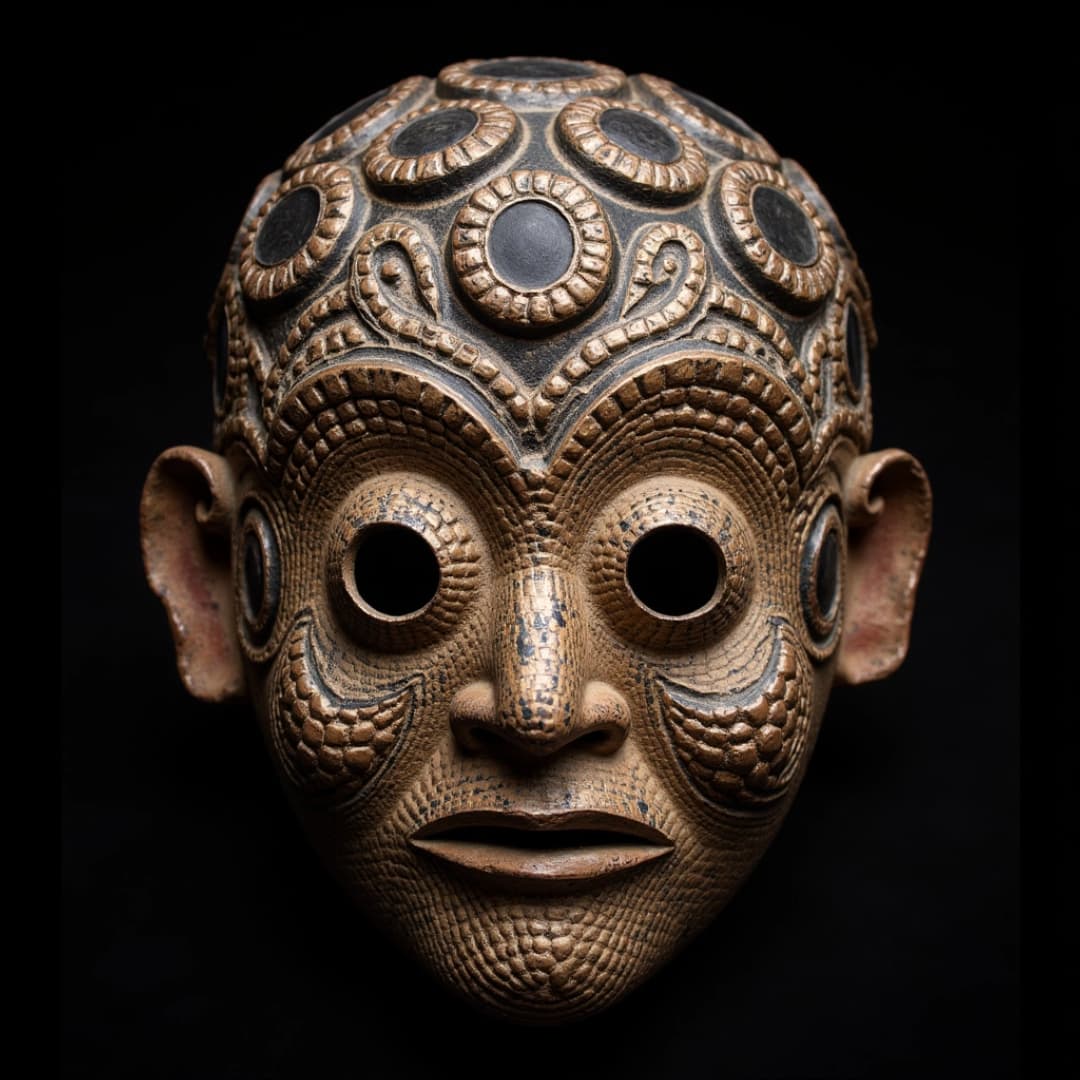
Masking often begins in childhood, when autistic people realise that they are perceived as "weird", "strange" or "different". Instead of receiving support, they learn to adapt. To become invisible. To put on a mask.
Masking is not simply pretending. It is a constant cognitive effort that strains the entire nervous system: around the clock, in every social context.
What does masking look like in practice? Recognising typical behaviours
Masking manifests itself in many everyday situations. Common examples:
· Eye contact is consciously established or controlled: not because it comes naturally, but because those affected know that it is expected.
· Body language is imitated: gestures, facial expressions and sitting posture are oriented towards the other person.
· Stimming (repetitive movements such as rocking, snapping fingers or humming) is suppressed, even though it serves as a means of self-regulation.
· Scripting: conversation sequences are rehearsed endlessly in the mind.
· Special interests are hidden because those affected know that they are considered "strange".
· Sensory overload is not communicated, but endured.
· Feelings and needs are suppressed to avoid attracting attention.
All of this often happens simultaneously in a single social situation. Autistic people, in particular, feel like they have run a marathon after such situations.
Why autistic people mask: protection, socialisation and pressure to conform
Masking is a matter of survival in a world geared towards neurotypical patterns of experience and behaviour. Children who behave "differently" are marginalised, bullied or treated as if they were difficult. The message they learn is: you have to be normal.
The pressure to conform does not only arise from open rejection. It also arises from a thousand little moments: the irritated look when someone does not make enough eye contact. The question "Why are you so quiet?" The laughter at behaviour that was completely logical to the person concerned. These moments add up and form a constant self-control that eventually becomes automatic.
What's more, masking is rarely a conscious decision. For many autistic adults, it was simply "the way they were" until the diagnosis explained that it was a learned survival strategy.
Masking with ADHD: same mask, different reasons
ADHD masking works similarly, but with its own patterns. Those affected learn to control their impulsiveness, hide their hyperactivity, and suppress behaviours considered disruptive at school or work. Those who mask with ADHD:
· forces themselves to sit still in meetings, even though their bodies want to move
· double-check everything to conceal mistakes caused by inattention
· actively play a social role: overcompensate with humour, charm or performance
· avoid situations in which ADHD symptoms could become visible
Many people with ADHD have experienced exclusion when their symptoms became visible. Masking helps avoid judgment, criticism, and misunderstandings, especially in places where behaviour is closely observed, such as at school or work.
Masking in girls and women: why diagnosis is so often missed
Girls and women with autism and ADHD are diagnosed less frequently and later than men, and this is directly related to masking. Girls are socialised to be quiet, conformist and socially competent. These expectations encourage the early internalisation of masking strategies.
There is a blind spot in diagnostics: the historical diagnostic criteria for autism and ADHD were developed predominantly on male subjects. The "classic" ADHD profile (hyperactive, impulsive, disruptive) corresponds to a male presentation pattern. Girls do not cause disruption. So they do not stand out. As a result, they are diagnosed late or not at all.
The result: decades of misdiagnoses such as depression, anxiety disorder or borderline personality disorder. Therapies only have a partial effect because the neurobiological foundation is never addressed. Many affected individuals only receive their first diagnosis after a breakdown or after their own child is diagnosed.
Masking as a trauma response: when adaptation becomes a survival strategy
Masking is often more than social adaptation. It is a deeply ingrained survival strategy that arises in uncertain environments, after social rejection or as a result of trauma. From an early age, autistic people feel that they are not welcome just as they are.
This experience leaves its mark. Masking and mental health issues such as anxiety disorders, depression or PTSD are closely related. This is because suppressing autistic behaviours for years causes considerable psychological stress.
The fact that masking can be a trauma response is equally significant: it explains why many affected individuals cannot simply "relax" when they are safe. Self-control is automated. The mask is firmly in place. And removing it requires therapeutic support, not just goodwill.
How can you recognise masking? Signs in yourself and others
There are characteristic patterns:
Signs in yourself:
· Conversations feel like a scripted performance: a controlled one.
· The feeling of playing a role and not knowing who you "really" are
· Your behaviour in private differs greatly from your behaviour in public.
· Social situations are followed by deep exhaustion that others do not seem to share.
Signs in others:
· Contradiction between official performance and private breakdown
· Excessive preparation for social situations (running through lists and scenarios)
· Visible relief when social obligations are cancelled
(Non-autistic people often react with surprise to diagnoses because they "never noticed anything").
Autistic or ADHD burnout: the end of compensatory capacity
Chronic masking is exhausting. Neurodivergent burnout is qualitatively different from classic burnout: it is the direct result of this constant stress. Those affected lose skills they previously mastered, such as language, social functioning, and everyday structure.
Typical symptoms of neurodivergent burnout:
· Shutdown: withdrawal, muteness, inability to act
· Increased sensory hypersensitivity
· Extreme irritability and emotional dysregulation
· Loss of speech (temporary)
· Inability to perform even simple everyday tasks
Burnouts of this kind are often treated as depressive episodes, with insufficient results, because the cause remains untouched. The crucial intervention is not more adaptation, but less. More space for neurodivergent behaviour, less enforcement of neurotypical behaviour.
What does masking mean for diagnosis, and what must a serious examination take into account?
Diagnosis in people with pronounced masking is particularly challenging. What is visible in the consulting room is the result of years of compensatory work, not the neurodivergent profile. A serious autism and ADHD diagnosis must therefore:
· Explicitly ask about the contrast between public and private experiences
· Reveal exhaustion after social situations
· Take shame seriously as a diagnostic signal
· Critically evaluate information provided by others (parents have often experienced the mask, not the child behind it)
· Consistently consider the possibility of late or undiagnosed neurodivergence in adults
· Be sensitive to the type of communication: directness and literalness, without social packaging, are often autistic, not rude.
Masking, preventing diagnosis, is one of the most serious problems in the care of neurodivergent people.
The most important facts at a glance
· Masking is the conscious or unconscious suppression of neurodivergent behaviours.
· It arises from pressure to conform, social rejection and socialisation, not from ill will.
· High intelligence and social adaptation can mask symptoms for years, delaying diagnosis.
· Girls and women are disproportionately affected because masking is reinforced by socialisation.
· Typical tools: scripting, mirroring, stimming suppression, forced eye contact.
· Long-term consequences: neurodivergent burnout, identity diffusion, co-occurring mental health conditions
· Masking can be a trauma response: therapeutic support is required to stop it.
· Reputable diagnostics must actively ask about the difference between public functioning and private experience.
· Neurodivergent people have the right to mask less: this is not a weakness, but self-care.
· The goal is not to stop masking completely, but to consciously decide when and where to do so.
Frequently asked questions about masking in autism and ADHD
What exactly is masking in autism?
Masking in autism refers to hiding or suppressing autistic behaviours to avoid standing out in neurotypical environments. It includes conscious and unconscious strategies such as forcing eye contact, suppressing stimming, using social scripts and adapting one's body language to others. It is not a choice, but a learned response to pressure to conform.
Should neurodivergent people mask?
No: at least not permanently and not at the expense of their health. Masking can provide short-term protection, but it is psychologically stressful in the long term. The goal of neurodiversity coaching is not to eliminate masking, but to help those affected to consciously decide when masking is useful and when it is harmful.
How can you tell if someone is masking?
Typical signs: conversations seem like memorised scripts, those affected are unusually exhausted after social situations, behaviour in public differs greatly from behaviour in private, and there is a vague feeling of always playing a role. Those who ask themselves these questions often already have an important clue.
When does masking begin?
Masking can begin very early: as early as preschool age, when children notice that their natural behaviour leads to exclusion. Many autistic children learn early on that they are "different" and unconsciously begin to adapt to fit in.
What does ADHD masking look like?
ADHD masking manifests itself in ways such as forced stillness in meetings, excessive preparation to avoid mistakes, social overcompensation through humour or performance, and avoidance of situations in which ADHD symptoms could become apparent. The effort behind this controlled surface is enormous.
Is masking a trauma response?
Yes, often. Masking often arises in response to social rejection, punishment, or bullying (i.e., traumatic experiences). For many autistic people, it is a deeply ingrained survival strategy that remains active even when the original danger is long gone.
What is the difference between masking and camouflaging?
The terms are often used synonymously. "Camouflaging" describes the broader phenomenon of social adaptation in autistic people: it encompasses assimilation (positive adaptation), compensation (compensating for deficits) and masking in the narrower sense (active concealment). Masking is therefore part of camouflaging.
Can you be autistic and socially competent?
Yes. Autistic people do not lack social skills; they have different ones. Those who learn social rules intellectually and apply them precisely often appear highly competent. This does not change their neurodivergent profile: it only shows how laborious masking can be.
What is autistic burnout?
Autistic burnout is the direct result of chronic masking and differs from classic work burnout. Those affected lose skills they previously mastered: language, everyday organisation, and social functioning. It occurs when the compensatory reserves are completely exhausted. It requires specific treatment, not classic burnout therapy.
Why are women with autism so often diagnosed late?
Because girls are socialised to behave more prosocially and therefore mask more pronouncedly, this is compounded by clinical diagnostic criteria developed on male subjects. The result: women do not cause disruption and are therefore overlooked until the system collapses.
Is masking the same as psychological masking (e.g. in PTSD)?
There are overlaps. Psychological masking in PTSD refers to the concealment of emotional states to avoid rejection or danger. Autistic masking is more specific: it refers to the suppression of neurodivergent behaviours. Both can occur simultaneously and often do so in traumatised autistic people.
What is stimming, and why is it suppressed?
Stimming (self-stimulation) refers to repetitive movements or sounds that autistic people use for self-regulation, such as rocking, snapping fingers, humming, or finger flicking. It helps to process sensory overload and express inner states. In masking, stimming is suppressed because it is considered "strange" or "conspicuous," even though suppression takes considerable energy and impairs self-regulation.
How are masking and identity related?
Years of masking can lead to those affected no longer knowing who they "really" are: beyond the adapted role. This identity diffusion is a common long-term consequence. Late diagnosis is then often experienced as a turning point: not as a new problem, but as an explanation of one's life so far.
How can therapy help with masking?
Neurodiversity-affirmative therapy does not aim to "cure" masking or make those affected even more conformist. It helps them to make conscious decisions about when conformity is appropriate and creates space for them to get to know, accept and integrate their own neurodivergent self. This also includes psychoeducation of their social environment.
RELATED ARTICLES:
AuDHD, Masking & Burnout: Causes and Help for Those Affected by Burnout in ADHD and Autism
ADHD and Autism: Diagnosis Within the Spectrum of Neurodiversity
Autism Spectrum Disorders: The Autism Spectrum Has Strengths - 7 Features That Should Be Seen More
AUDHD & Spoon Theory: More Energy in Everyday Life with ADHD and Autism
DESCRIPTION:
Why do autistic people, or those with ADHD or AuDHS, mask? Information about camouflaging and adaptation.
Masking in autism and ADHD: When people on the spectrum learn to pretend
TL;DR: Masking is the conscious or unconscious suppression of neurodivergent behaviours to avoid standing out in a neurotypical world. Especially in people with AuDHS (autism + ADHD), masking can cause years of misdiagnosis, lead to deep exhaustion, and often only becomes apparent when burnout sets in.
What it's about:
· What lies behind masking,
· Who is particularly affected, and
· What a thorough diagnosis must take into account.
AuDHS – When autism and ADHD meet: – a guide to diagnosis and everyday life
Welcome to our specialised section on AuDHS. More and more people are recognising that they have both autism and ADHD: an internal conflict that is often only recognised at a late stage.
Here you will find information on neurodiversity, guidance on AuDHS diagnosis for adults, and answers to why you often fluctuate between inner restlessness and the need for structure. We shed light on the paradox of sensory overload and boredom and explain the background of autism spectrum disorder comorbidity with ADHD.
🧠 A note about our design (neuro-inclusive reading)
We know that long texts are often exhausting for neurodivergent brains. That's why this blog is designed to be ADHD-friendly:
· TL;DR (Too Long; Didn't Read): You will find a summary at the beginning of each article.
· Scannability: We use bold type for key terms and lots of bullet points so you can grasp the most important information at a glance.
· Clarity: We avoid walls of text and use short, digestible paragraphs
What does masking mean in autism, and what does it have to do with camouflaging?
Masking, also known as camouflaging or autistic masking, refers to the conscious or unconscious suppression of neurodivergent behaviours to avoid attracting negative attention in neurotypical environments. Those affected learn to behave in the way neurotypical people expect them to, not because it comes naturally to them, but because deviations were often punished with exclusion.
Masking often begins in childhood, when autistic people realise that they are perceived as "weird", "strange" or "different". Instead of receiving support, they learn to adapt. To become invisible. To put on a mask.
Masking is not simply pretending. It is a constant cognitive effort that strains the entire nervous system: around the clock, in every social context.
What does masking look like in practice? Recognising typical behaviours
Masking manifests itself in many everyday situations. Common examples:
· Eye contact is consciously established or controlled: not because it comes naturally, but because those affected know that it is expected.
· Body language is imitated: gestures, facial expressions and sitting posture are oriented towards the other person.
· Stimming (repetitive movements such as rocking, snapping fingers or humming) is suppressed, even though it serves as a means of self-regulation.
· Scripting: conversation sequences are rehearsed endlessly in the mind.
· Special interests are hidden because those affected know that they are considered "strange".
· Sensory overload is not communicated, but endured.
· Feelings and needs are suppressed to avoid attracting attention.
All of this often happens simultaneously in a single social situation. Autistic people, in particular, feel like they have run a marathon after such situations.
Why autistic people mask: protection, socialisation and pressure to conform
Masking is a matter of survival in a world geared towards neurotypical patterns of experience and behaviour. Children who behave "differently" are marginalised, bullied or treated as if they were difficult. The message they learn is: you have to be normal.
The pressure to conform does not only arise from open rejection. It also arises from a thousand little moments: the irritated look when someone does not make enough eye contact. The question "Why are you so quiet?" The laughter at behaviour that was completely logical to the person concerned. These moments add up and form a constant self-control that eventually becomes automatic.
What's more, masking is rarely a conscious decision. For many autistic adults, it was simply "the way they were" until the diagnosis explained that it was a learned survival strategy.
Masking with ADHD: same mask, different reasons
ADHD masking works similarly, but with its own patterns. Those affected learn to control their impulsiveness, hide their hyperactivity, and suppress behaviours considered disruptive at school or work. Those who mask with ADHD:
· forces themselves to sit still in meetings, even though their bodies want to move
· double-check everything to conceal mistakes caused by inattention
· actively play a social role: overcompensate with humour, charm or performance
· avoid situations in which ADHD symptoms could become visible
Many people with ADHD have experienced exclusion when their symptoms became visible. Masking helps avoid judgment, criticism, and misunderstandings, especially in places where behaviour is closely observed, such as at school or work.
Masking in girls and women: why diagnosis is so often missed
Girls and women with autism and ADHD are diagnosed less frequently and later than men, and this is directly related to masking. Girls are socialised to be quiet, conformist and socially competent. These expectations encourage the early internalisation of masking strategies.
There is a blind spot in diagnostics: the historical diagnostic criteria for autism and ADHD were developed predominantly on male subjects. The "classic" ADHD profile (hyperactive, impulsive, disruptive) corresponds to a male presentation pattern. Girls do not cause disruption. So they do not stand out. As a result, they are diagnosed late or not at all.
The result: decades of misdiagnoses such as depression, anxiety disorder or borderline personality disorder. Therapies only have a partial effect because the neurobiological foundation is never addressed. Many affected individuals only receive their first diagnosis after a breakdown or after their own child is diagnosed.
Masking as a trauma response: when adaptation becomes a survival strategy
Masking is often more than social adaptation. It is a deeply ingrained survival strategy that arises in uncertain environments, after social rejection or as a result of trauma. From an early age, autistic people feel that they are not welcome just as they are.
This experience leaves its mark. Masking and mental health issues such as anxiety disorders, depression or PTSD are closely related. This is because suppressing autistic behaviours for years causes considerable psychological stress.
The fact that masking can be a trauma response is equally significant: it explains why many affected individuals cannot simply "relax" when they are safe. Self-control is automated. The mask is firmly in place. And removing it requires therapeutic support, not just goodwill.
How can you recognise masking? Signs in yourself and others
There are characteristic patterns:
Signs in yourself:
· Conversations feel like a scripted performance: a controlled one.
· The feeling of playing a role and not knowing who you "really" are
· Your behaviour in private differs greatly from your behaviour in public.
· Social situations are followed by deep exhaustion that others do not seem to share.
Signs in others:
· Contradiction between official performance and private breakdown
· Excessive preparation for social situations (running through lists and scenarios)
· Visible relief when social obligations are cancelled
(Non-autistic people often react with surprise to diagnoses because they "never noticed anything").
Autistic or ADHD burnout: the end of compensatory capacity
Chronic masking is exhausting. Neurodivergent burnout is qualitatively different from classic burnout: it is the direct result of this constant stress. Those affected lose skills they previously mastered, such as language, social functioning, and everyday structure.
Typical symptoms of neurodivergent burnout:
· Shutdown: withdrawal, muteness, inability to act
· Increased sensory hypersensitivity
· Extreme irritability and emotional dysregulation
· Loss of speech (temporary)
· Inability to perform even simple everyday tasks
Burnouts of this kind are often treated as depressive episodes, with insufficient results, because the cause remains untouched. The crucial intervention is not more adaptation, but less. More space for neurodivergent behaviour, less enforcement of neurotypical behaviour.
What does masking mean for diagnosis, and what must a serious examination take into account?
Diagnosis in people with pronounced masking is particularly challenging. What is visible in the consulting room is the result of years of compensatory work, not the neurodivergent profile. A serious autism and ADHD diagnosis must therefore:
· Explicitly ask about the contrast between public and private experiences
· Reveal exhaustion after social situations
· Take shame seriously as a diagnostic signal
· Critically evaluate information provided by others (parents have often experienced the mask, not the child behind it)
· Consistently consider the possibility of late or undiagnosed neurodivergence in adults
· Be sensitive to the type of communication: directness and literalness, without social packaging, are often autistic, not rude.
Masking, preventing diagnosis, is one of the most serious problems in the care of neurodivergent people.
The most important facts at a glance
· Masking is the conscious or unconscious suppression of neurodivergent behaviours.
· It arises from pressure to conform, social rejection and socialisation, not from ill will.
· High intelligence and social adaptation can mask symptoms for years, delaying diagnosis.
· Girls and women are disproportionately affected because masking is reinforced by socialisation.
· Typical tools: scripting, mirroring, stimming suppression, forced eye contact.
· Long-term consequences: neurodivergent burnout, identity diffusion, co-occurring mental health conditions
· Masking can be a trauma response: therapeutic support is required to stop it.
· Reputable diagnostics must actively ask about the difference between public functioning and private experience.
· Neurodivergent people have the right to mask less: this is not a weakness, but self-care.
· The goal is not to stop masking completely, but to consciously decide when and where to do so.
Frequently asked questions about masking in autism and ADHD
What exactly is masking in autism?
Masking in autism refers to hiding or suppressing autistic behaviours to avoid standing out in neurotypical environments. It includes conscious and unconscious strategies such as forcing eye contact, suppressing stimming, using social scripts and adapting one's body language to others. It is not a choice, but a learned response to pressure to conform.
Should neurodivergent people mask?
No: at least not permanently and not at the expense of their health. Masking can provide short-term protection, but it is psychologically stressful in the long term. The goal of neurodiversity coaching is not to eliminate masking, but to help those affected to consciously decide when masking is useful and when it is harmful.
How can you tell if someone is masking?
Typical signs: conversations seem like memorised scripts, those affected are unusually exhausted after social situations, behaviour in public differs greatly from behaviour in private, and there is a vague feeling of always playing a role. Those who ask themselves these questions often already have an important clue.
When does masking begin?
Masking can begin very early: as early as preschool age, when children notice that their natural behaviour leads to exclusion. Many autistic children learn early on that they are "different" and unconsciously begin to adapt to fit in.
What does ADHD masking look like?
ADHD masking manifests itself in ways such as forced stillness in meetings, excessive preparation to avoid mistakes, social overcompensation through humour or performance, and avoidance of situations in which ADHD symptoms could become apparent. The effort behind this controlled surface is enormous.
Is masking a trauma response?
Yes, often. Masking often arises in response to social rejection, punishment, or bullying (i.e., traumatic experiences). For many autistic people, it is a deeply ingrained survival strategy that remains active even when the original danger is long gone.
What is the difference between masking and camouflaging?
The terms are often used synonymously. "Camouflaging" describes the broader phenomenon of social adaptation in autistic people: it encompasses assimilation (positive adaptation), compensation (compensating for deficits) and masking in the narrower sense (active concealment). Masking is therefore part of camouflaging.
Can you be autistic and socially competent?
Yes. Autistic people do not lack social skills; they have different ones. Those who learn social rules intellectually and apply them precisely often appear highly competent. This does not change their neurodivergent profile: it only shows how laborious masking can be.
What is autistic burnout?
Autistic burnout is the direct result of chronic masking and differs from classic work burnout. Those affected lose skills they previously mastered: language, everyday organisation, and social functioning. It occurs when the compensatory reserves are completely exhausted. It requires specific treatment, not classic burnout therapy.
Why are women with autism so often diagnosed late?
Because girls are socialised to behave more prosocially and therefore mask more pronouncedly, this is compounded by clinical diagnostic criteria developed on male subjects. The result: women do not cause disruption and are therefore overlooked until the system collapses.
Is masking the same as psychological masking (e.g. in PTSD)?
There are overlaps. Psychological masking in PTSD refers to the concealment of emotional states to avoid rejection or danger. Autistic masking is more specific: it refers to the suppression of neurodivergent behaviours. Both can occur simultaneously and often do so in traumatised autistic people.
What is stimming, and why is it suppressed?
Stimming (self-stimulation) refers to repetitive movements or sounds that autistic people use for self-regulation, such as rocking, snapping fingers, humming, or finger flicking. It helps to process sensory overload and express inner states. In masking, stimming is suppressed because it is considered "strange" or "conspicuous," even though suppression takes considerable energy and impairs self-regulation.
How are masking and identity related?
Years of masking can lead to those affected no longer knowing who they "really" are: beyond the adapted role. This identity diffusion is a common long-term consequence. Late diagnosis is then often experienced as a turning point: not as a new problem, but as an explanation of one's life so far.
How can therapy help with masking?
Neurodiversity-affirmative therapy does not aim to "cure" masking or make those affected even more conformist. It helps them to make conscious decisions about when conformity is appropriate and creates space for them to get to know, accept and integrate their own neurodivergent self. This also includes psychoeducation of their social environment.
RELATED ARTICLES:
AuDHD, Masking & Burnout: Causes and Help for Those Affected by Burnout in ADHD and Autism
ADHD and Autism: Diagnosis Within the Spectrum of Neurodiversity
Autism Spectrum Disorders: The Autism Spectrum Has Strengths - 7 Features That Should Be Seen More
AUDHD & Spoon Theory: More Energy in Everyday Life with ADHD and Autism
Newsletter
Would you like to be notified when I publish a new blog post? Sign up here.
Click "Subscribe for free" if you have read and accepted my privacy policy. You can revoke your consent at any time.
Newsletter
Would you like to be notified when I publish a new blog post? Sign up here.
Click "Subscribe for free" if you have read and accepted my privacy policy. You can revoke your consent at any time.