Emotional incest and enmeshment
Emotional incest and enmeshment: When parents turn children into partners
Emotional incest and enmeshment: When parents turn children into partners
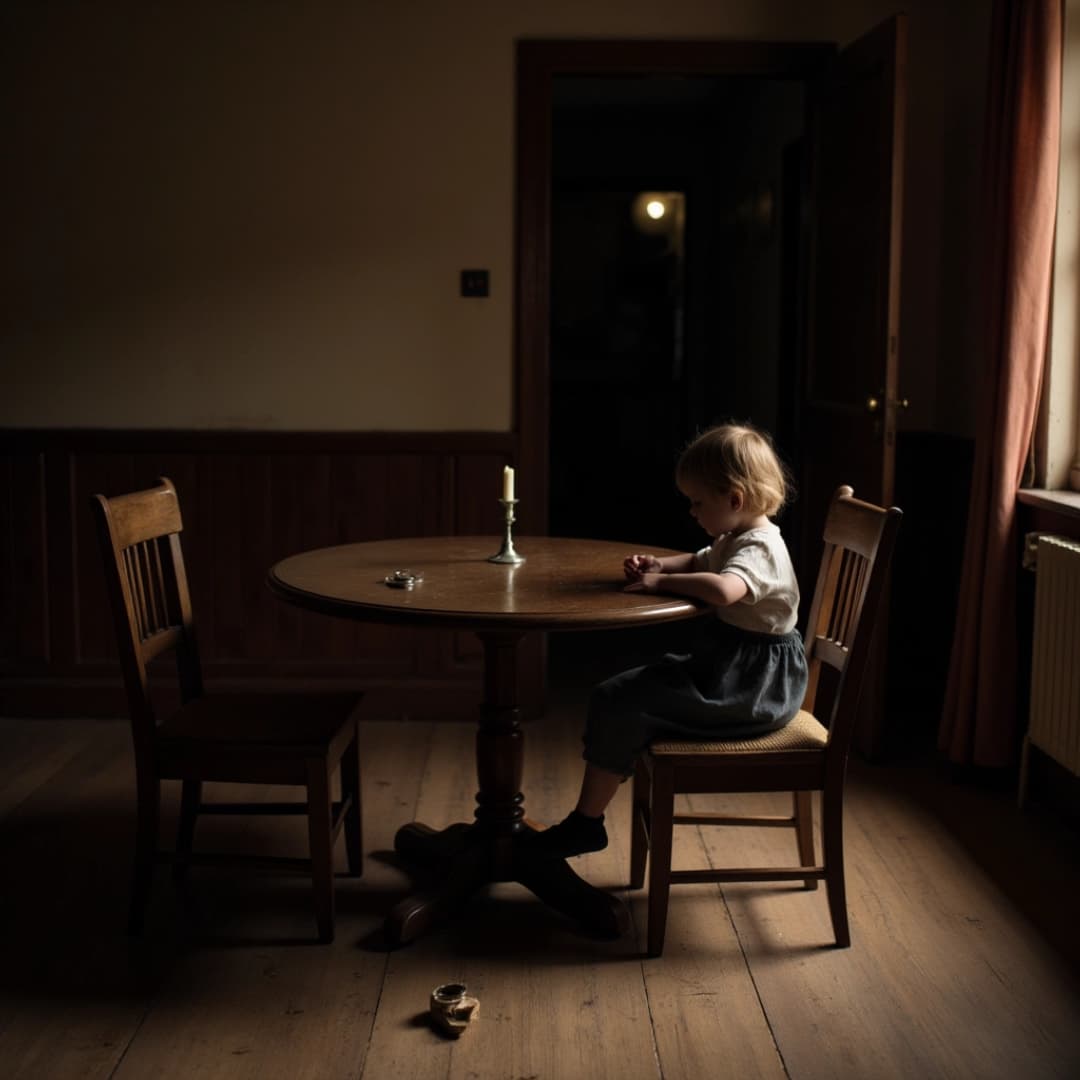
DESCRIPTION:
Emotional Incest, Covert Incest, Boy Mom Trap: When parents turn children into substitute partners: psychoanalytic concepts and clinical insights.
Emotional incest: When parents turn children into substitute partners
When a parent draws their own child into the emotional void left by a missing partner, a constellation arises that is described in family therapy as ‘emotional incest’ or ‘covert incest’. This is not about physical abuse, but rather a silent role reversal that turns a child into a confidant, a comforter, an imaginary partner.
This post summarises the phenomenon precisely, showing that US family therapy rediscovered in 1990 what psychoanalysis had structurally conceptualised since Freud in the concept of Oedipalisation, and argues that the label ‘emotional incest’ remains a pseudo-discovery, whose affective force obscures rather than enhances the structural clarity of the older concepts (parentification, partner substitution, triangulation).
What does ‘emotional incest’ actually mean?
The term originates from two books published almost simultaneously: Pat Love’s “The Emotional Incest Syndrome” (1990) and Kenneth Adams’ “Silently Seduced” (1991). Both describe a family situation in which a parent, often following the partner’s withdrawal, affair, illness or death, draws their own child into the emotionally vacant role. The child becomes the primary caregiver for the adult’s unmet needs, without ever crossing any physical boundaries. Adams calls this “silently seduced” because the co-opting occurs quietly, often disguised as a special closeness, sometimes even as a parenting strategy: “You are my best friend, my little man, my little princess.” The child loses the permission to be a child.
Why now? The TikTok wave of 2026
In May 2026, an article about the ‘Boy Mom Trap’ sparked a wider debate and caused the hashtag #CovertIncest to go viral on social media. Young adults describe how, as children, they were made to act as an emotional surrogate for a parent, and suddenly find words in clinical vocabulary to describe a vague sense of unease. It would be wrong to dismiss this movement as pop-therapy jargon. It has a serious core: many adults only realise late in life that the unusually close, supposedly ‘special’ relationship with their mother or father contained a structural violation. At the same time, the acceleration of media coverage requires caution: what Pat Love and Kenneth Adams developed as a family dynamics concept cannot be reliably diagnosed in a thirty-second reel.
What does the conflict between parent and child look like in everyday life?
A mother whose marriage has broken down begins to talk to her ten-year-old son about her loneliness, asks him for advice on marital problems, and repeatedly tells him that he is the only man who really understands her.
A father takes his fifteen-year-old daughter to the restaurant where he used to go with his wife, complains about the mother, and gives his daughter jewellery that is ‘suitable for a proper woman’.
Such scenes appear superficially affectionate, sometimes even touching. The harm lies in the fact that the child is placed in a position they are not developmentally equipped to handle, and loyalty to the parent blocks their own emergence as a subject. Annie Tanasugarn describes this constellation as a covert form of ‘emotional parentification’, in which the child becomes a parent to their parent.
What are the systemic roots of this concept?
Before Pat Love and Adams coined the term, Murray Bowen and Salvador Minuchin had laid the foundations. Bowen’s concept of ‘enmeshment’ describes families in which there is little emotional differentiation among members: people feel for one another rather than with themselves. In his structural family therapy, Minuchin demonstrated the importance of clear subsystem boundaries, particularly between the parent and child subsystems. If this boundary breaks down, for instance, because the couple’s dynamic breaks down, the child slips into the parent subsystem and takes on tasks they are not equipped to handle. The literature on co-dependency, which emerged from addiction therapy in the 1980s, supplements this view with the aspect of mutual attachment to states of deprivation. In this respect, ‘emotional incest’ is not an isolated diagnosis, but a particular concentration of systemic phenomena.
Is emotional incest the same as Oedipalisation?
The usual answer is: two concepts, two traditions. This answer is too textbook-like. The Oedipus complex is often narrated from the boy’s perspective: the child desires the mother, fears the castrating father. Oedipalisation, however, is primarily a process concerning the parents’ desire, not the child’s. In Lacan, this is explicit: le désir de la mère, the mother’s desire, is the first Other the child encounters. The child attempts to be for the mother what she lacks—her phallus, the substitute for what her partner does not give her. The function of the Nom-du-Père, the ‘Name-of-the-Father’, does not primarily consist in forbidding the child’s desire, but in interrupting the maternal investment. He says to the mother: ‘You will not have your child’, and to the child: ‘You will not be the one she lacks.’ The incest taboo is directed at both sides of the dyad, with the emphasis on the parental side.
What, then, is Pat Love actually describing?
When the ‘name-of-the-father’ is rejected in psychosis, or in forms of neurosis and perversion, the child remains in precisely the position that Pat Love has described as ‘covert incest’: a phallic complement, a substitute partner, a comfort object for a disappointed partner. Pat Love’s and Kenneth Adams’s achievement lies in making this phenomenon accessible to US family therapy in pragmatic language. However, what they presented as a discovery in family therapy is, at its core, what Freud and Lacan conceive of structurally. ‘Emotional incest’ is Oedipalisation itself, described from the parental position of desire, in its pathological variant. The fact that this goes so largely unnoticed in Anglo-American culture is more a symptom of the neglect of the psychoanalytic tradition than a genuine innovation.
Why, then, does “emotional incest” remain a pseudo-discovery?
The historical recognition of what Pat Love has described should not obscure a second, more critical step: the term itself is a rebranding with problematic consequences. In substance, ‘emotional incest’ describes a constellation that psychoanalytic and systemic family therapy has known for decades under more precise terms, such as parentification, partner substitution, role reversal, and instrumental triangulation in the sense of Bowen and Minuchin. What Pat Love and Adams have presented as a discovery in family therapy is, at its core, a renaming of already well-described structures under a label with strong emotional connotations. Theoretically, this adds nothing, but rather loses something: the structural nuance of the older models.
The term ‘incest’ is not harmless. In the psychoanalytic tradition, ‘incest’ is linked to concrete, symbolically highly charged instances of prohibition and desire, to the violation of sexual boundaries, to the breaking of taboos, to the enactment of the prohibition in the symbolic realm. The transfer of this term to purely emotional entanglements blurs clinically decisive qualitative differences. This creates a twofold risk: on the one hand, there is a danger of relativising real, physical-sexual incest trauma, the severity of which fades in the shadow of the metaphorically used term. On the other hand, there is a risk of unnecessarily dramatising the emotionally entangled constellation, forcing those affected to recount their experience using the vocabulary of sexual violence, even though the structure is different.
Added to this is the label’s role within market and media logic. “Emotional incest” is headline-grabbing, hashtag-friendly, and easily linked to self-help literature and social media awareness reels. The term ‘incest’ generates a sense of recognition and outrage that can be conveyed without the underlying complex family dynamic models, and this is precisely why it renders them superfluous. What is intended as education popularises a label whilst simultaneously supplanting the theoretical tools that would precisely capture the phenomenon. Discursively, this is a loss; clinically, a risk. Those working with the ‘pattern are better served by terms such as ‘parentification’, ‘partner substitution’ and ‘pathological triangulation’ than by a term whose emotional impact hinders the recognition of underlying structures.
The conclusion is not to downplay the phenomenon; on the contrary. The conclusion is to describe it more accurately. What is referred to as ‘emotional incest’ is a real and serious phenomenon: the entanglement of the child in the parents’ disappointed, unfulfilled desires, with consequences that extend well into adulthood. But the label ‘emotional incest’ obscures this structure more than it illuminates it, and takes its toll both on the victims of genuine sexual violence and on those emotionally entangled, who are forced into a false vocabulary.
What are the consequences of this distinction?
As long as “emotional incest” is treated as an isolated concept, the structural background is missing: why this pattern carries any weight at all, why it is so prone to repetition, why self-actualisation is so difficult within it. As soon as one interprets it as a variant of an insufficiently resolved Oedipus complex, it becomes clear: The child is not primarily ‘abused’ in the traumatological sense, but structurally not released. The corresponding symptoms—attachment disorder, chronic shame, co-dependence, difficulties in choosing a partner, and a diffuse sense of guilt when taking steps towards autonomy—can then be understood as consequences of the subject remaining in the position of a substitute, rather than moving away from the other’s desire. Therapeutically, this interpretation offers a clearer point of intervention than the purely descriptive one: it is not a matter of processing an act of transgression, but of the belated symbolisation of a missed break.
What distinguishes emotional incest from a close but healthy parent-child relationship?
This question arises automatically when adults doubt whether their mother or father was ‘just very close’, or whether something abusive happened. A good distinguishing criterion is the question of who carries whose needs. In a healthy relationship, parents carry the child’s needs, regulate their emotions, and create a safe space. In emotional incest, this is reversed: the child regulates the adult’s emotions, listens, comforts, plans and defends. Added to this are typical markers described by Charlie Health, Sandstone Care and Modern Intimacy in their overviews: The child is drawn into adult conflicts, is expected to keep secrets from the other parent, is referred to in sexually or romantically suggestive terms (‘my little man’, ‘my little princess’), encounters parental jealousy when forming their own relationships, and feels intense guilt when taking steps towards autonomy.
What long-term consequences of this unhealthy pattern are described?
Seeking Integrity and The Balance Clinic list recurring clinical presentations that emerge in research on covert incest: difficulties in choosing a partner, often with a tendency to repeat the old constellation or to avoid it altogether; difficulties with intimacy and sexuality, because proximity is historically charged; identity diffusion, because the question “Who would I be if I were not what my mother or father needed in me?” could not be asked for a long time; chronic guilt when setting boundaries; depressive episodes when taking steps towards detachment. A sense of divided loyalty towards the other parent, often devalued, is also common. In psychoanalytic terms, the subject has not sufficiently detached themselves from the position of the phallus—that is, the object that complements the mother—and remains trapped in the desire of the Other.
How does this relate to the narcissistic mother?
The dynamics of emotional incest often overlap with those of narcissistic parenting. A mother who uses her child as a mirror and a source of self-worth is also a mother who installs the child as a substitute partner as soon as her own relationship no longer meets her narcissistic needs. Anyone who has read the article on the narcissistic mother will recognise the similarities: idealisation and devaluation alternate; the child is both ‘special’ and available; differentiation is experienced as betrayal. The term ‘emotional incest’ adds an extra layer: the romantic, partnership-like nature of the relationship. It is not a synonym, but a common variant of the same family dynamic in which the child is not allowed to be themselves because they have to fill a void in the adult’s life.
What does the therapeutic solution look like?
Treatment does not primarily take the form of trauma processing in the strict sense, but rather a slow, careful correction of the relationship. Three movements are central: firstly, detachment and individuation, that is, the possibility of imagining oneself as someone other than what the parent needed; secondly, working through the bond of loyalty and the guilt that accompanies setting boundaries; thirdly, working on attachment patterns, because the choice of partner by those affected often repeats the old entanglement. Psychoanalytically, this can be described as work on one’s position in the other’s desire: no longer having to be the one who complements the mother or father. It often becomes apparent that the seemingly simple question ‘What do I actually want?’ is one of the most difficult. A therapeutic relationship that can sustain this space without filling it again with expectations is central here.
An overview of the key findings
· Emotional incest, also known as ‘covert incest’, refers to a constellation in which a parent makes the child an emotional substitute partner, without any physical abuse taking place.
· The terms originate with Pat Love (1990) and Kenneth Adams (1991). They are rooted in the tradition of family therapy by Bowen and Minuchin, as well as in the literature on co-dependency.
· Oedipalisation is primarily a process centred on the parents’ desire, not the child’s. According to Lacan, le désir de la mère establishes the child as a phallic complement, as a substitute for what the mother lacks in her partner. The Nom-du-Père serves to interrupt this maternal investment.
· Pat Love’s ‘covert incest’ is therefore Oedipalisation itself in its pathological variant, in which separation fails. In 1990, US family therapy rediscovered descriptively what psychoanalysis carries out structurally.
· Clinical correlates are not psychosis or perversion (which follow a rejection of the Name-of-the-Father), but attachment disorder, shame, co-dependency, difficulties in choosing a partner, and chronic guilt when taking steps towards autonomy – symptoms of a subject who has remained in the position of the phallic complement.
· The 2026 TikTok wave centred on #Covertincest and the ‘Boy Mom Trap’ popularised the concept. It should be taken seriously as a cultural movement, but it does not replace clinical diagnosis.
· Therapeutic work aims at detachment, individuation, working through the loyalty bond, and changing recurring attachment patterns in one’s own relationships.
· The overlap with narcissistic parenting is common: the child as a mirror and the child as a substitute partner are related positions within the same family grammar.
· Despite its substantive validity, the term “emotional incest” remains a pseudo-discovery: a rebranding of structures described for decades (parentification, partner substitution, instrumental triangulation) under an emotionally charged label with no theoretical added value.
· The use of the term ‘incest’ to describe purely emotional entanglements poses a twofold clinical risk: on the one hand, it trivialises real, physical and sexual incest trauma; on the other, it unnecessarily dramatises emotionally entangled situations.
· Discursively, the label fulfils a market- and media-logical function (suitability for hashtags, recognition effect) whilst simultaneously supplanting the more precise psychoanalytic and systemic terms with which the phenomenon could be better grasped clinically.
Related
DESCRIPTION:
Emotional Incest, Covert Incest, Boy Mom Trap: When parents turn children into substitute partners: psychoanalytic concepts and clinical insights.
Emotional incest: When parents turn children into substitute partners
When a parent draws their own child into the emotional void left by a missing partner, a constellation arises that is described in family therapy as ‘emotional incest’ or ‘covert incest’. This is not about physical abuse, but rather a silent role reversal that turns a child into a confidant, a comforter, an imaginary partner.
This post summarises the phenomenon precisely, showing that US family therapy rediscovered in 1990 what psychoanalysis had structurally conceptualised since Freud in the concept of Oedipalisation, and argues that the label ‘emotional incest’ remains a pseudo-discovery, whose affective force obscures rather than enhances the structural clarity of the older concepts (parentification, partner substitution, triangulation).
What does ‘emotional incest’ actually mean?
The term originates from two books published almost simultaneously: Pat Love’s “The Emotional Incest Syndrome” (1990) and Kenneth Adams’ “Silently Seduced” (1991). Both describe a family situation in which a parent, often following the partner’s withdrawal, affair, illness or death, draws their own child into the emotionally vacant role. The child becomes the primary caregiver for the adult’s unmet needs, without ever crossing any physical boundaries. Adams calls this “silently seduced” because the co-opting occurs quietly, often disguised as a special closeness, sometimes even as a parenting strategy: “You are my best friend, my little man, my little princess.” The child loses the permission to be a child.
Why now? The TikTok wave of 2026
In May 2026, an article about the ‘Boy Mom Trap’ sparked a wider debate and caused the hashtag #CovertIncest to go viral on social media. Young adults describe how, as children, they were made to act as an emotional surrogate for a parent, and suddenly find words in clinical vocabulary to describe a vague sense of unease. It would be wrong to dismiss this movement as pop-therapy jargon. It has a serious core: many adults only realise late in life that the unusually close, supposedly ‘special’ relationship with their mother or father contained a structural violation. At the same time, the acceleration of media coverage requires caution: what Pat Love and Kenneth Adams developed as a family dynamics concept cannot be reliably diagnosed in a thirty-second reel.
What does the conflict between parent and child look like in everyday life?
A mother whose marriage has broken down begins to talk to her ten-year-old son about her loneliness, asks him for advice on marital problems, and repeatedly tells him that he is the only man who really understands her.
A father takes his fifteen-year-old daughter to the restaurant where he used to go with his wife, complains about the mother, and gives his daughter jewellery that is ‘suitable for a proper woman’.
Such scenes appear superficially affectionate, sometimes even touching. The harm lies in the fact that the child is placed in a position they are not developmentally equipped to handle, and loyalty to the parent blocks their own emergence as a subject. Annie Tanasugarn describes this constellation as a covert form of ‘emotional parentification’, in which the child becomes a parent to their parent.
What are the systemic roots of this concept?
Before Pat Love and Adams coined the term, Murray Bowen and Salvador Minuchin had laid the foundations. Bowen’s concept of ‘enmeshment’ describes families in which there is little emotional differentiation among members: people feel for one another rather than with themselves. In his structural family therapy, Minuchin demonstrated the importance of clear subsystem boundaries, particularly between the parent and child subsystems. If this boundary breaks down, for instance, because the couple’s dynamic breaks down, the child slips into the parent subsystem and takes on tasks they are not equipped to handle. The literature on co-dependency, which emerged from addiction therapy in the 1980s, supplements this view with the aspect of mutual attachment to states of deprivation. In this respect, ‘emotional incest’ is not an isolated diagnosis, but a particular concentration of systemic phenomena.
Is emotional incest the same as Oedipalisation?
The usual answer is: two concepts, two traditions. This answer is too textbook-like. The Oedipus complex is often narrated from the boy’s perspective: the child desires the mother, fears the castrating father. Oedipalisation, however, is primarily a process concerning the parents’ desire, not the child’s. In Lacan, this is explicit: le désir de la mère, the mother’s desire, is the first Other the child encounters. The child attempts to be for the mother what she lacks—her phallus, the substitute for what her partner does not give her. The function of the Nom-du-Père, the ‘Name-of-the-Father’, does not primarily consist in forbidding the child’s desire, but in interrupting the maternal investment. He says to the mother: ‘You will not have your child’, and to the child: ‘You will not be the one she lacks.’ The incest taboo is directed at both sides of the dyad, with the emphasis on the parental side.
What, then, is Pat Love actually describing?
When the ‘name-of-the-father’ is rejected in psychosis, or in forms of neurosis and perversion, the child remains in precisely the position that Pat Love has described as ‘covert incest’: a phallic complement, a substitute partner, a comfort object for a disappointed partner. Pat Love’s and Kenneth Adams’s achievement lies in making this phenomenon accessible to US family therapy in pragmatic language. However, what they presented as a discovery in family therapy is, at its core, what Freud and Lacan conceive of structurally. ‘Emotional incest’ is Oedipalisation itself, described from the parental position of desire, in its pathological variant. The fact that this goes so largely unnoticed in Anglo-American culture is more a symptom of the neglect of the psychoanalytic tradition than a genuine innovation.
Why, then, does “emotional incest” remain a pseudo-discovery?
The historical recognition of what Pat Love has described should not obscure a second, more critical step: the term itself is a rebranding with problematic consequences. In substance, ‘emotional incest’ describes a constellation that psychoanalytic and systemic family therapy has known for decades under more precise terms, such as parentification, partner substitution, role reversal, and instrumental triangulation in the sense of Bowen and Minuchin. What Pat Love and Adams have presented as a discovery in family therapy is, at its core, a renaming of already well-described structures under a label with strong emotional connotations. Theoretically, this adds nothing, but rather loses something: the structural nuance of the older models.
The term ‘incest’ is not harmless. In the psychoanalytic tradition, ‘incest’ is linked to concrete, symbolically highly charged instances of prohibition and desire, to the violation of sexual boundaries, to the breaking of taboos, to the enactment of the prohibition in the symbolic realm. The transfer of this term to purely emotional entanglements blurs clinically decisive qualitative differences. This creates a twofold risk: on the one hand, there is a danger of relativising real, physical-sexual incest trauma, the severity of which fades in the shadow of the metaphorically used term. On the other hand, there is a risk of unnecessarily dramatising the emotionally entangled constellation, forcing those affected to recount their experience using the vocabulary of sexual violence, even though the structure is different.
Added to this is the label’s role within market and media logic. “Emotional incest” is headline-grabbing, hashtag-friendly, and easily linked to self-help literature and social media awareness reels. The term ‘incest’ generates a sense of recognition and outrage that can be conveyed without the underlying complex family dynamic models, and this is precisely why it renders them superfluous. What is intended as education popularises a label whilst simultaneously supplanting the theoretical tools that would precisely capture the phenomenon. Discursively, this is a loss; clinically, a risk. Those working with the ‘pattern are better served by terms such as ‘parentification’, ‘partner substitution’ and ‘pathological triangulation’ than by a term whose emotional impact hinders the recognition of underlying structures.
The conclusion is not to downplay the phenomenon; on the contrary. The conclusion is to describe it more accurately. What is referred to as ‘emotional incest’ is a real and serious phenomenon: the entanglement of the child in the parents’ disappointed, unfulfilled desires, with consequences that extend well into adulthood. But the label ‘emotional incest’ obscures this structure more than it illuminates it, and takes its toll both on the victims of genuine sexual violence and on those emotionally entangled, who are forced into a false vocabulary.
What are the consequences of this distinction?
As long as “emotional incest” is treated as an isolated concept, the structural background is missing: why this pattern carries any weight at all, why it is so prone to repetition, why self-actualisation is so difficult within it. As soon as one interprets it as a variant of an insufficiently resolved Oedipus complex, it becomes clear: The child is not primarily ‘abused’ in the traumatological sense, but structurally not released. The corresponding symptoms—attachment disorder, chronic shame, co-dependence, difficulties in choosing a partner, and a diffuse sense of guilt when taking steps towards autonomy—can then be understood as consequences of the subject remaining in the position of a substitute, rather than moving away from the other’s desire. Therapeutically, this interpretation offers a clearer point of intervention than the purely descriptive one: it is not a matter of processing an act of transgression, but of the belated symbolisation of a missed break.
What distinguishes emotional incest from a close but healthy parent-child relationship?
This question arises automatically when adults doubt whether their mother or father was ‘just very close’, or whether something abusive happened. A good distinguishing criterion is the question of who carries whose needs. In a healthy relationship, parents carry the child’s needs, regulate their emotions, and create a safe space. In emotional incest, this is reversed: the child regulates the adult’s emotions, listens, comforts, plans and defends. Added to this are typical markers described by Charlie Health, Sandstone Care and Modern Intimacy in their overviews: The child is drawn into adult conflicts, is expected to keep secrets from the other parent, is referred to in sexually or romantically suggestive terms (‘my little man’, ‘my little princess’), encounters parental jealousy when forming their own relationships, and feels intense guilt when taking steps towards autonomy.
What long-term consequences of this unhealthy pattern are described?
Seeking Integrity and The Balance Clinic list recurring clinical presentations that emerge in research on covert incest: difficulties in choosing a partner, often with a tendency to repeat the old constellation or to avoid it altogether; difficulties with intimacy and sexuality, because proximity is historically charged; identity diffusion, because the question “Who would I be if I were not what my mother or father needed in me?” could not be asked for a long time; chronic guilt when setting boundaries; depressive episodes when taking steps towards detachment. A sense of divided loyalty towards the other parent, often devalued, is also common. In psychoanalytic terms, the subject has not sufficiently detached themselves from the position of the phallus—that is, the object that complements the mother—and remains trapped in the desire of the Other.
How does this relate to the narcissistic mother?
The dynamics of emotional incest often overlap with those of narcissistic parenting. A mother who uses her child as a mirror and a source of self-worth is also a mother who installs the child as a substitute partner as soon as her own relationship no longer meets her narcissistic needs. Anyone who has read the article on the narcissistic mother will recognise the similarities: idealisation and devaluation alternate; the child is both ‘special’ and available; differentiation is experienced as betrayal. The term ‘emotional incest’ adds an extra layer: the romantic, partnership-like nature of the relationship. It is not a synonym, but a common variant of the same family dynamic in which the child is not allowed to be themselves because they have to fill a void in the adult’s life.
What does the therapeutic solution look like?
Treatment does not primarily take the form of trauma processing in the strict sense, but rather a slow, careful correction of the relationship. Three movements are central: firstly, detachment and individuation, that is, the possibility of imagining oneself as someone other than what the parent needed; secondly, working through the bond of loyalty and the guilt that accompanies setting boundaries; thirdly, working on attachment patterns, because the choice of partner by those affected often repeats the old entanglement. Psychoanalytically, this can be described as work on one’s position in the other’s desire: no longer having to be the one who complements the mother or father. It often becomes apparent that the seemingly simple question ‘What do I actually want?’ is one of the most difficult. A therapeutic relationship that can sustain this space without filling it again with expectations is central here.
An overview of the key findings
· Emotional incest, also known as ‘covert incest’, refers to a constellation in which a parent makes the child an emotional substitute partner, without any physical abuse taking place.
· The terms originate with Pat Love (1990) and Kenneth Adams (1991). They are rooted in the tradition of family therapy by Bowen and Minuchin, as well as in the literature on co-dependency.
· Oedipalisation is primarily a process centred on the parents’ desire, not the child’s. According to Lacan, le désir de la mère establishes the child as a phallic complement, as a substitute for what the mother lacks in her partner. The Nom-du-Père serves to interrupt this maternal investment.
· Pat Love’s ‘covert incest’ is therefore Oedipalisation itself in its pathological variant, in which separation fails. In 1990, US family therapy rediscovered descriptively what psychoanalysis carries out structurally.
· Clinical correlates are not psychosis or perversion (which follow a rejection of the Name-of-the-Father), but attachment disorder, shame, co-dependency, difficulties in choosing a partner, and chronic guilt when taking steps towards autonomy – symptoms of a subject who has remained in the position of the phallic complement.
· The 2026 TikTok wave centred on #Covertincest and the ‘Boy Mom Trap’ popularised the concept. It should be taken seriously as a cultural movement, but it does not replace clinical diagnosis.
· Therapeutic work aims at detachment, individuation, working through the loyalty bond, and changing recurring attachment patterns in one’s own relationships.
· The overlap with narcissistic parenting is common: the child as a mirror and the child as a substitute partner are related positions within the same family grammar.
· Despite its substantive validity, the term “emotional incest” remains a pseudo-discovery: a rebranding of structures described for decades (parentification, partner substitution, instrumental triangulation) under an emotionally charged label with no theoretical added value.
· The use of the term ‘incest’ to describe purely emotional entanglements poses a twofold clinical risk: on the one hand, it trivialises real, physical and sexual incest trauma; on the other, it unnecessarily dramatises emotionally entangled situations.
· Discursively, the label fulfils a market- and media-logical function (suitability for hashtags, recognition effect) whilst simultaneously supplanting the more precise psychoanalytic and systemic terms with which the phenomenon could be better grasped clinically.
Related
Newsletter
Would you like to be notified when I publish a new blog post? Sign up here.
Click "Subscribe for free" if you have read and accepted my privacy policy. You can revoke your consent at any time.
Newsletter
Would you like to be notified when I publish a new blog post? Sign up here.
Click "Subscribe for free" if you have read and accepted my privacy policy. You can revoke your consent at any time.