Inner Freedom and Growth
Inner Freedom and Growth: Living and Growing Despite Pain
Inner Freedom and Growth: Living and Growing Despite Pain
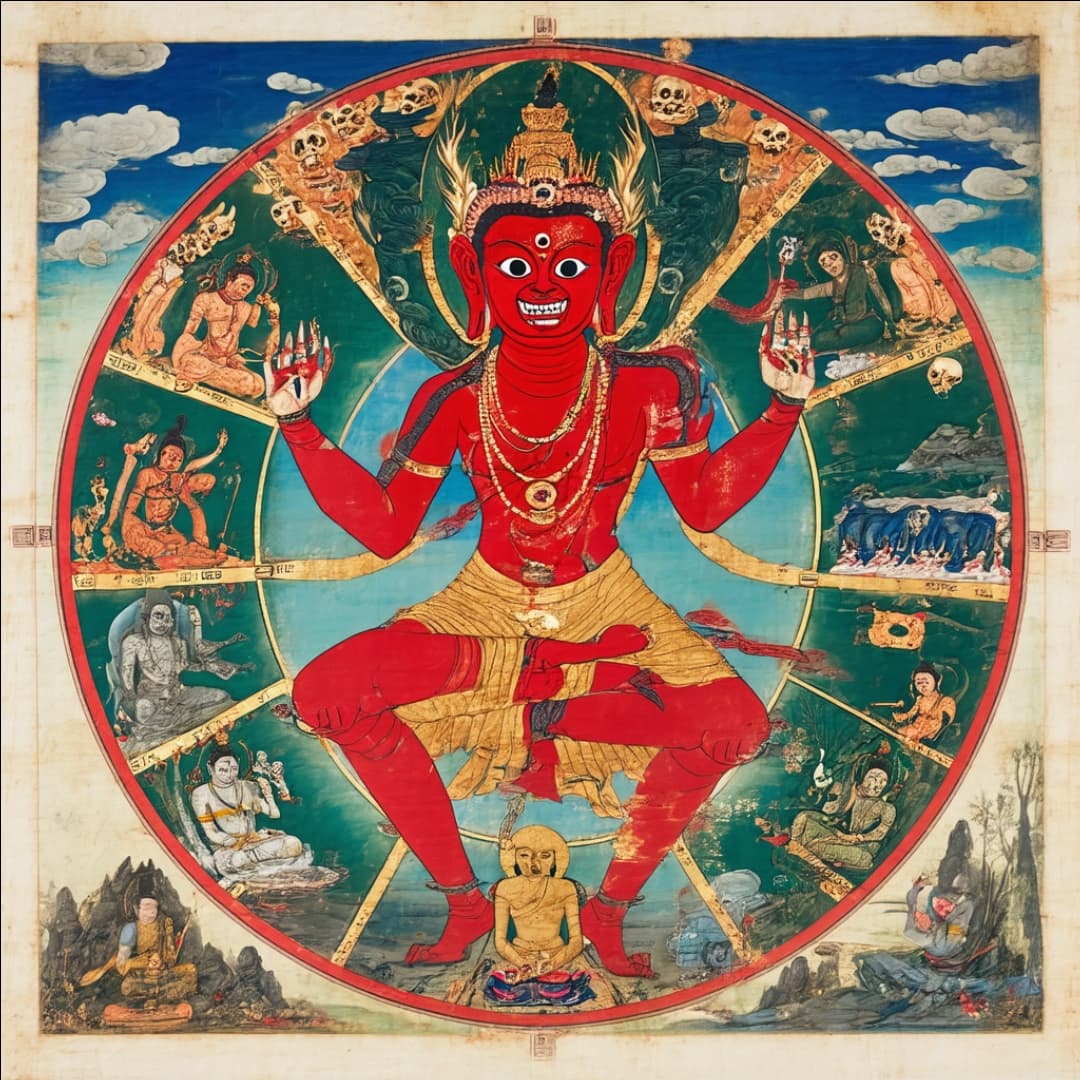
DESCRIPTION:
Inner Freedom and Growth: Living with Pain and Growing Despite It. Overcoming Suffering, Finding Peace and Strength, Creating Emotional Freedom.
Inner growth and freedom despite suffering: How we learn to deal with, live with and grow from unavoidable pain
Life is finite and involves unavoidable difficulties – separations, ageing, illness, death. This article examines, from a philosophical and psychological perspective, how we can constructively deal with the inevitable existential suffering. Important: This is NOT about "suffering making us stronger" or "reinterpreting trauma in a positive light". Man-made violence – abuse, war, assault – is never necessary, meaningful or "growth-promoting".
What it is about:
· unavoidable existential challenges and avoidable violence,
· dealing with stress and uncertainty, and
· Why accepting what we cannot change is sometimes helpful, without ever accepting injustice.
How does inner growth arise despite unavoidable suffering?
The finiteness of life is not a philosophical abstraction; it is the fundamental condition of human existence. Unlike immortal hypothetical beings who would have infinite time to postpone decisions, our mortality forces us to set priorities. Every decision in favour of something is simultaneously a decision against countless alternatives. This conscious choice between different possibilities is the first step towards an authentic life.
Existential philosophy describes how awareness of our finitude can lead us to make authentic decisions. Those who are aware of their mortality can live more consciously. Finitude can encourage reflection on priorities.
Viktor Frankl, a concentration camp survivor, wrote about his observations: Some people found ways to preserve their dignity even in extreme inhumanity. Important: This is NOT a statement that concentration camps "enable growth" or that victims "must make sense of their trauma". Frankl's observations have often been misunderstood and misused. Violence and injustice are never justified or "instructive." What Frankl described was the admirable resistance of individuals against total dehumanisation, not a justification of their suffering. From a psychological perspective, terror management theory shows how awareness of mortality can influence our behaviour; people sometimes invest more in relationships when they are reminded of finitude.
Does freedom require the possibility of failure?
But why is it a risk to seize opportunities in the first place? Because true freedom necessarily includes the possibility of failure. Jean-Paul Sartre's famous phrase, "Man is condemned to freedom," means precisely this: we cannot choose. Even not deciding is a decision. This freedom to choose is both a gift and a challenge.
Imagine a world in which you cannot fail. Every message you send will be received positively. Every flight you take would be a perfect experience. Every instrument you learn to play will be mastered effortlessly. Sounds tempting? In fact, it would be the hell of meaninglessness. Without the risk of failure, we could not truly grow.
Success only has meaning in contrast to possible failure. Courage only makes sense if there is something to fear. Love is only precious because it can be lost. The possibility of loss is not an unfortunate side effect of reality; it is the condition that gives anything meaning in the first place. Psychology shows empirically that flow experiences, moments of highest fulfilment, arise precisely at the boundary between being overchallenged and underchallenged. We need this challenge to grow.
Do we create deeper connections through vulnerability?
It doesn't matter if it makes us vulnerable or exposes us; we should open up. Brené Brown has shown, through decades of research, that vulnerability is at the core of authentic human connection. People who dare to be imperfect and vulnerable experience deeper relationships than those who live behind masks of perfection. This kind of openness is what enables genuine bonding.
Why is that? Because a genuine encounter requires two people to perceive each other in their humanity, not in their carefully curated facades. The mask protects us from hurt, but it also prevents genuine closeness. The things that make us most vulnerable – our fears, insecurities, longings – are precisely what make us human and lovable. We must move towards authenticity, not away from it.
Attachment theory shows that secure attachment does not come from perfection, but from the experience of being accepted even in our imperfections. Children do not develop secure attachments to perfect parents, but to "good enough" parents who can admit their mistakes and make amends. In relationships, fear of vulnerability leads to superficial connections. Those who never risk rejection will never experience the deep feeling of being truly seen and loved, nonetheless.
Does inner strength grow from consciously dealing with challenges?
First of all, this section refers to everyday challenges and existential issues, not trauma caused by violence. In the case of violence, resistance is healthy and appropriate, not "acceptance".
Allow yourself to be touched by life, by joy and also by difficulties. Stoic philosophy, especially Epictetus, wrote as early as the first century: "It is not things themselves that disturb us, but our judgements about them." The Stoics understood that pain is sometimes unavoidable, but that catastrophic thoughts can influence additional suffering. This insight can be helpful in everyday difficulties.
Modern understanding of pain confirms this: pain is a biological signal, and suffering is our psychological response to it. Pain research shows that the same level of pain is experienced very differently depending on context, meaning, and attention. A marathon runner experiences the same muscle pain differently than someone afraid of being seriously ill. Practice teaches to refine this distinction through conscious engagement with physical discomfort.
Acceptance and commitment therapy distinguishes between "clean pain" (unavoidable suffering) and "dirty pain" (suffering caused by resistance to pain). When you grieve, the grief itself is clean pain. When you condemn yourself for grieving or desperately try to avoid grief, you add dirty pain.
What change does acceptance of reality bring about?
Dialectical behavioural therapy teaches "radical acceptance": reality is what it is, not what we want it to be. This statement, which sounds bitter at first, is paradoxically liberating. As long as we fight against reality, against our finitude, against the possibility of loss, against the inevitability of pain, we waste energy in a hopeless struggle. This acceptance is the first step towards positive change.
Radical acceptance does not mean resignation or passivity. It means acknowledging what we cannot change so we can focus our energy on what we can influence. We cannot prevent people from dying, but we can choose how we live the time we have with them. We cannot guarantee that our love will be reciprocated, but we can choose to love authentically. This process of letting go of control and holding on to desires is central.
The Stoics distinguished between what is "within our power" (our judgements, values, actions) and what is not within our power (external events, the opinions of others, chance). Wisdom consists in recognising this distinction and investing our energy accordingly. Sanskrit speaks of "santosha", contentment with what is. This attitude promises peace and harmony, even when external circumstances are difficult.
How can we learn to live with impermanence?
The Buddhist concept of impermanence (anicca) describes how everything that exists is in flux. Nothing stays the same. Every encounter is also a farewell; every moment dies as it is born. This insight can be paralysing or liberating. When we perceive impermanence without fighting it, a deep inner peace arises.
When we accept that everything is impermanent, we can experience the present more intensely. The awareness that this moment with a loved one will never return allows us to be more present. Impermanence does not make things less valuable; it makes them more precious. Every breath in our practice reminds us of this: inhale, exhale, let go—a constant process of arising and passing away.
People who can accept impermanence experience less fear and a better quality of life. They do not cling desperately to what is permanent because they have understood that holding on causes suffering. They can enjoy what is, while it is. This attitude is not fatalistic, but realistic. It allows us to live life to the fullest without constantly striving for a "better" state. We gain freedom from the tyranny of our desires.
What does it mean to "risk your heart"?
Nothing. You are not in this world to "risk your heart". This statement is a sentimental platitude that pretends to be an existential truth. Nevertheless, we must love, we must commit ourselves, we must make ourselves vulnerable. We must do things that may fail, and love people who will die. It is often not easy not shy away from life, but to give ourselves over to it completely.
Otherwise, we may avoid pain, but at the cost of our own lives. It is, as Bukowski wrote, a kind of slow death. We achieve nothing meaningful if we never face up to things.
Research on meaning in life shows that people experience their lives as meaningful when they commit themselves to something beyond themselves, when they love, create and give. All these activities require vulnerability. Meaning does not arise from security, but from risk. The existentialists called this "engagement," the willingness to commit oneself despite the absurdity and uncertainty of life. Albert Camus's Sisyphus, who rolls the stone up the mountain again and again, is not a tragic hero; he is a model of human dignity.
How do we develop inner strength through external challenges?
Our culture often conveys that strength means being invulnerable, hiding emotions, showing no weakness and always remaining in control. This definition of strength leads to emotional isolation and psychological problems. However, true inner strength lies in the ability to be vulnerable and still carry on.
It takes more courage to say "I'm afraid" than to pretend to be fearless. It is more difficult to ask for help than to try to do everything on your own. It takes more strength of character to admit mistakes than to cover them up.
Resilience research shows that resilient people are not those who never fall, but those who can fall and get back up again. They have learned that failure is part of life, that vulnerability is human, and that asking for support shows strength. Men who have internalised the traditional image of masculinity (showing no emotion, always being strong) are more likely to develop depression, addiction and suicidal tendencies. Emotional openness is not a weakness; emotional suppression hurts and is self-destructive.
How do we find the courage for personal growth?
The courage to live, to open up, to fail and to get back up again is not an innate trait. It grows through practice, small steps of vulnerability, and enduring uncertainty. Every step on this path of growth is essential, even if it seems small.
Start small: tell someone you appreciate them. Share an uncertainty. Try something where you might fail. Each of these acts trains your "vulnerability muscle." Over time, it becomes easier, not because the risk disappears, but because you develop confidence in your ability to deal with the consequences. Self-care is often the first hurdle and an excellent training ground for this skill.
Self-efficacy research shows that people who believe they can master difficult situations develop confidence in their abilities. Every challenge overcome strengthens the conviction that "I can handle this." This conviction is more important than avoiding difficulties. Surround yourself with people who exemplify vulnerability. Authenticity is contagious. In communities where people talk honestly about their struggles, it is easier to be vulnerable yourself. Growth happens in a relationship, not in isolation.
Summary: Important insights into dealing with unavoidable suffering
Key insights, with important caveats:
• Distinguishing between unavoidable and avoidable suffering: Existential challenges (ageing, illness, death, separations) are part of life. Man-made violence (abuse, war, assaults) is NEVER necessary or "instructive". This distinction is fundamental. No one has to "give meaning" to violence or injustice or "grow" from it.
• Beware of "growth through trauma": The idea that trauma "makes us stronger" is scientifically controversial and hurtful to many victims. Some people develop new perspectives after traumatic experiences, but this never justifies the trauma and is not a goal of therapy.
• Freedom in everyday decisions: In our everyday lives, we often have more choices than we use. Using this freedom to take risks and communicate authentically can enrich our lives. This applies to privileged situations, not to contexts of violence or oppression.
• Vulnerability in secure relationships: In relationships where there is security and trust, vulnerability can lead to a deeper connection. Important: This does NOT apply to relationships involving power imbalances, violence or abuse. In such cases, self-protection, not openness, is required.
• Acceptance as a coping strategy: When it comes to things we cannot change (chronic illness, loss), acceptance can release energy. But: Acceptance NEVER means accepting injustice or tolerating violence. Acceptance refers to unchangeable facts, not changeable injustices.
• Transience as a philosophical concept: The realisation that nothing lasts forever can lead to presence in privileged contexts. For people in acute crises or with trauma, this is often not helpful and can even have a retraumatising effect.
• Relationships as a source of strength: Deep, secure relationships are a source of well-being. However, not everyone has access to secure relationships. This is a social injustice, not an individual weakness.
• Pain and suffering: The distinction between unavoidable pain and additional suffering caused by resistance can be helpful in some contexts. However, in cases of trauma, resistance is often a healthy protective reaction, not a "cause of suffering".
• Limits of self-help: Many of the approaches described here require a certain degree of stability, security and resources. In cases of severe trauma, acute crises or complex stress, professional support is essential.
• Criticism of self-perfection: The cultural pressure to "learn" or "grow" from every difficulty can create additional stress. It is okay to survive. It is OK not to learn a "lesson" from everything. Resilient people are not those who never suffer, but those who find the resources and support to cope.
• Social responsibility: Many forms of suffering are not "inevitable" but the result of social injustice: poverty, discrimination, lack of access to healthcare. Focusing on individual coping strategies must not distract from structural problems.
RELATED ARTICLES:
DESCRIPTION:
Inner Freedom and Growth: Living with Pain and Growing Despite It. Overcoming Suffering, Finding Peace and Strength, Creating Emotional Freedom.
Inner growth and freedom despite suffering: How we learn to deal with, live with and grow from unavoidable pain
Life is finite and involves unavoidable difficulties – separations, ageing, illness, death. This article examines, from a philosophical and psychological perspective, how we can constructively deal with the inevitable existential suffering. Important: This is NOT about "suffering making us stronger" or "reinterpreting trauma in a positive light". Man-made violence – abuse, war, assault – is never necessary, meaningful or "growth-promoting".
What it is about:
· unavoidable existential challenges and avoidable violence,
· dealing with stress and uncertainty, and
· Why accepting what we cannot change is sometimes helpful, without ever accepting injustice.
How does inner growth arise despite unavoidable suffering?
The finiteness of life is not a philosophical abstraction; it is the fundamental condition of human existence. Unlike immortal hypothetical beings who would have infinite time to postpone decisions, our mortality forces us to set priorities. Every decision in favour of something is simultaneously a decision against countless alternatives. This conscious choice between different possibilities is the first step towards an authentic life.
Existential philosophy describes how awareness of our finitude can lead us to make authentic decisions. Those who are aware of their mortality can live more consciously. Finitude can encourage reflection on priorities.
Viktor Frankl, a concentration camp survivor, wrote about his observations: Some people found ways to preserve their dignity even in extreme inhumanity. Important: This is NOT a statement that concentration camps "enable growth" or that victims "must make sense of their trauma". Frankl's observations have often been misunderstood and misused. Violence and injustice are never justified or "instructive." What Frankl described was the admirable resistance of individuals against total dehumanisation, not a justification of their suffering. From a psychological perspective, terror management theory shows how awareness of mortality can influence our behaviour; people sometimes invest more in relationships when they are reminded of finitude.
Does freedom require the possibility of failure?
But why is it a risk to seize opportunities in the first place? Because true freedom necessarily includes the possibility of failure. Jean-Paul Sartre's famous phrase, "Man is condemned to freedom," means precisely this: we cannot choose. Even not deciding is a decision. This freedom to choose is both a gift and a challenge.
Imagine a world in which you cannot fail. Every message you send will be received positively. Every flight you take would be a perfect experience. Every instrument you learn to play will be mastered effortlessly. Sounds tempting? In fact, it would be the hell of meaninglessness. Without the risk of failure, we could not truly grow.
Success only has meaning in contrast to possible failure. Courage only makes sense if there is something to fear. Love is only precious because it can be lost. The possibility of loss is not an unfortunate side effect of reality; it is the condition that gives anything meaning in the first place. Psychology shows empirically that flow experiences, moments of highest fulfilment, arise precisely at the boundary between being overchallenged and underchallenged. We need this challenge to grow.
Do we create deeper connections through vulnerability?
It doesn't matter if it makes us vulnerable or exposes us; we should open up. Brené Brown has shown, through decades of research, that vulnerability is at the core of authentic human connection. People who dare to be imperfect and vulnerable experience deeper relationships than those who live behind masks of perfection. This kind of openness is what enables genuine bonding.
Why is that? Because a genuine encounter requires two people to perceive each other in their humanity, not in their carefully curated facades. The mask protects us from hurt, but it also prevents genuine closeness. The things that make us most vulnerable – our fears, insecurities, longings – are precisely what make us human and lovable. We must move towards authenticity, not away from it.
Attachment theory shows that secure attachment does not come from perfection, but from the experience of being accepted even in our imperfections. Children do not develop secure attachments to perfect parents, but to "good enough" parents who can admit their mistakes and make amends. In relationships, fear of vulnerability leads to superficial connections. Those who never risk rejection will never experience the deep feeling of being truly seen and loved, nonetheless.
Does inner strength grow from consciously dealing with challenges?
First of all, this section refers to everyday challenges and existential issues, not trauma caused by violence. In the case of violence, resistance is healthy and appropriate, not "acceptance".
Allow yourself to be touched by life, by joy and also by difficulties. Stoic philosophy, especially Epictetus, wrote as early as the first century: "It is not things themselves that disturb us, but our judgements about them." The Stoics understood that pain is sometimes unavoidable, but that catastrophic thoughts can influence additional suffering. This insight can be helpful in everyday difficulties.
Modern understanding of pain confirms this: pain is a biological signal, and suffering is our psychological response to it. Pain research shows that the same level of pain is experienced very differently depending on context, meaning, and attention. A marathon runner experiences the same muscle pain differently than someone afraid of being seriously ill. Practice teaches to refine this distinction through conscious engagement with physical discomfort.
Acceptance and commitment therapy distinguishes between "clean pain" (unavoidable suffering) and "dirty pain" (suffering caused by resistance to pain). When you grieve, the grief itself is clean pain. When you condemn yourself for grieving or desperately try to avoid grief, you add dirty pain.
What change does acceptance of reality bring about?
Dialectical behavioural therapy teaches "radical acceptance": reality is what it is, not what we want it to be. This statement, which sounds bitter at first, is paradoxically liberating. As long as we fight against reality, against our finitude, against the possibility of loss, against the inevitability of pain, we waste energy in a hopeless struggle. This acceptance is the first step towards positive change.
Radical acceptance does not mean resignation or passivity. It means acknowledging what we cannot change so we can focus our energy on what we can influence. We cannot prevent people from dying, but we can choose how we live the time we have with them. We cannot guarantee that our love will be reciprocated, but we can choose to love authentically. This process of letting go of control and holding on to desires is central.
The Stoics distinguished between what is "within our power" (our judgements, values, actions) and what is not within our power (external events, the opinions of others, chance). Wisdom consists in recognising this distinction and investing our energy accordingly. Sanskrit speaks of "santosha", contentment with what is. This attitude promises peace and harmony, even when external circumstances are difficult.
How can we learn to live with impermanence?
The Buddhist concept of impermanence (anicca) describes how everything that exists is in flux. Nothing stays the same. Every encounter is also a farewell; every moment dies as it is born. This insight can be paralysing or liberating. When we perceive impermanence without fighting it, a deep inner peace arises.
When we accept that everything is impermanent, we can experience the present more intensely. The awareness that this moment with a loved one will never return allows us to be more present. Impermanence does not make things less valuable; it makes them more precious. Every breath in our practice reminds us of this: inhale, exhale, let go—a constant process of arising and passing away.
People who can accept impermanence experience less fear and a better quality of life. They do not cling desperately to what is permanent because they have understood that holding on causes suffering. They can enjoy what is, while it is. This attitude is not fatalistic, but realistic. It allows us to live life to the fullest without constantly striving for a "better" state. We gain freedom from the tyranny of our desires.
What does it mean to "risk your heart"?
Nothing. You are not in this world to "risk your heart". This statement is a sentimental platitude that pretends to be an existential truth. Nevertheless, we must love, we must commit ourselves, we must make ourselves vulnerable. We must do things that may fail, and love people who will die. It is often not easy not shy away from life, but to give ourselves over to it completely.
Otherwise, we may avoid pain, but at the cost of our own lives. It is, as Bukowski wrote, a kind of slow death. We achieve nothing meaningful if we never face up to things.
Research on meaning in life shows that people experience their lives as meaningful when they commit themselves to something beyond themselves, when they love, create and give. All these activities require vulnerability. Meaning does not arise from security, but from risk. The existentialists called this "engagement," the willingness to commit oneself despite the absurdity and uncertainty of life. Albert Camus's Sisyphus, who rolls the stone up the mountain again and again, is not a tragic hero; he is a model of human dignity.
How do we develop inner strength through external challenges?
Our culture often conveys that strength means being invulnerable, hiding emotions, showing no weakness and always remaining in control. This definition of strength leads to emotional isolation and psychological problems. However, true inner strength lies in the ability to be vulnerable and still carry on.
It takes more courage to say "I'm afraid" than to pretend to be fearless. It is more difficult to ask for help than to try to do everything on your own. It takes more strength of character to admit mistakes than to cover them up.
Resilience research shows that resilient people are not those who never fall, but those who can fall and get back up again. They have learned that failure is part of life, that vulnerability is human, and that asking for support shows strength. Men who have internalised the traditional image of masculinity (showing no emotion, always being strong) are more likely to develop depression, addiction and suicidal tendencies. Emotional openness is not a weakness; emotional suppression hurts and is self-destructive.
How do we find the courage for personal growth?
The courage to live, to open up, to fail and to get back up again is not an innate trait. It grows through practice, small steps of vulnerability, and enduring uncertainty. Every step on this path of growth is essential, even if it seems small.
Start small: tell someone you appreciate them. Share an uncertainty. Try something where you might fail. Each of these acts trains your "vulnerability muscle." Over time, it becomes easier, not because the risk disappears, but because you develop confidence in your ability to deal with the consequences. Self-care is often the first hurdle and an excellent training ground for this skill.
Self-efficacy research shows that people who believe they can master difficult situations develop confidence in their abilities. Every challenge overcome strengthens the conviction that "I can handle this." This conviction is more important than avoiding difficulties. Surround yourself with people who exemplify vulnerability. Authenticity is contagious. In communities where people talk honestly about their struggles, it is easier to be vulnerable yourself. Growth happens in a relationship, not in isolation.
Summary: Important insights into dealing with unavoidable suffering
Key insights, with important caveats:
• Distinguishing between unavoidable and avoidable suffering: Existential challenges (ageing, illness, death, separations) are part of life. Man-made violence (abuse, war, assaults) is NEVER necessary or "instructive". This distinction is fundamental. No one has to "give meaning" to violence or injustice or "grow" from it.
• Beware of "growth through trauma": The idea that trauma "makes us stronger" is scientifically controversial and hurtful to many victims. Some people develop new perspectives after traumatic experiences, but this never justifies the trauma and is not a goal of therapy.
• Freedom in everyday decisions: In our everyday lives, we often have more choices than we use. Using this freedom to take risks and communicate authentically can enrich our lives. This applies to privileged situations, not to contexts of violence or oppression.
• Vulnerability in secure relationships: In relationships where there is security and trust, vulnerability can lead to a deeper connection. Important: This does NOT apply to relationships involving power imbalances, violence or abuse. In such cases, self-protection, not openness, is required.
• Acceptance as a coping strategy: When it comes to things we cannot change (chronic illness, loss), acceptance can release energy. But: Acceptance NEVER means accepting injustice or tolerating violence. Acceptance refers to unchangeable facts, not changeable injustices.
• Transience as a philosophical concept: The realisation that nothing lasts forever can lead to presence in privileged contexts. For people in acute crises or with trauma, this is often not helpful and can even have a retraumatising effect.
• Relationships as a source of strength: Deep, secure relationships are a source of well-being. However, not everyone has access to secure relationships. This is a social injustice, not an individual weakness.
• Pain and suffering: The distinction between unavoidable pain and additional suffering caused by resistance can be helpful in some contexts. However, in cases of trauma, resistance is often a healthy protective reaction, not a "cause of suffering".
• Limits of self-help: Many of the approaches described here require a certain degree of stability, security and resources. In cases of severe trauma, acute crises or complex stress, professional support is essential.
• Criticism of self-perfection: The cultural pressure to "learn" or "grow" from every difficulty can create additional stress. It is okay to survive. It is OK not to learn a "lesson" from everything. Resilient people are not those who never suffer, but those who find the resources and support to cope.
• Social responsibility: Many forms of suffering are not "inevitable" but the result of social injustice: poverty, discrimination, lack of access to healthcare. Focusing on individual coping strategies must not distract from structural problems.
RELATED ARTICLES:
Newsletter
Möchten Sie informiert werden, wenn ich einen neuen Blogbeitrag veröffentliche? Tragen Sie sich gern hier ein.
Klicken Sie auf „Kostenlos abonnieren“, wenn Sie meine Datenschutzerklärung gelesen und akzeptiert haben. Ihre Einwilligung können Sie jederzeit widerrufen.
Newsletter
Möchten Sie informiert werden, wenn ich einen neuen Blogbeitrag veröffentliche? Tragen Sie sich gern hier ein.
Klicken Sie auf „Kostenlos abonnieren“, wenn Sie meine Datenschutzerklärung gelesen und akzeptiert haben. Ihre Einwilligung können Sie jederzeit widerrufen.