Maxxing fatigue
Maxxing fatigue: Maxxing with no end in sight, or the end of self-optimisation?
Maxxing fatigue: Maxxing with no end in sight, or the end of self-optimisation?
DESCRIPTION:
Sleepmaxxing, Fibermaxxing, Looksmaxxing. Optimisation has taken hold of every aspect of life. In 2026, the mood shifts: 84 per cent of mentions of Looksmaxxing are negative, and the wellness industry calls for a counter-movement.
Maxxing fatigue: How self-optimisation is currently burning itself out, and enjoyment is becoming the new goal
The Global Wellness Summit, one of the industry’s most influential trend-setting bodies, has declared a shift for 2026: an end to relentless optimisation, and a return to safety, connection and enjoyment. During the same period, the online mood shows just how tired the public has become of optimisation: ‘Looksmaxxing’ was mentioned over 806,000 times on social media between September 2025 and early 2026, with 84 per cent of these mentions negative. The era of Maxxing has passed its zenith, and the industry that fuelled it is the first to herald the counter-movement. This dual movement is worth a closer look, as the recovery from optimisation is itself becoming an optimisation project.
The career of a suffix: from looksmaxxing to maxxing fatigue
The suffix “-maxxing” originates from gaming forums, where it referred to maximising a game statistic. From there, it migrated to the Looksmaxxing scene, where it came to mean the aggressive maximisation of one’s own attractiveness. Skin logs, jawlines, and in extreme cases, surgical procedures and bone-smashing videos. Then it spread, across every aspect of daily life: Sleepmaxxing optimises sleep, Fibremaxxing optimises fibre intake, Proteinmaxxing optimises protein intake, Productivitymaxxing optimises the working day. Even retreat was given a label. Solo-Maxxing maximises solitude, Nonnamaxxing maximises the slow life.
This seamless proliferation contains a cultural diagnosis. If every aspect of life is given a ‘maximising’ verb, then optimisation has shifted from a specific activity to a fundamental mindset. Eating, sleeping, breathing, resting. Everything becomes a discipline with a target value, tracking and peak performance. It is precisely this totality that is now causing the trend to burn itself out. 84 per cent of negative mentions are a symptom of exhaustion from too much optimisation.
When health itself becomes a source of stress
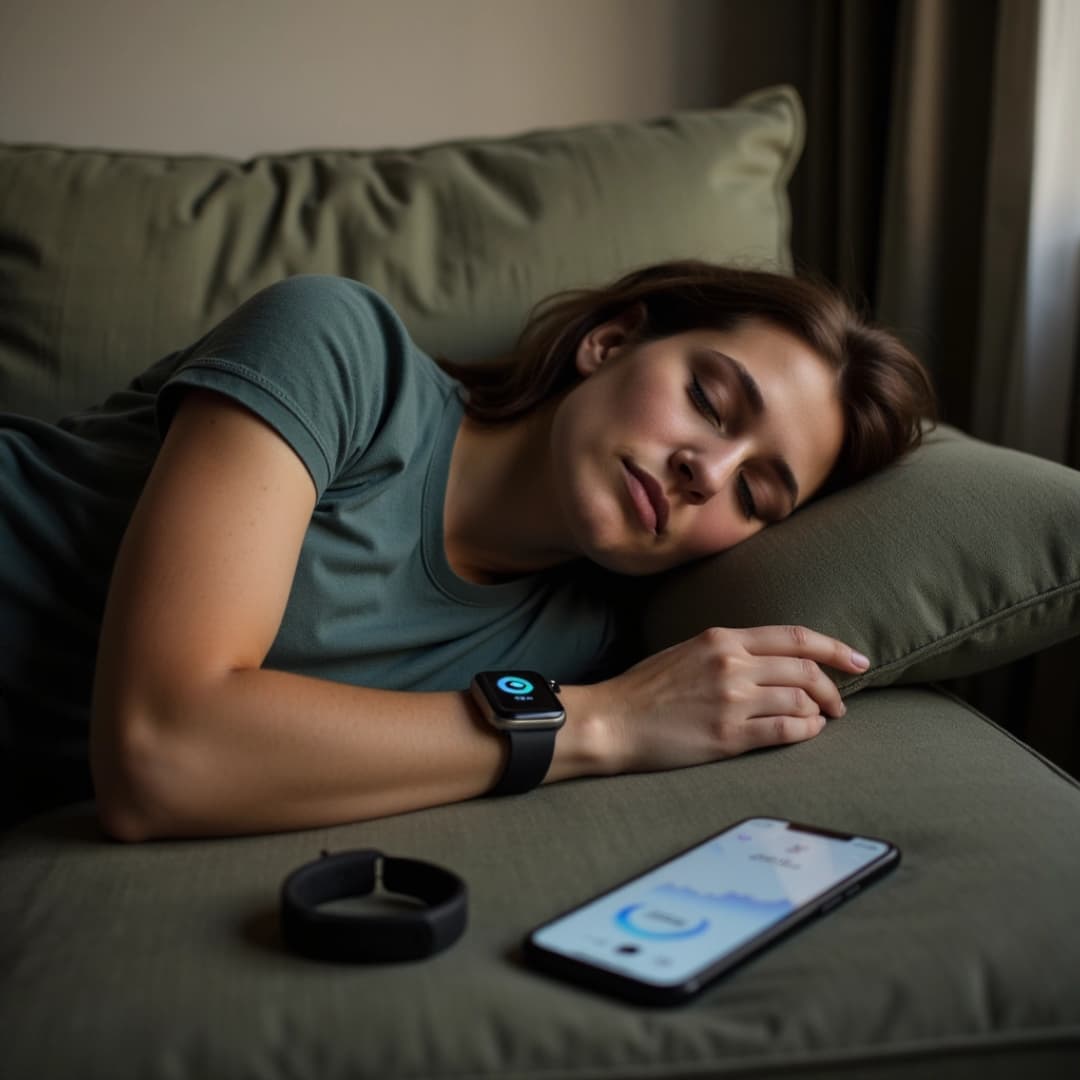
The psychological mechanics behind this are well described. Anyone who translates every habit into a metric turns their own life into a constant test. A missed run ruins the day. A poor sleep score causes anxiety even before you’ve got out of bed. Sleep medicine has even coined a specific term for this: orthosomnia describes the paradoxical disorder in which the dogged pursuit of perfect sleep actually prevents sleep. The measuring device generates the very anxiety it promises to alleviate.
Behind this lies an old clinical finding: perfectionism is a significant risk factor for anxiety, depression, eating disorders, chronic stress and burnout. The ‘maxxing’ culture has democratised perfectionism and equipped it with apps. It turns self-care into a performance discipline in which even resting has a target value. A 2025 survey shows just how high the cost is, particularly for young people: almost half of those under 24 considered surgery as part of ‘Looksmaxxing’, and over 55 per cent reported stress or anxiety relating to their own appearance.
Physical capital and optimisation as a showpiece
Why do people optimise themselves so visibly? Thorstein Veblen provides an answer; as early as 1899, he described how social status is displayed through conspicuous consumption – through goods and gestures that demonstrate one’s ability to afford them. The ‘Maxxing’ culture is the physical version of this display. The toned body, the flawless skin, the perfect sleep score are evidence of an investment that demands time, money and discipline. Those who display them demonstrate that they have these resources at their disposal.
This links the Maxxing trend to a line of thought that this blog has pursued in its piece on body capitalism: the body becomes capital to invest in, and whose returns are used to position oneself in the social marketplace. Optimisation is thus an economic gesture, carried out on one’s own body. And like any means of distinction, it loses its value as soon as everyone engages in it. When everyone is maximising, maximising no longer signals an advantage. This is precisely where fatigue sets in, and this is precisely where the industry senses the next business opportunity.
The counter-movement as optimisation in disguise
The wellness industry responds to this exhaustion with a narrative that initially sounds liberating: instead of optimising, one should now feel, connect, and enjoy. On closer reading, however, the old logic returns within the praise of pleasure. Pleasure becomes the new target, relaxation a discipline to be practised correctly. The day of rest becomes the ‘recovery protocol’, idleness the ‘intentional practice of leisure’, doing nothing yet another format complete with instructions, tracking and best practice. Anti-optimisation wears the disguise of optimisation.
This concept has a theoretical depth that Rousseau can illustrate. In his *Émile*, Rousseau outlines an education in which the child does what is intended, whilst remaining convinced that they are following their own free will. The instruction disappears from the command and moves into what is supposedly one’s own volition. The wellness industry’s shift towards pleasure operates along the same lines: the imperative “Optimise yourself” vanishes from the overt call to performance and returns as an inner need to do everything right, even whilst resting. One is no longer to drive oneself to perform; one is to drive oneself to relax, and the old tension sits at the table with us.
There is no escape from wearable culture.
The fatigue at Maxxing points to a real condition: a culture that has transformed every stir of life into a measured discipline and is exhausted by this totality. The need for less self-measurement is genuine. Its fate is that the market co-opted it the very moment it stirred. The day of rest becomes the marketed recovery protocol; idleness becomes a guided leisure practice; the need for a break becomes the next target value. Biohacking knows no escape, that it does not itself offer as a product.
This is precisely where the connection lies with Rousseau’s ‘gentle rule’ and Veblen’s ‘showpiece’. The imperative vanishes from the open call to performance and returns as a supposedly personal need to do everything right whilst enjoying oneself. What such a culture cannot sell is ‘good enough’: the body that is healthy without being maximised, the sleep that restores without being perfect, the day that succeeds without being exhausted. ‘Good enough’ carries no target value and yields no return, and that is why the culture of optimisation has quietly abolished it. The counter-movement it now proclaims does not bring it back. It sells tranquillity as the last discipline that was still free.
Summary: Maxxing fatigue and enjoyment as the new norm
• The Global Wellness Summit is proclaiming a counter-movement to over-optimisation for 2026; at the same time, 84 per cent of over 806,000 mentions of ‘Looksmaxxing’ (Sept. 2025) are negative by early 2026. The Maxxing era has passed its zenith.
• The suffix ‘–maxxing’ has spread from Looksmaxxing to Sleep-, Fibre-, Protein- and Productivitymaxxing, right through to Solo- and Nonnamaxxing. This comprehensive spread shows that optimisation has evolved from an activity into a fundamental mindset.
• Psychological mechanics: anyone who translates every habit into a metric turns life into an endurance test. Orthosomnia (the dogged pursuit of perfect sleep prevents sleep) is one example; perfectionism is a significant risk factor for anxiety, depression and burnout.
• Optimisation is demonstrative consumption at one’s own expense, a showcase of available resources that loses its value the moment everyone engages in it.
• The industry’s counter-movement sells enjoyment as the new target: recovery protocols, the intentional practice of leisure. The imperative disappears from the appeal and returns as a supposedly personal need.
• The need for less self-measurement is genuine, yet the industry immediately co-opts it again (enjoyment as a target, recovery protocols). There is no alternative to a market-driven exit from the culture of measurement, because every exit is offered as the next product. What it cannot sell is ‘good enough’—the body that is healthy without being maximised.
Related
DESCRIPTION:
Sleepmaxxing, Fibermaxxing, Looksmaxxing. Optimisation has taken hold of every aspect of life. In 2026, the mood shifts: 84 per cent of mentions of Looksmaxxing are negative, and the wellness industry calls for a counter-movement.
Maxxing fatigue: How self-optimisation is currently burning itself out, and enjoyment is becoming the new goal
The Global Wellness Summit, one of the industry’s most influential trend-setting bodies, has declared a shift for 2026: an end to relentless optimisation, and a return to safety, connection and enjoyment. During the same period, the online mood shows just how tired the public has become of optimisation: ‘Looksmaxxing’ was mentioned over 806,000 times on social media between September 2025 and early 2026, with 84 per cent of these mentions negative. The era of Maxxing has passed its zenith, and the industry that fuelled it is the first to herald the counter-movement. This dual movement is worth a closer look, as the recovery from optimisation is itself becoming an optimisation project.
The career of a suffix: from looksmaxxing to maxxing fatigue
The suffix “-maxxing” originates from gaming forums, where it referred to maximising a game statistic. From there, it migrated to the Looksmaxxing scene, where it came to mean the aggressive maximisation of one’s own attractiveness. Skin logs, jawlines, and in extreme cases, surgical procedures and bone-smashing videos. Then it spread, across every aspect of daily life: Sleepmaxxing optimises sleep, Fibremaxxing optimises fibre intake, Proteinmaxxing optimises protein intake, Productivitymaxxing optimises the working day. Even retreat was given a label. Solo-Maxxing maximises solitude, Nonnamaxxing maximises the slow life.
This seamless proliferation contains a cultural diagnosis. If every aspect of life is given a ‘maximising’ verb, then optimisation has shifted from a specific activity to a fundamental mindset. Eating, sleeping, breathing, resting. Everything becomes a discipline with a target value, tracking and peak performance. It is precisely this totality that is now causing the trend to burn itself out. 84 per cent of negative mentions are a symptom of exhaustion from too much optimisation.
When health itself becomes a source of stress
The psychological mechanics behind this are well described. Anyone who translates every habit into a metric turns their own life into a constant test. A missed run ruins the day. A poor sleep score causes anxiety even before you’ve got out of bed. Sleep medicine has even coined a specific term for this: orthosomnia describes the paradoxical disorder in which the dogged pursuit of perfect sleep actually prevents sleep. The measuring device generates the very anxiety it promises to alleviate.
Behind this lies an old clinical finding: perfectionism is a significant risk factor for anxiety, depression, eating disorders, chronic stress and burnout. The ‘maxxing’ culture has democratised perfectionism and equipped it with apps. It turns self-care into a performance discipline in which even resting has a target value. A 2025 survey shows just how high the cost is, particularly for young people: almost half of those under 24 considered surgery as part of ‘Looksmaxxing’, and over 55 per cent reported stress or anxiety relating to their own appearance.
Physical capital and optimisation as a showpiece
Why do people optimise themselves so visibly? Thorstein Veblen provides an answer; as early as 1899, he described how social status is displayed through conspicuous consumption – through goods and gestures that demonstrate one’s ability to afford them. The ‘Maxxing’ culture is the physical version of this display. The toned body, the flawless skin, the perfect sleep score are evidence of an investment that demands time, money and discipline. Those who display them demonstrate that they have these resources at their disposal.
This links the Maxxing trend to a line of thought that this blog has pursued in its piece on body capitalism: the body becomes capital to invest in, and whose returns are used to position oneself in the social marketplace. Optimisation is thus an economic gesture, carried out on one’s own body. And like any means of distinction, it loses its value as soon as everyone engages in it. When everyone is maximising, maximising no longer signals an advantage. This is precisely where fatigue sets in, and this is precisely where the industry senses the next business opportunity.
The counter-movement as optimisation in disguise
The wellness industry responds to this exhaustion with a narrative that initially sounds liberating: instead of optimising, one should now feel, connect, and enjoy. On closer reading, however, the old logic returns within the praise of pleasure. Pleasure becomes the new target, relaxation a discipline to be practised correctly. The day of rest becomes the ‘recovery protocol’, idleness the ‘intentional practice of leisure’, doing nothing yet another format complete with instructions, tracking and best practice. Anti-optimisation wears the disguise of optimisation.
This concept has a theoretical depth that Rousseau can illustrate. In his *Émile*, Rousseau outlines an education in which the child does what is intended, whilst remaining convinced that they are following their own free will. The instruction disappears from the command and moves into what is supposedly one’s own volition. The wellness industry’s shift towards pleasure operates along the same lines: the imperative “Optimise yourself” vanishes from the overt call to performance and returns as an inner need to do everything right, even whilst resting. One is no longer to drive oneself to perform; one is to drive oneself to relax, and the old tension sits at the table with us.
There is no escape from wearable culture.
The fatigue at Maxxing points to a real condition: a culture that has transformed every stir of life into a measured discipline and is exhausted by this totality. The need for less self-measurement is genuine. Its fate is that the market co-opted it the very moment it stirred. The day of rest becomes the marketed recovery protocol; idleness becomes a guided leisure practice; the need for a break becomes the next target value. Biohacking knows no escape, that it does not itself offer as a product.
This is precisely where the connection lies with Rousseau’s ‘gentle rule’ and Veblen’s ‘showpiece’. The imperative vanishes from the open call to performance and returns as a supposedly personal need to do everything right whilst enjoying oneself. What such a culture cannot sell is ‘good enough’: the body that is healthy without being maximised, the sleep that restores without being perfect, the day that succeeds without being exhausted. ‘Good enough’ carries no target value and yields no return, and that is why the culture of optimisation has quietly abolished it. The counter-movement it now proclaims does not bring it back. It sells tranquillity as the last discipline that was still free.
Summary: Maxxing fatigue and enjoyment as the new norm
• The Global Wellness Summit is proclaiming a counter-movement to over-optimisation for 2026; at the same time, 84 per cent of over 806,000 mentions of ‘Looksmaxxing’ (Sept. 2025) are negative by early 2026. The Maxxing era has passed its zenith.
• The suffix ‘–maxxing’ has spread from Looksmaxxing to Sleep-, Fibre-, Protein- and Productivitymaxxing, right through to Solo- and Nonnamaxxing. This comprehensive spread shows that optimisation has evolved from an activity into a fundamental mindset.
• Psychological mechanics: anyone who translates every habit into a metric turns life into an endurance test. Orthosomnia (the dogged pursuit of perfect sleep prevents sleep) is one example; perfectionism is a significant risk factor for anxiety, depression and burnout.
• Optimisation is demonstrative consumption at one’s own expense, a showcase of available resources that loses its value the moment everyone engages in it.
• The industry’s counter-movement sells enjoyment as the new target: recovery protocols, the intentional practice of leisure. The imperative disappears from the appeal and returns as a supposedly personal need.
• The need for less self-measurement is genuine, yet the industry immediately co-opts it again (enjoyment as a target, recovery protocols). There is no alternative to a market-driven exit from the culture of measurement, because every exit is offered as the next product. What it cannot sell is ‘good enough’—the body that is healthy without being maximised.
Related
Newsletter
Möchten Sie informiert werden, wenn ich einen neuen Blogbeitrag veröffentliche? Tragen Sie sich gern hier ein.
Klicken Sie auf „Kostenlos abonnieren“, wenn Sie meine Datenschutzerklärung gelesen und akzeptiert haben. Ihre Einwilligung können Sie jederzeit widerrufen.
Newsletter
Möchten Sie informiert werden, wenn ich einen neuen Blogbeitrag veröffentliche? Tragen Sie sich gern hier ein.
Klicken Sie auf „Kostenlos abonnieren“, wenn Sie meine Datenschutzerklärung gelesen und akzeptiert haben. Ihre Einwilligung können Sie jederzeit widerrufen.