ADHD
ADHD: Brain scans reveal three different types
ADHD: Brain scans reveal three different types
DESCRIPTION:
ADHD: Brain scans reveal three distinct types. An imaging study has identified three clearly distinguishable biotypes in the brains of children with ADHD. What the new brain scans mean for diagnosis, stimulants and identity.
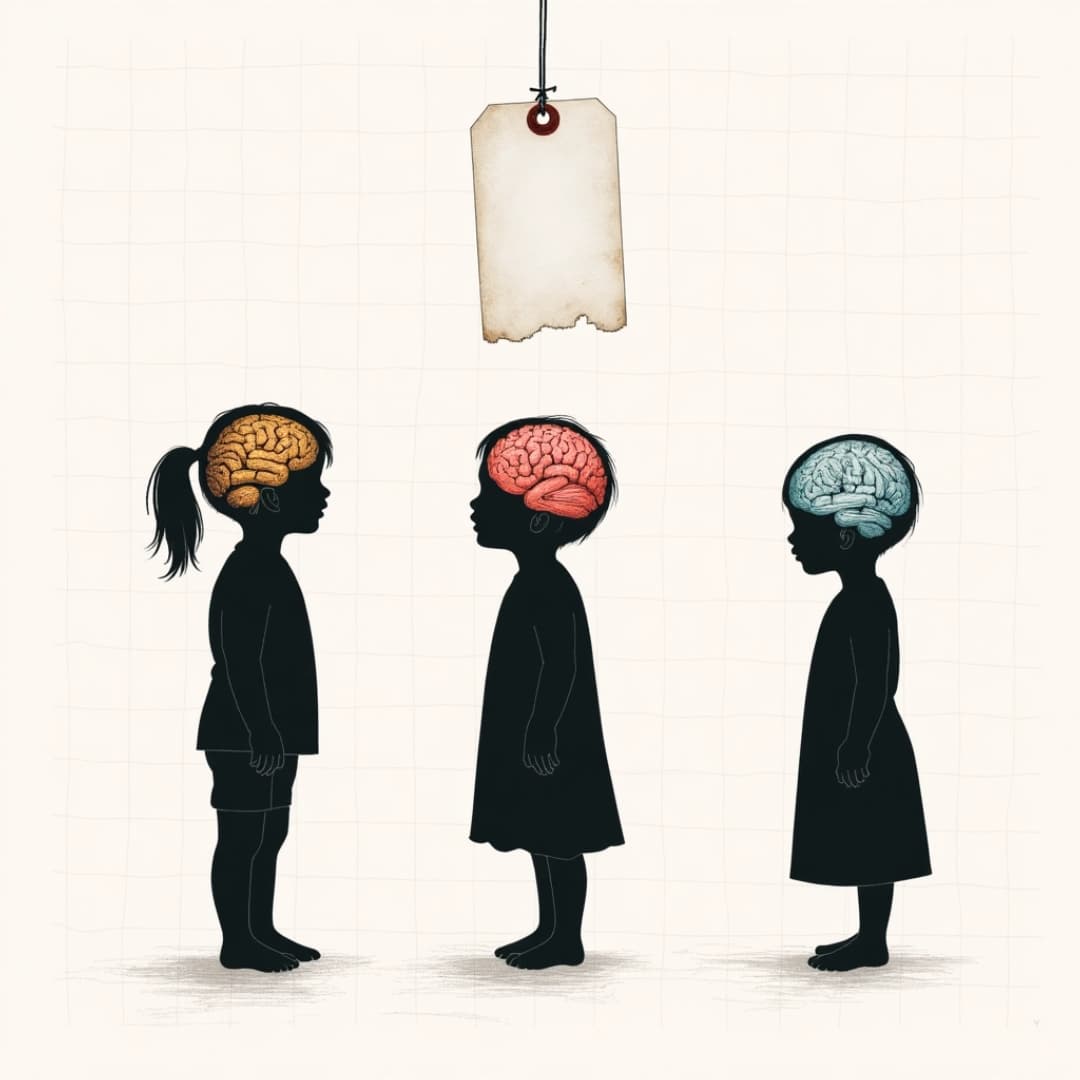
ADHD biotypes via brain scan: three different structural patterns in the brain, one diagnosis. Why is there no such thing as ‘ADHD’
We know surprisingly little about the most common neuropsychiatric diagnosis in childhood. For example, whether it actually refers to a single condition. A research group led by Qiyong Gong from Sichuan University has published an imaging study on this topic in JAMA Psychiatry (original title: Mapping ADHD Heterogeneity and Biotypes by Topological Deviations in Morphometric Similarity Networks, jamanetwork.com), which answers this question for the first time using a large dataset, and the answer is: probably not. In brain scans of over 3,500 children, the researchers identified three clearly distinguishable organisational patterns. Three ADHD biotypes, each with its own brain signature, its own genetic risk profile and, this is the clinically significant point, differing responses to medication. I gave an interview to WEB.DE magazine about this study (“Not all ADHD is the same”). Here is the detailed version of the questions, which naturally had to be kept brief in the interview format.
What is the core issue with ADHD? Beyond the ‘fidgety child’ stereotype?
At its core, ADHD is not a disorder of attention, but of its control. Those affected do not get too little attention. They have too little control over it. Attention follows the most interesting thing in the room rather than the most important; the reward system systematically weights immediate stimuli more heavily than later consequences; and the executive functions – planning, inhibition, perseverance, and switching tasks – operate unreliably. In everyday practice, this rarely manifests as a fidgety child but often as an exhausted adult: unpaid bills despite having the money, a string of half-finished projects, a postbox that becomes a source of dread, plus the chronic shame of failing at ‘simple things’ whilst complex ones are completed effortlessly. In contrast, there is hyperfocus, which can sustain concentration for hours on end once something truly captures their interest.
The most common misconception is therefore that ADHD is a discipline problem. The second is that it is a childhood diagnosis that children grow out of. What they do grow out of, however, is primarily the visible motor hyperactivity. This shifts, as it were, to the inner self, becoming constant tension and mental restlessness. The problems with organisation, emotional regulation and sustained attention remain.
Which three clinical forms of ADHD do diagnostic systems already recognise?
Diagnostic systems have long distinguished between three presentation forms (subtypes): the predominantly inattentive type (formerly often called ‘ADD’) – dreamy, slow to get going, easily distracted, frequently overlooked, particularly in girls; the predominantly hyperactive-impulsive type (motor-driven, interrupting, risk-taking) – the type that shapes the public perception of ADHD; and the combined type, which combines both symptom clusters and is the most commonly diagnosed clinically.
The term ‘presentation form’ is important. It was chosen deliberately because this classification is based on observable behaviour, not on causes. The subtype can also change over the course of a person’s life: the hyperactive primary school child often becomes an adult who fits the inattentive or combined profile. The clinical forms are snapshots of behaviour, not stable patterns. This is precisely where the new study comes in.
New brain scans: What the Sichuan University imaging study found in the brain
The research team led by Qiyong Gong analysed MRI scans of over 3,500 children at Chinese and US clinics (discovery sample: 446 affected children and 708 peers without ADHD; validation on an independent cohort of 123 scans as a control group). From the grey matter, they constructed so-called morphometric similarity networks; put simply, geometric maps of the brain’s surface, similar to topographical maps, which describe how similar different brain areas are in their structure and how they organise themselves into networks. An algorithm then searched for topological deviations in the morphometric similarity networks and, without knowledge of the symptoms, sorted the brains into clusters, identifying three clearly distinguishable subgroups.
The first biotype exhibits the most pronounced features of all three core symptoms: inattention, hyperactivity, and impulsivity, as well as widespread changes in the frontal lobe and the pallidum, a central structure involved in motor and drive control.
The second biotype is the most surprising: here, the changes are concentrated on the connections between the pallidum and the cingulate gyrus, a region involved in emotional processing. These children are less inattentive but more hyperactive and impulsive, with a distinct emotional component.
The third biotype struggles almost exclusively with attention control and shows narrowly defined changes in a single cerebral gyrus. Crucial to the robustness of the findings: the clusters were formed solely from brain data, without knowledge of the symptoms, and nevertheless overlap with clinical profiles. The findings were replicated in an independent cohort.
Do the three biotypes correspond to the three clinical forms of ADHD?
That is the most obvious question. And the answer is actually the most intriguing: no, not exactly. There are overlaps (the third biotype resembles the inattentive type, the first the combined type), but no one-to-one correspondence. The second biotype, with its emotional signature, has no direct counterpart in the clinical classification. Emotional dysregulation is still not included in the diagnostic criteria, even though many affected individuals experience it daily.
This means that the behavioural and neurological levels perceive reality differently. Clinical classifications are based on what is apparent. The biotypes are categorised according to underlying factors. The most important finding here is that these two classifications do not overlap. It explains why two children with the same diagnosis can be so different, why the same medication helps one but has little effect on the other, and why studies on ‘ADHD’ so often yield contradictory results: they may be averaging across three different conditions.
Biotype and neurotransmitter: Do the groups respond differently to stimulants?
The most clinically significant part of the new data concerns medication. The standard treatment for ADHD intervenes in the neurotransmitter system. Stimulants such as methylphenidate (known as Ritalin) increase the availability of dopamine and noradrenaline in the synaptic cleft, whilst the non-stimulant atomoxetine acts more selectively on the noradrenaline system. To this day, determining which neurotransmitter plays what role and to what extent largely involves trial and error: weeks or months spent weighing up the benefits against the side effects.
This is precisely where the hope of biotype research lies. Because the three groups differ in precisely those areas of the brain where these signalling molecules and their binding sites are particularly concentrated – in the frontal lobes, the pallidum and the dopamine-rich basal ganglia – it stands to reason that they respond differently to stimulants. The study provides initial indications of this, but no certainty. Should it be confirmed that one biotype responds reliably to methylphenidate and another more to atomoxetine, the agonising trial-and-error process could be shortened. That is still a long way off.
Will brain scans soon become part of ADHD diagnosis?
A level-headed approach is called for here, and this is important to me: No, not in the foreseeable future. The biotypes are group findings, statistical patterns drawn from hundreds of individual images. They do not allow for individual case diagnosis; you cannot put a single child in the scanner and identify a biotype. Anyone who soon sees brain-scan-based ADHD diagnostics being offered commercially (and this will happen; the market for diagnostic shortcuts is reliable) should recognise the deception: science is not there yet, and it does not claim to be.
The realistic benefit in the medium term lies elsewhere: in treatment planning. If it is confirmed that the biotypes respond differently to stimulants, the agonising trial-and-error process of adjusting medication could be shortened. And in the long term, the findings could change the diagnostic systems themselves – moving away from pure behavioural lists towards profiles that include emotional regulation. In this respect, the study also serves as a commentary on the DSM debate: it shows that the categories we work with are provisional administrative units of ignorance.
What do the findings mean for people with ADHD?
Here, the question leaves the laboratory and concerns practice. And the self-description of an entire generation. ADHD is no longer merely a diagnosis, but a category of identity: in profiles, communities, and personal narratives. What does it do to this identity when science says: What you have may be one of three different conditions’?
I regard the findings as a relief, not an insult. Many affected individuals are familiar with the nagging feeling of not quite fitting into their own image of ADHD. The woman whose main problem is emotional turmoil, not restlessness; the man who was never hyperactive and therefore considered himself ‘simply lazy’ for decades. Biotype research tells these people: your differences are real, they have a biological basis, and they are not a diagnostic error. The results are not the final word on a person. But they invite us to take a closer look. We should not expect more from them than that.
What does this mean in therapeutic terms?
The study’s findings already apply to current treatment: there is no one-size-fits-all ADHD therapy. What works is a combination of psychoeducation, structural adjustments to daily life, medication where appropriate, and psychotherapy that takes the individual’s specific profile seriously. For the emotional-impulsive profile, the focus is on emotion regulation and relationship patterns; for the inattentive profile, it is on self-organisation, addressing feelings of shame, and dealing with decades of being labelled as ‘lazy’. And for parents: the question is not which type a child ‘has’, but under what conditions they thrive. Biotype research will refine the map. The journey must continue to be undertaken with the person.
Summary: ADHD biotypes, clinical forms and the future of diagnosis
· A JAMA Psychiatry imaging study led by Qiyong Gong (Sichuan University; Mapping ADHD Heterogeneity and Biotypes by Topological Deviations in Morphometric Similarity Networks) analysed brain scans of over 3,500 children and identified three clearly distinguishable ADHD biotypes, each with its own brain signature, genetic profile and varying response to medication; replication in an independent cohort.
· Medication: The biotypes differ in the brain regions where neurotransmitters bind. Initial evidence suggests that the groups may respond differently to stimulants (methylphenidate/Ritalin) or atomoxetine. This would shorten the agonising trial-and-error process of titration, but has not yet been clinically confirmed.
· Biotype 1: most pronounced manifestation of all core symptoms, extensive changes in the frontal lobes and pallidum. Biotype 2: emotional component, changes in the connections between the pallidum and cingulate gyrus, greater hyperactivity/impulsivity. Biotype 3: predominantly attention problems, a narrowly defined change in a cerebral gyrus.
· The biotypes do not correspond one-to-one with the three clinical presentation types (inattentive, hyperactive-impulsive, combined). The behavioural and brain levels reflect reality in different ways.
· This explains clinical puzzles: heterogeneous response to medication, contradictory study findings, and the diversity of people with the same diagnosis.
· Brain scans will not become a diagnostic tool in the foreseeable future: group findings do not allow for individual case classification. Caution is advised regarding commercial scan-based diagnostic services.
· Realistic benefits: personalised treatment planning in the medium term; better diagnostic systems in the long term that take emotional dysregulation into account.
· For those affected, the findings are a relief: the diversity experienced within the diagnosis is real and has a biological basis. The research results invite closer examination. They are not the final word.
· The full interview on the study has been published in WEB.DE Magazine: “Not all ADHD is the same”.
Related
DESCRIPTION:
ADHD: Brain scans reveal three distinct types. An imaging study has identified three clearly distinguishable biotypes in the brains of children with ADHD. What the new brain scans mean for diagnosis, stimulants and identity.
ADHD biotypes via brain scan: three different structural patterns in the brain, one diagnosis. Why is there no such thing as ‘ADHD’
We know surprisingly little about the most common neuropsychiatric diagnosis in childhood. For example, whether it actually refers to a single condition. A research group led by Qiyong Gong from Sichuan University has published an imaging study on this topic in JAMA Psychiatry (original title: Mapping ADHD Heterogeneity and Biotypes by Topological Deviations in Morphometric Similarity Networks, jamanetwork.com), which answers this question for the first time using a large dataset, and the answer is: probably not. In brain scans of over 3,500 children, the researchers identified three clearly distinguishable organisational patterns. Three ADHD biotypes, each with its own brain signature, its own genetic risk profile and, this is the clinically significant point, differing responses to medication. I gave an interview to WEB.DE magazine about this study (“Not all ADHD is the same”). Here is the detailed version of the questions, which naturally had to be kept brief in the interview format.
What is the core issue with ADHD? Beyond the ‘fidgety child’ stereotype?
At its core, ADHD is not a disorder of attention, but of its control. Those affected do not get too little attention. They have too little control over it. Attention follows the most interesting thing in the room rather than the most important; the reward system systematically weights immediate stimuli more heavily than later consequences; and the executive functions – planning, inhibition, perseverance, and switching tasks – operate unreliably. In everyday practice, this rarely manifests as a fidgety child but often as an exhausted adult: unpaid bills despite having the money, a string of half-finished projects, a postbox that becomes a source of dread, plus the chronic shame of failing at ‘simple things’ whilst complex ones are completed effortlessly. In contrast, there is hyperfocus, which can sustain concentration for hours on end once something truly captures their interest.
The most common misconception is therefore that ADHD is a discipline problem. The second is that it is a childhood diagnosis that children grow out of. What they do grow out of, however, is primarily the visible motor hyperactivity. This shifts, as it were, to the inner self, becoming constant tension and mental restlessness. The problems with organisation, emotional regulation and sustained attention remain.
Which three clinical forms of ADHD do diagnostic systems already recognise?
Diagnostic systems have long distinguished between three presentation forms (subtypes): the predominantly inattentive type (formerly often called ‘ADD’) – dreamy, slow to get going, easily distracted, frequently overlooked, particularly in girls; the predominantly hyperactive-impulsive type (motor-driven, interrupting, risk-taking) – the type that shapes the public perception of ADHD; and the combined type, which combines both symptom clusters and is the most commonly diagnosed clinically.
The term ‘presentation form’ is important. It was chosen deliberately because this classification is based on observable behaviour, not on causes. The subtype can also change over the course of a person’s life: the hyperactive primary school child often becomes an adult who fits the inattentive or combined profile. The clinical forms are snapshots of behaviour, not stable patterns. This is precisely where the new study comes in.
New brain scans: What the Sichuan University imaging study found in the brain
The research team led by Qiyong Gong analysed MRI scans of over 3,500 children at Chinese and US clinics (discovery sample: 446 affected children and 708 peers without ADHD; validation on an independent cohort of 123 scans as a control group). From the grey matter, they constructed so-called morphometric similarity networks; put simply, geometric maps of the brain’s surface, similar to topographical maps, which describe how similar different brain areas are in their structure and how they organise themselves into networks. An algorithm then searched for topological deviations in the morphometric similarity networks and, without knowledge of the symptoms, sorted the brains into clusters, identifying three clearly distinguishable subgroups.
The first biotype exhibits the most pronounced features of all three core symptoms: inattention, hyperactivity, and impulsivity, as well as widespread changes in the frontal lobe and the pallidum, a central structure involved in motor and drive control.
The second biotype is the most surprising: here, the changes are concentrated on the connections between the pallidum and the cingulate gyrus, a region involved in emotional processing. These children are less inattentive but more hyperactive and impulsive, with a distinct emotional component.
The third biotype struggles almost exclusively with attention control and shows narrowly defined changes in a single cerebral gyrus. Crucial to the robustness of the findings: the clusters were formed solely from brain data, without knowledge of the symptoms, and nevertheless overlap with clinical profiles. The findings were replicated in an independent cohort.
Do the three biotypes correspond to the three clinical forms of ADHD?
That is the most obvious question. And the answer is actually the most intriguing: no, not exactly. There are overlaps (the third biotype resembles the inattentive type, the first the combined type), but no one-to-one correspondence. The second biotype, with its emotional signature, has no direct counterpart in the clinical classification. Emotional dysregulation is still not included in the diagnostic criteria, even though many affected individuals experience it daily.
This means that the behavioural and neurological levels perceive reality differently. Clinical classifications are based on what is apparent. The biotypes are categorised according to underlying factors. The most important finding here is that these two classifications do not overlap. It explains why two children with the same diagnosis can be so different, why the same medication helps one but has little effect on the other, and why studies on ‘ADHD’ so often yield contradictory results: they may be averaging across three different conditions.
Biotype and neurotransmitter: Do the groups respond differently to stimulants?
The most clinically significant part of the new data concerns medication. The standard treatment for ADHD intervenes in the neurotransmitter system. Stimulants such as methylphenidate (known as Ritalin) increase the availability of dopamine and noradrenaline in the synaptic cleft, whilst the non-stimulant atomoxetine acts more selectively on the noradrenaline system. To this day, determining which neurotransmitter plays what role and to what extent largely involves trial and error: weeks or months spent weighing up the benefits against the side effects.
This is precisely where the hope of biotype research lies. Because the three groups differ in precisely those areas of the brain where these signalling molecules and their binding sites are particularly concentrated – in the frontal lobes, the pallidum and the dopamine-rich basal ganglia – it stands to reason that they respond differently to stimulants. The study provides initial indications of this, but no certainty. Should it be confirmed that one biotype responds reliably to methylphenidate and another more to atomoxetine, the agonising trial-and-error process could be shortened. That is still a long way off.
Will brain scans soon become part of ADHD diagnosis?
A level-headed approach is called for here, and this is important to me: No, not in the foreseeable future. The biotypes are group findings, statistical patterns drawn from hundreds of individual images. They do not allow for individual case diagnosis; you cannot put a single child in the scanner and identify a biotype. Anyone who soon sees brain-scan-based ADHD diagnostics being offered commercially (and this will happen; the market for diagnostic shortcuts is reliable) should recognise the deception: science is not there yet, and it does not claim to be.
The realistic benefit in the medium term lies elsewhere: in treatment planning. If it is confirmed that the biotypes respond differently to stimulants, the agonising trial-and-error process of adjusting medication could be shortened. And in the long term, the findings could change the diagnostic systems themselves – moving away from pure behavioural lists towards profiles that include emotional regulation. In this respect, the study also serves as a commentary on the DSM debate: it shows that the categories we work with are provisional administrative units of ignorance.
What do the findings mean for people with ADHD?
Here, the question leaves the laboratory and concerns practice. And the self-description of an entire generation. ADHD is no longer merely a diagnosis, but a category of identity: in profiles, communities, and personal narratives. What does it do to this identity when science says: What you have may be one of three different conditions’?
I regard the findings as a relief, not an insult. Many affected individuals are familiar with the nagging feeling of not quite fitting into their own image of ADHD. The woman whose main problem is emotional turmoil, not restlessness; the man who was never hyperactive and therefore considered himself ‘simply lazy’ for decades. Biotype research tells these people: your differences are real, they have a biological basis, and they are not a diagnostic error. The results are not the final word on a person. But they invite us to take a closer look. We should not expect more from them than that.
What does this mean in therapeutic terms?
The study’s findings already apply to current treatment: there is no one-size-fits-all ADHD therapy. What works is a combination of psychoeducation, structural adjustments to daily life, medication where appropriate, and psychotherapy that takes the individual’s specific profile seriously. For the emotional-impulsive profile, the focus is on emotion regulation and relationship patterns; for the inattentive profile, it is on self-organisation, addressing feelings of shame, and dealing with decades of being labelled as ‘lazy’. And for parents: the question is not which type a child ‘has’, but under what conditions they thrive. Biotype research will refine the map. The journey must continue to be undertaken with the person.
Summary: ADHD biotypes, clinical forms and the future of diagnosis
· A JAMA Psychiatry imaging study led by Qiyong Gong (Sichuan University; Mapping ADHD Heterogeneity and Biotypes by Topological Deviations in Morphometric Similarity Networks) analysed brain scans of over 3,500 children and identified three clearly distinguishable ADHD biotypes, each with its own brain signature, genetic profile and varying response to medication; replication in an independent cohort.
· Medication: The biotypes differ in the brain regions where neurotransmitters bind. Initial evidence suggests that the groups may respond differently to stimulants (methylphenidate/Ritalin) or atomoxetine. This would shorten the agonising trial-and-error process of titration, but has not yet been clinically confirmed.
· Biotype 1: most pronounced manifestation of all core symptoms, extensive changes in the frontal lobes and pallidum. Biotype 2: emotional component, changes in the connections between the pallidum and cingulate gyrus, greater hyperactivity/impulsivity. Biotype 3: predominantly attention problems, a narrowly defined change in a cerebral gyrus.
· The biotypes do not correspond one-to-one with the three clinical presentation types (inattentive, hyperactive-impulsive, combined). The behavioural and brain levels reflect reality in different ways.
· This explains clinical puzzles: heterogeneous response to medication, contradictory study findings, and the diversity of people with the same diagnosis.
· Brain scans will not become a diagnostic tool in the foreseeable future: group findings do not allow for individual case classification. Caution is advised regarding commercial scan-based diagnostic services.
· Realistic benefits: personalised treatment planning in the medium term; better diagnostic systems in the long term that take emotional dysregulation into account.
· For those affected, the findings are a relief: the diversity experienced within the diagnosis is real and has a biological basis. The research results invite closer examination. They are not the final word.
· The full interview on the study has been published in WEB.DE Magazine: “Not all ADHD is the same”.
Related
Newsletter
Would you like to be notified when I publish a new blog post? Sign up here.
Click "Subscribe for free" if you have read and accepted my privacy policy. You can revoke your consent at any time.
Newsletter
Would you like to be notified when I publish a new blog post? Sign up here.
Click "Subscribe for free" if you have read and accepted my privacy policy. You can revoke your consent at any time.