Against Fear
Against Fear: Rituals against Fear, Anxiety and Panic – Origin and Evolution
Against Fear: Rituals against Fear, Anxiety and Panic – Origin and Evolution
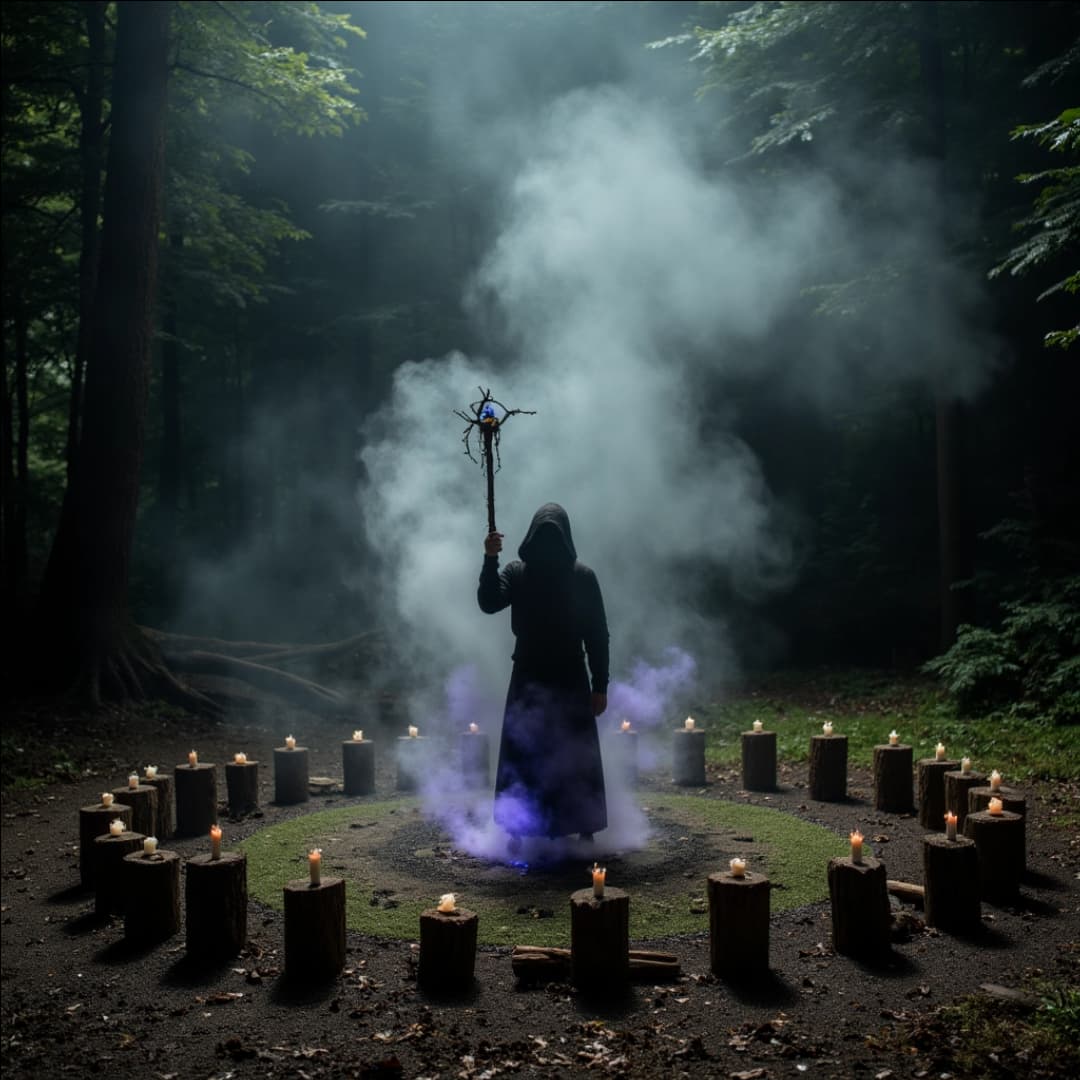
DESCRIPTION:
Rituals of fear: origins and evolution – historical rituals against fear, anxiety and panic. Why we fear and what triggers fear.
The evolution of fear and panic: How madness and fear shape our era – origin, triggers and definition
What it's about:
· A fascinating journey through the history of the human psyche
· how fear and panic are not merely modern diseases of civilisation, but are deeply rooted in evolution
· the shamanic rituals of Siberia
· The medical knowledge of antiquity through to modern neurobiology
· the historical definition of madness, and
· What we can learn from past eras for dealing with fear today.
This article is worth reading for anyone who wants to understand why we feel the way we do and how ancient knowledge can enrich modern therapies.
Has fear always been a deadly companion to humanity?
In today's technologically advanced world, we tend to view fear and panic attacks as modern phenomena – the price we pay for our stressful lifestyles. But when we broaden our perspective, we realise that these feelings are as old as humanity itself. Even our earliest ancestors knew the oppressive feeling when a sabre-toothed tiger rustled in the bushes or an enemy tribe attacked. Back then, the threat was often physical and immediately deadly, but the physiological reaction was the same as what we feel today when we miss a deadline or stand in a crowded underground train.
Historical accounts show that fear is not a modern invention. What has changed is the context and interpretation. In earlier times, when survival was at stake every day, constant alertness was essential. However, even then, some conditions went beyond normal fear and paralysed those affected. These were often interpreted spiritually, but at their core, they were the exact neurobiological mechanisms that we treat in practice today. The history of fear is thus also a history of the human will to survive.
It can be comforting to understand that we are not the first people to struggle with these intense feelings. We are part of a long tradition of people who have had to find ways to deal with the unknown and the threatening. Whether in Stone Age caves or the skyscrapers of Berlin, the basic feeling remains the same. It is a universal part of the human experience that connects us, even if the triggers have changed over the millennia.
Is fear just a remnant of evolution, or is it vital for survival?
To understand the origins of panic, we need to look deep into our biological history. Evolution has equipped us with a highly effective alarm system. Fear is not a flaw in the system, but an essential function for survival. It mobilises energy reserves, sharpens the senses, and prepares the body for fight-or-flight. Without this system, our ancestors would have been easy prey. The problem only arises when this system reacts too sensitively or kicks in when there is no real danger.
A key factor here is the amygdala, a small, almond-shaped complex in the brain. It constantly scans our environment for risks and dangers. If it detects a threat, it immediately signals the release of adrenaline and cortisol. This chemical cascade is responsible for the physical reaction: the heart beats faster, and the muscles tense up. In the wild, this saves lives; in the modern office or supermarket, it leads to what we know as a panic attack. Evolution has not optimised our brains for PowerPoint presentations, but for survival in a hostile environment.
It is therefore important to understand that we do not need to fear that our body is 'broken' when we experience panic. On the contrary, it is functioning almost too well. It is trying to protect us, but with outdated means in a new environment. This realisation is the first step towards recovery. When we understand that fear is a biological protective function, we can stop fighting it and start regulating it.
How did the ancient world define madness?
Long before modern diagnostic criteria existed, scholars were studying the human psyche. In ancient times, especially in ancient Greece, people began to move away from purely religious explanations. Hippocrates, often referred to as the father of medicine, described symptoms such as palpitations, dizziness and fainting in the 5th century BC. However, he often mistakenly attributed them to "hysteria", a term that shaped the understanding of mental illness for a long time. Nevertheless, this was an important step: away from punishment by the gods and towards a physical definition.
Hippocrates and his contemporaries sought natural causes for what was often referred to as madness at the time. They developed the doctrine of the four humours and believed that an imbalance of these humours could lead to melancholy or mania. Although this theory is outdated from today's perspective, it laid the foundation for the idea that mental health problems can have biological roots. Ancient physicians attempted to restore balance through diet, baths, and conversation.
In this era, the boundary between philosophy and medicine was fluid. It was recognised that the mind and body form a unity. The patient's well-being depended not only on their organs, but also on their lifestyle and thoughts. This holistic view was partially lost in the course of history and is now being laboriously rediscovered in modern psychosomatics. Antiquity teaches us that we must always view human beings as a whole.
Was mental illness misunderstood as possession in the Middle Ages?
With the decline of antiquity and the rise of the Middle Ages, views on the psyche changed dramatically. Superstition often dominated in Europe. Mental disorders were frequently not seen as illnesses, but as signs of sin or demonic possession. This led to cruel practices such as exorcisms or the persecution of alleged witches. Those who behaved differently, who heard voices or were shaken by panic, lived dangerously.
But there were rays of hope, especially in the Islamic world. In 1025, Ibn Sina (known in the West as Avicenna) wrote his Canon of Medicine. He described forms of sudden fear not as possession, but as neuropsychological disorders. Ibn Sina was a visionary. He wrote: "The movements of the soul begin in the heart and manifest themselves in the body." He recognised that strong emotions can change the pulse and affect the complexion. His insight that emotional and spiritual states directly control physical health anticipated principles now considered proven in modern stress research.
While in Europe, people often prayed or resorted to torture to exorcise the "demon" of fear, doctors such as Ibn Sina were already using approaches that we would today describe as psychosomatic. They understood that a symptom such as palpitations could be caused by mental suffering. Unfortunately, it took many centuries for this knowledge to become widely accepted in the West. The Middle Ages show us impressively how much our culture determines how we interpret and treat illness and suffering.
What do ancient rituals such as the Zār teach us about dealing with fear?
Many historical societies intuitively understood that logical arguments cannot calm a person in panic ("There is no danger"), but rather that it is through the senses. In parts of North Africa (Egypt and Sudan) and the Middle East, there is a tradition still practised today: Zār. Women primarily practise this ritual and address symptoms that would be highly familiar to a modern psychiatrist: shortness of breath, tightness in the chest and uncontrollable trembling.
In the context of the Zār, these symptoms are interpreted as possession by a restless spirit. Psychologically speaking, this interpretation offers an enormous advantage: it relieves shame. If a spirit has taken possession of me, I am not "weak" or "crazy". The community comes together, drums are played, people dance, and incense is burned. This ritual offers a structured catharsis. It allows the sick to express their feelings to the extreme without being judged.
We find similar mechanisms among the Evenki peoples in Siberia. States of extreme fear or emotional paralysis are often interpreted here as the "call of the spirits". The shaman uses a large drum to fall into a trance and integrate the fear. The method here is inclusion rather than isolation. The affected person is not locked away, but brought into the centre of the community. This shows us how important social support and rhythmic sensory stimuli (music, dance) are for regulating fear – an aspect that we often forget today.
What happens in the brain when panic strikes?
When we move from rituals to biology, we quickly end up back in the realm of science. What exactly happens when a panic attack overwhelms us? The starting point is often the amygdala, as mentioned above. It fires warning signals even before our consciousness has registered the situation. This leads to a massive release of stress hormones, especially adrenaline and noradrenaline.
These hormones affect the entire body. Blood pressure skyrockets, and the heart begins to race (tachycardia) to pump blood to the muscles. Breathing becomes shallow and rapid, which paradoxically often leads to a feeling of breathlessness. Blood is drawn away from the digestive tract and skin (hence the paleness and nausea) and directed to the extremities. All this happens in a fraction of a second. For the brain, the body is now ready for a life-and-death struggle.
The problem with panic disorder is that this mechanism misfires. There is no tiger. The pent-up energy cannot be released through fight or flight. It remains stuck in the body and manifests as trembling, dizziness, or a feeling of going crazy. Many sufferers mistakenly interpret these massive physical reactions as a heart attack or stroke, which only increases their anxiety. A vicious circle develops in which the fear of fear (anticipatory anxiety) becomes the actual illness.
Why do more people suffer from anxiety disorders today?
We live in an age of fear. Studies suggest that more and more people are suffering from anxiety disorders. But why is this the case? Are we not safer than ever before? Paradoxically, one reason could be precisely this safety. Since we no longer face existential threats from predators, our brains project their alertness onto abstract dangers: climate change, pensions, social rejection, or job loss.
In addition, our world has become highly complex and unpredictable. Our brains love predictability and patterns. The constant flood of information, constant availability and social comparison on social media keep our nervous system in a permanent state of arousal. We hardly ever get any rest. Modern life offers little room for natural stress relief. We sit all day while our bodies are full of stress hormones.
Another aspect is diagnosis. In the past, people with anxiety disorders might have been dismissed as "nervous" or "eccentric". Today, we have more precise terms and less stigma, which means more people seek help, as reflected in the statistics. Nevertheless, there is no denying that the demands of the modern era are fertile ground for mental stress. Ironically, the pressure to be permanently happy and productive often leads to unhappiness and panic.
From agoraphobia to panic: what forms can fear take?
Not all anxiety is the same. In psychology and psychiatry, we distinguish between different forms. On the one hand, there is generalised anxiety disorder, in which those affected worry almost constantly ("What if ..."). Then there are specific phobias, such as the fear of spiders or heights, which are usually manageable as long as the trigger is avoided. A particularly limiting form is agoraphobia.
People who suffer from agoraphobia fear situations from which it would be difficult to escape or in which no help is available (e.g. crowds, public places, travelling alone). This often develops as a result of panic attacks: people avoid areas where they have previously experienced panic. This can go so far that they no longer leave the house. Here we see how fear begins to control life.
Social phobia is also widespread – the excessive fear of negative evaluation by others. What they all have in common is that reason often cannot overcome emotion. The person affected usually knows rationally that the underground is not dangerous, but their emotional brain sends a "mortal danger" signal. Understanding these different facets is essential, as many fears require different treatment approaches. Not everyone who experiences panic has agoraphobia, and not every fear is pathological.
From exorcism to modern psychiatry: how has the method changed?
The history of treatment is as wild as the history of the disease itself. As mentioned, methods ranged from spiritual rituals to brutal interventions. An extreme example is trepanation – drilling holes in the skull to let evil spirits (or pressure) escape. Over time, understanding changed. With the advent of modern psychiatry and research in the 19th and 20th centuries, a systematic search for solutions began.
Sigmund Freud attempted to cure anxiety through psychoanalysis and the uncovering of repressed conflicts. Later came the behaviourists, who showed that anxiety is often learned and can be "unlearned" through confrontation. Today, cognitive behavioural therapy is the gold standard. It helps patients to question their thought patterns and face the situations they fear.
Pharmacology developed in parallel. Drugs such as benzodiazepines can suppress panic extremely quickly. They act on GABA receptors in the brain, providing immediate relaxation. But they come with a high risk: they are highly addictive and do not solve the root cause of the problem. Although some patients benefit in the short term, treatment with medication alone is often not sustainable in the long term. Modern science is therefore attempting to combine biological and psychotherapeutic approaches.
Can we overcome anxiety without medication?
The question of whether we can control panic without chemicals preoccupies many psychologists and sufferers. The answer is a cautious yes, but it requires work. Interestingly, we are returning to methods that resemble the old rituals. Somatic (body-oriented) therapies are gaining in importance. They assume that we must use the body to calm the mind.
Breathing techniques are central to this. Since shortness of breath is a core symptom, conscious, deep exhalation can signal to the brain: "We are safe." Rhythm also plays a role. Similar to drumming in the Zār ritual, rhythmic walking, humming or tapping can help regulate the nervous system. Neurofeedback is another modern technique in which patients learn to consciously control their brain waves – a kind of high-tech meditation.
We must learn not to suppress emotions, but to let them flow through the body. This is often unsettling and exhausting, but it is the only way to integrate fear in the long term. It is not about never feeling fear again (that would be inhuman), but about ensuring that fear no longer paralyses us. We must reconnect the fear centre in our brain with the prefrontal cortex, the seat of reason.
Summary: The most important points at a glance
· Historical constant: Fear and panic are not purely diseases of civilisation, but have accompanied humanity since the beginning of time. Even in ancient times and the Middle Ages, people sought explanations and cures.
· Biological roots: Fear is an evolutionarily meaningful response (fight-or-flight), controlled by the amygdala and hormones such as adrenaline.
· Physical symptoms: Panic manifests itself physically through rapid heartbeat, increased blood pressure and shortness of breath, which is often mistakenly interpreted as life-threatening (heart attack).
· Rituals as role models: Ancient traditions such as the Zār cult or shamanism used community, rhythm and trance for regulation – elements that are being rediscovered today in body therapy.
· Modern therapies: The path led from exorcism and trepanation to psychotherapy and medication. While medication helps quickly but can be addictive, modern somatic approaches aim at sustainable regulation of the nervous system.
· Acceptance rather than struggle: The key to coping often lies not in suppressing fear, but in understanding its function and its physical integration.
RELATED ARTICLES:
Halloween: From Samhain, witches and art history
Anger in history: symbolism, madness and morality in the Middle Ages
Childhood trauma reactions – what happens in the brain during extreme fear
Anxiety Affects - Understanding Childhood Fears and Anxieties
DESCRIPTION:
Rituals of fear: origins and evolution – historical rituals against fear, anxiety and panic. Why we fear and what triggers fear.
The evolution of fear and panic: How madness and fear shape our era – origin, triggers and definition
What it's about:
· A fascinating journey through the history of the human psyche
· how fear and panic are not merely modern diseases of civilisation, but are deeply rooted in evolution
· the shamanic rituals of Siberia
· The medical knowledge of antiquity through to modern neurobiology
· the historical definition of madness, and
· What we can learn from past eras for dealing with fear today.
This article is worth reading for anyone who wants to understand why we feel the way we do and how ancient knowledge can enrich modern therapies.
Has fear always been a deadly companion to humanity?
In today's technologically advanced world, we tend to view fear and panic attacks as modern phenomena – the price we pay for our stressful lifestyles. But when we broaden our perspective, we realise that these feelings are as old as humanity itself. Even our earliest ancestors knew the oppressive feeling when a sabre-toothed tiger rustled in the bushes or an enemy tribe attacked. Back then, the threat was often physical and immediately deadly, but the physiological reaction was the same as what we feel today when we miss a deadline or stand in a crowded underground train.
Historical accounts show that fear is not a modern invention. What has changed is the context and interpretation. In earlier times, when survival was at stake every day, constant alertness was essential. However, even then, some conditions went beyond normal fear and paralysed those affected. These were often interpreted spiritually, but at their core, they were the exact neurobiological mechanisms that we treat in practice today. The history of fear is thus also a history of the human will to survive.
It can be comforting to understand that we are not the first people to struggle with these intense feelings. We are part of a long tradition of people who have had to find ways to deal with the unknown and the threatening. Whether in Stone Age caves or the skyscrapers of Berlin, the basic feeling remains the same. It is a universal part of the human experience that connects us, even if the triggers have changed over the millennia.
Is fear just a remnant of evolution, or is it vital for survival?
To understand the origins of panic, we need to look deep into our biological history. Evolution has equipped us with a highly effective alarm system. Fear is not a flaw in the system, but an essential function for survival. It mobilises energy reserves, sharpens the senses, and prepares the body for fight-or-flight. Without this system, our ancestors would have been easy prey. The problem only arises when this system reacts too sensitively or kicks in when there is no real danger.
A key factor here is the amygdala, a small, almond-shaped complex in the brain. It constantly scans our environment for risks and dangers. If it detects a threat, it immediately signals the release of adrenaline and cortisol. This chemical cascade is responsible for the physical reaction: the heart beats faster, and the muscles tense up. In the wild, this saves lives; in the modern office or supermarket, it leads to what we know as a panic attack. Evolution has not optimised our brains for PowerPoint presentations, but for survival in a hostile environment.
It is therefore important to understand that we do not need to fear that our body is 'broken' when we experience panic. On the contrary, it is functioning almost too well. It is trying to protect us, but with outdated means in a new environment. This realisation is the first step towards recovery. When we understand that fear is a biological protective function, we can stop fighting it and start regulating it.
How did the ancient world define madness?
Long before modern diagnostic criteria existed, scholars were studying the human psyche. In ancient times, especially in ancient Greece, people began to move away from purely religious explanations. Hippocrates, often referred to as the father of medicine, described symptoms such as palpitations, dizziness and fainting in the 5th century BC. However, he often mistakenly attributed them to "hysteria", a term that shaped the understanding of mental illness for a long time. Nevertheless, this was an important step: away from punishment by the gods and towards a physical definition.
Hippocrates and his contemporaries sought natural causes for what was often referred to as madness at the time. They developed the doctrine of the four humours and believed that an imbalance of these humours could lead to melancholy or mania. Although this theory is outdated from today's perspective, it laid the foundation for the idea that mental health problems can have biological roots. Ancient physicians attempted to restore balance through diet, baths, and conversation.
In this era, the boundary between philosophy and medicine was fluid. It was recognised that the mind and body form a unity. The patient's well-being depended not only on their organs, but also on their lifestyle and thoughts. This holistic view was partially lost in the course of history and is now being laboriously rediscovered in modern psychosomatics. Antiquity teaches us that we must always view human beings as a whole.
Was mental illness misunderstood as possession in the Middle Ages?
With the decline of antiquity and the rise of the Middle Ages, views on the psyche changed dramatically. Superstition often dominated in Europe. Mental disorders were frequently not seen as illnesses, but as signs of sin or demonic possession. This led to cruel practices such as exorcisms or the persecution of alleged witches. Those who behaved differently, who heard voices or were shaken by panic, lived dangerously.
But there were rays of hope, especially in the Islamic world. In 1025, Ibn Sina (known in the West as Avicenna) wrote his Canon of Medicine. He described forms of sudden fear not as possession, but as neuropsychological disorders. Ibn Sina was a visionary. He wrote: "The movements of the soul begin in the heart and manifest themselves in the body." He recognised that strong emotions can change the pulse and affect the complexion. His insight that emotional and spiritual states directly control physical health anticipated principles now considered proven in modern stress research.
While in Europe, people often prayed or resorted to torture to exorcise the "demon" of fear, doctors such as Ibn Sina were already using approaches that we would today describe as psychosomatic. They understood that a symptom such as palpitations could be caused by mental suffering. Unfortunately, it took many centuries for this knowledge to become widely accepted in the West. The Middle Ages show us impressively how much our culture determines how we interpret and treat illness and suffering.
What do ancient rituals such as the Zār teach us about dealing with fear?
Many historical societies intuitively understood that logical arguments cannot calm a person in panic ("There is no danger"), but rather that it is through the senses. In parts of North Africa (Egypt and Sudan) and the Middle East, there is a tradition still practised today: Zār. Women primarily practise this ritual and address symptoms that would be highly familiar to a modern psychiatrist: shortness of breath, tightness in the chest and uncontrollable trembling.
In the context of the Zār, these symptoms are interpreted as possession by a restless spirit. Psychologically speaking, this interpretation offers an enormous advantage: it relieves shame. If a spirit has taken possession of me, I am not "weak" or "crazy". The community comes together, drums are played, people dance, and incense is burned. This ritual offers a structured catharsis. It allows the sick to express their feelings to the extreme without being judged.
We find similar mechanisms among the Evenki peoples in Siberia. States of extreme fear or emotional paralysis are often interpreted here as the "call of the spirits". The shaman uses a large drum to fall into a trance and integrate the fear. The method here is inclusion rather than isolation. The affected person is not locked away, but brought into the centre of the community. This shows us how important social support and rhythmic sensory stimuli (music, dance) are for regulating fear – an aspect that we often forget today.
What happens in the brain when panic strikes?
When we move from rituals to biology, we quickly end up back in the realm of science. What exactly happens when a panic attack overwhelms us? The starting point is often the amygdala, as mentioned above. It fires warning signals even before our consciousness has registered the situation. This leads to a massive release of stress hormones, especially adrenaline and noradrenaline.
These hormones affect the entire body. Blood pressure skyrockets, and the heart begins to race (tachycardia) to pump blood to the muscles. Breathing becomes shallow and rapid, which paradoxically often leads to a feeling of breathlessness. Blood is drawn away from the digestive tract and skin (hence the paleness and nausea) and directed to the extremities. All this happens in a fraction of a second. For the brain, the body is now ready for a life-and-death struggle.
The problem with panic disorder is that this mechanism misfires. There is no tiger. The pent-up energy cannot be released through fight or flight. It remains stuck in the body and manifests as trembling, dizziness, or a feeling of going crazy. Many sufferers mistakenly interpret these massive physical reactions as a heart attack or stroke, which only increases their anxiety. A vicious circle develops in which the fear of fear (anticipatory anxiety) becomes the actual illness.
Why do more people suffer from anxiety disorders today?
We live in an age of fear. Studies suggest that more and more people are suffering from anxiety disorders. But why is this the case? Are we not safer than ever before? Paradoxically, one reason could be precisely this safety. Since we no longer face existential threats from predators, our brains project their alertness onto abstract dangers: climate change, pensions, social rejection, or job loss.
In addition, our world has become highly complex and unpredictable. Our brains love predictability and patterns. The constant flood of information, constant availability and social comparison on social media keep our nervous system in a permanent state of arousal. We hardly ever get any rest. Modern life offers little room for natural stress relief. We sit all day while our bodies are full of stress hormones.
Another aspect is diagnosis. In the past, people with anxiety disorders might have been dismissed as "nervous" or "eccentric". Today, we have more precise terms and less stigma, which means more people seek help, as reflected in the statistics. Nevertheless, there is no denying that the demands of the modern era are fertile ground for mental stress. Ironically, the pressure to be permanently happy and productive often leads to unhappiness and panic.
From agoraphobia to panic: what forms can fear take?
Not all anxiety is the same. In psychology and psychiatry, we distinguish between different forms. On the one hand, there is generalised anxiety disorder, in which those affected worry almost constantly ("What if ..."). Then there are specific phobias, such as the fear of spiders or heights, which are usually manageable as long as the trigger is avoided. A particularly limiting form is agoraphobia.
People who suffer from agoraphobia fear situations from which it would be difficult to escape or in which no help is available (e.g. crowds, public places, travelling alone). This often develops as a result of panic attacks: people avoid areas where they have previously experienced panic. This can go so far that they no longer leave the house. Here we see how fear begins to control life.
Social phobia is also widespread – the excessive fear of negative evaluation by others. What they all have in common is that reason often cannot overcome emotion. The person affected usually knows rationally that the underground is not dangerous, but their emotional brain sends a "mortal danger" signal. Understanding these different facets is essential, as many fears require different treatment approaches. Not everyone who experiences panic has agoraphobia, and not every fear is pathological.
From exorcism to modern psychiatry: how has the method changed?
The history of treatment is as wild as the history of the disease itself. As mentioned, methods ranged from spiritual rituals to brutal interventions. An extreme example is trepanation – drilling holes in the skull to let evil spirits (or pressure) escape. Over time, understanding changed. With the advent of modern psychiatry and research in the 19th and 20th centuries, a systematic search for solutions began.
Sigmund Freud attempted to cure anxiety through psychoanalysis and the uncovering of repressed conflicts. Later came the behaviourists, who showed that anxiety is often learned and can be "unlearned" through confrontation. Today, cognitive behavioural therapy is the gold standard. It helps patients to question their thought patterns and face the situations they fear.
Pharmacology developed in parallel. Drugs such as benzodiazepines can suppress panic extremely quickly. They act on GABA receptors in the brain, providing immediate relaxation. But they come with a high risk: they are highly addictive and do not solve the root cause of the problem. Although some patients benefit in the short term, treatment with medication alone is often not sustainable in the long term. Modern science is therefore attempting to combine biological and psychotherapeutic approaches.
Can we overcome anxiety without medication?
The question of whether we can control panic without chemicals preoccupies many psychologists and sufferers. The answer is a cautious yes, but it requires work. Interestingly, we are returning to methods that resemble the old rituals. Somatic (body-oriented) therapies are gaining in importance. They assume that we must use the body to calm the mind.
Breathing techniques are central to this. Since shortness of breath is a core symptom, conscious, deep exhalation can signal to the brain: "We are safe." Rhythm also plays a role. Similar to drumming in the Zār ritual, rhythmic walking, humming or tapping can help regulate the nervous system. Neurofeedback is another modern technique in which patients learn to consciously control their brain waves – a kind of high-tech meditation.
We must learn not to suppress emotions, but to let them flow through the body. This is often unsettling and exhausting, but it is the only way to integrate fear in the long term. It is not about never feeling fear again (that would be inhuman), but about ensuring that fear no longer paralyses us. We must reconnect the fear centre in our brain with the prefrontal cortex, the seat of reason.
Summary: The most important points at a glance
· Historical constant: Fear and panic are not purely diseases of civilisation, but have accompanied humanity since the beginning of time. Even in ancient times and the Middle Ages, people sought explanations and cures.
· Biological roots: Fear is an evolutionarily meaningful response (fight-or-flight), controlled by the amygdala and hormones such as adrenaline.
· Physical symptoms: Panic manifests itself physically through rapid heartbeat, increased blood pressure and shortness of breath, which is often mistakenly interpreted as life-threatening (heart attack).
· Rituals as role models: Ancient traditions such as the Zār cult or shamanism used community, rhythm and trance for regulation – elements that are being rediscovered today in body therapy.
· Modern therapies: The path led from exorcism and trepanation to psychotherapy and medication. While medication helps quickly but can be addictive, modern somatic approaches aim at sustainable regulation of the nervous system.
· Acceptance rather than struggle: The key to coping often lies not in suppressing fear, but in understanding its function and its physical integration.
RELATED ARTICLES:
Halloween: From Samhain, witches and art history
Anger in history: symbolism, madness and morality in the Middle Ages
Childhood trauma reactions – what happens in the brain during extreme fear
Anxiety Affects - Understanding Childhood Fears and Anxieties
Newsletter
Would you like to be notified when I publish a new blog post? Sign up here.
Click "Subscribe for free" if you have read and accepted my privacy policy. You can revoke your consent at any time.
Newsletter
Would you like to be notified when I publish a new blog post? Sign up here.
Click "Subscribe for free" if you have read and accepted my privacy policy. You can revoke your consent at any time.