Bone Smashing
Bone Smashing: A dangerous self-optimisation trend on Instagram
Bone Smashing: A dangerous self-optimisation trend on Instagram
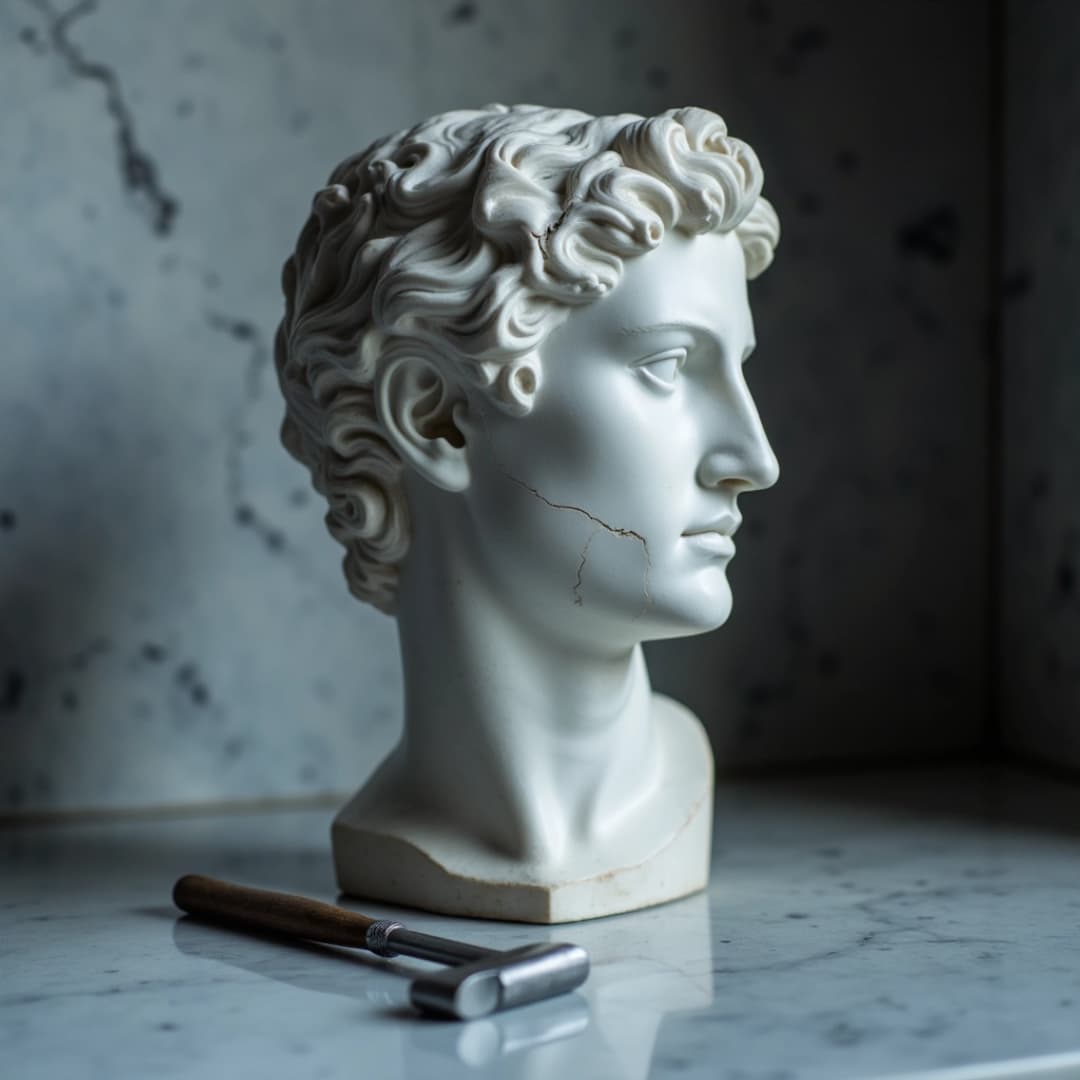
DESCRIPTION:
Bone Smashing, Hard Mooning, Steroids: Are boys as young as 10 smashing their faces? A realistic assessment of ‘male anorexia in the Manosphere’.
Bone Smashing: a dangerous trend in self-optimisation amongst young men seeking to maximise their looks, or even male anorexia?
Boys as young as ten are hitting themselves in the face with hammers to ‘remodel’ their cheekbones and jawline. Fortunately, this sounds, at best, like a fringe phenomenon within the Manosphere. One could compare it to anorexia: a similar mechanism, a different stage.
What exactly is bone smashing, and why is everyone suddenly talking about it?
Bone Smashing is the most radical manifestation of a subculture known as ‘Looksmaxxing’. On TikTok, young men – and even children – deliberately strike themselves in the face with hammers, stones or dumbbells, in the hope that the resulting microfractures will densify and ‘sculpt’ their cheekbones, zygomatic bones or jawline. The pseudo-biological rationale is based on a misinterpretation of Wolff’s law of bone remodelling: more pressure, more bone. Maxillofacial surgeons have been publicly contradicting this for months: at best, the result is bruising, bone splinters, nerve damage, permanent asymmetries, and even emergencies requiring reconstructive surgery.
In March 2026, The Guardian reported on the rapid spread of looksmaxxing in the UK in an article titled “There is no shame in being vain”. In April, Psychology Today followed with an article describing looksmaxxing as a movement in which self-optimisation turns into self-rejection. On 24 April 2026, the US practice group Summit Family Therapy published guidance specifically for parents. Healthline, the broadcaster WJLA, and Dazed Digital then reported that bone-smashing tutorials had garnered more than 250 million views on TikTok before the platform began blocking relevant search terms in early April. Anyone searching for “Bone Smashing German” now finds new German-language reposts almost daily. The content continues to spread faster than the moderators can keep up with.
This post is a follow-up to the article published in November 2025 on Looksmaxxing as a TikTok trend. Whilst that piece dealt with the movement as a whole—skincare routines, mewing, microdosing steroids, eye contouring, and hairstyles—this one focuses on the clinical core of bone smashing: why, specifically, among boys; why, specifically, now; why, specifically, at such a young age. He deliberately avoids quoting the relevant content and refrains from describing the injury techniques. The aim here is not to reproduce the scene’s vocabulary, but to contextualise it.
Is Looksmaxxing similar to anorexia?
The parallel is uncomfortable, but not far-fetched. Anorexia nervosa usually begins with a desire for self-control that is perceived as harmless, progresses through quantifiable rituals (calorie counting, scales, mirrors) and culminates in an identification with a controlled body shape. One’s own body becomes the raw material of an identity that may only be loved through the measure of discipline. Healing clashes with what feels like one’s own self.
Looksmaxxing follows a similar pattern, only with different tools. Instead of the scales, it’s the ‘canthal tilt’; instead of the calorie chart, the ‘Hunter Eyes’ scale; instead of the hip bones, the cheekbones. ‘Hard Mooning’, the self-imposed, days-long thirst for the visible accentuation of the jawline, is physiologically nothing other than a starvation diet, compounded by dehydration that endangers the kidneys and heart. Microdoses of steroids, “Mewing” compulsions, hours spent measuring one’s face in front of the mirror: it is an algorithm of recording, correcting and punishing that also fuels anorexia.
The underlying ideas are similar too. In both cases, there is a constant fixation on individual, isolated body parts, an internalised ‘observer’s eye’ that compares one’s own appearance with an unattainable ideal, and a growing indifference to physical danger. What has been understood for decades as a serious mental illness in girls is referred to in boys as “self-improvement”, “glow-up”, or “discipline”. A clinical interpretation is still pending.
Where anorexia and bone smashing diverge: denial and the positive economisation of Eros
The parallel is productive, but it obscures a crucial difference that only becomes apparent when one asks where the respective movement pushes the body in relation to sexuality. Anorexia and looksmaxxing both work on the body as material, but they work in opposite directions.
Anorexia denies sexuality. It withdraws the body from desire. Clinical reviews consistently show a reduction in sexual interest, a relinquishment of desires for partnership, and an experience of being desired as overwhelming, shameful, ‘too much’. Phenomenologically, the eating disorder produces regression: body shapes disappear, menstruation ceases, the figure becomes childlike again, and romantic relationships are abandoned. The anorexic self-declaration is usually unconscious: “I am not available.” Anorexia removes the subject from sexual desire by depriving them of the physicality that would make them erotic in the first place.
Looksmaxxing operates in exactly the opposite way. The relevant language states this openly: ‘sexual market value’, ‘SMV’, PSL scales, ‘ascension’, ‘mogging’. The Manosphere frames physical optimisation as capital accumulation, as an investment in an imagined erotic surplus return. Pain, self-harm and broken bones are not directed against sexuality, but are contributed as an advance payment into an imagined market where exchange value is dominant masculinity. Whereas the person with anorexia starves herself out of the exchange, the Looksmaxxer fights his way into an imaginary exchange through bone-smashing with a hammer.
Both movements remain entirely within the same logic, in which bodies are subject to change. In Looksmaxxing, sexuality is treated and presented within a lookism regime as a standardised sphere of performance, rather than as an intersubjective, contingent experience. The
Why are those affected so young?
Reports, including those from WJLA, NBC and The Conversation, cite an age of onset that would have been unthinkable just a few years ago: ten, eleven, twelve years old. This is no coincidence. From a developmental psychology perspective, the phase between late childhood and early puberty is a high-risk period for body image disorders. One’s own face is changing, identification with one’s body becomes uncertain, and validation from peers comes to the fore. When an algorithm intrudes precisely into this window with condensed beauty scales, comparison videos and ‘before and after’ evidence, it encounters a particularly vulnerable architecture.
Added to this is the fact that boys in this age group systematically have fewer words to express shame, insecurity and body anxiety. Whereas girls have been growing up in a broader discourse landscape since the early 2010s—body positivity, criticism of dieting, therapy cultures, peer-supported reflection—boys find on the platforms they actually use a language of optimisation, ranking and hierarchy primarily. The Manosphere offers these boys an explanatory worldview that translates their vague feelings of shame into a seemingly solvable problem: your face is wrong; here is the method.
What does this have to do with the Manosphere?
The Manosphere is not a single forum, but a loose network of YouTube channels, Discord servers, subreddits, TikTok accounts and Telegram groups that share a common underlying tone: masculinity is in crisis, women are partly to blame, and a man’s ‘market value’ can be measured biologically and visually. Looksmaxxing is the aesthetic translation of this worldview. Those who “ascend” supposedly secure a better position in a sexual hierarchy described as ruthless.
The boundaries with the incel subculture are blurred. Academic literature (analysed in The Conversation and Northeastern University News, 2026, among others) describes how looksmaxxing channels serve as a gateway to more radical, misogynistic communities. The media landscape also benefits economically: a 2026 study published in Social Science & Medicine on posts about supposedly low testosterone levels found that around 72 per cent of this content is directly linked to commercial offerings: supplements, coaching, ‘programmes’. Bone Smashing is the ideological pinnacle; the foundation is a well-functioning market.
What clinical diagnoses underlie this phenomenon?
Bone Smashing is not a clinical condition in its own right, but a peripheral phenomenon of Looksmaxxing at the intersection of several clinical constellations. Three diagnostic groups can be observed particularly clearly.
Firstly, body dysmorphic disorder (BDD, ICD-11 6B21). This is the central diagnosis underlying the phenomenon. Characteristic features include the agonising, often hours-long preoccupation with a body part perceived as disfigured, repetitive behaviours (checking the mirror, comparisons, corrections) and significant psychological distress. In boys, body dysmorphic disorder is recognised significantly later than in girls, because their behaviour is culturally interpreted as ‘ambitious’.
Secondly, the spectrum of compulsion. The rigid, ritualised repetition – always the same exercises, always the same measurements, always the same selfies taken under the same lighting conditions – bears clear hallmarks of compulsive processes. Relief is only short-lived; tension returns immediately, and the compulsion escalates.
Thirdly, the adolescent identity crisis, as defined by Erikson. Where the task is to develop a coherent identity that bridges the inner and outer worlds, the ‘Looksmaxxing’ ideology steps in and offers a ready-made identity: ‘I am what my face measures up to.’ This reduction of identity is tempting. It eliminates ambiguity and is correspondingly difficult to resolve, because its promise is stability.
What role does shame play?
Shame is the fuel without which none of these movements can function. It works both ways: it is the driving force (the fear of not being good enough) and the obstacle to help (the fear of having to reveal oneself). Boys who are confronted daily with the verdict “your face is wrong” very quickly develop a second, deeper shame: that of their own preoccupation with their appearance. Vanity is traditionally regarded as unmanly in the male imagination. This gives rise to a double concealment: from oneself and from others.
The media’s portrayal of this scene reproduces this concealment. Looksmaxxing is marketed as a ‘discipline’, ‘lifestyle’ or ‘science’, never as what it clinically is. Parents and teachers often only take notice when the changes become physically impossible to ignore, when weight has been lost at an alarming rate, or when the school day is organised around hours of mirror rituals. We have written in more detail elsewhere about shame as a structural element.
What can parents do in practical terms?
Parents don’t need TikTok fluency to respond. They need awareness, communication and patience. In practical terms, this means five steps.
Firstly, take the phenomenon seriously without dramatising it. Anyone hearing the term ‘bone smashing’ for the first time is understandably horrified. Yet it is precisely this horror that drives those affected deeper into secrecy. A factual, inquiring approach is more helpful: what does this mean to you, what do you hope to gain from it, what would bring you relief?
Secondly, don’t comment on the body, but on the inner pressure. Phrases like “You look fine” are meant to be reassuring to young people with body dysmorphic symptoms, but feel wrong to them; they feel the opposite. It is more effective to ask about their inner standards.
Thirdly, work together to make the platform economy visible. Understanding the chapter on commercial interconnections – who benefits, when and where? – helps develop a critical perspective that undermines ideologies.
Fourthly: Have physical changes medically assessed. Injuries, weight loss, dizziness and concentration difficulties are not aesthetic issues, but medical findings.
Fifthly: do not wait until the diagnosis is ‘clear-cut’ before seeking professional help. With body dysmorphic symptoms, as with anorexia, early intervention significantly improves the prognosis.
Boys exhibiting ‘looksmaxxing’ patterns rarely ‘stand out’. They are often particularly ambitious, disciplined and performance-oriented. Clues are more likely to include: constant eye contact with windows and mirrors, avoidance of PE lessons and swimming, photos taken only from specific angles, and an abrupt withdrawal from friendships in favour of like-minded online groups.
A two-pronged approach is recommended therapeutically: on the one hand, the established protocols for body dysmorphic disorder (CBT with exposure and response prevention, checking for SSRI indications where appropriate, family therapy modules for minors); on the other hand, an examination of the ideological context, which must not be polemical. Anyone who dismisses the Manosphere from a therapeutic standpoint will lose the young person. Anyone who takes their structure of longing seriously – stability, order, community, a comprehensible script for masculinity – can talk to the young person about where these needs can be met without their own body becoming the object of focus.
Where will this lead if nothing is done?
The sober answer is: to a generation of young men who have spent a significant part of their youth engaging in what is essentially self-harming behaviour, with measurable physical consequences, a fragile sense of identity, and a politically coloured worldview that reinterprets relationships in terms of competition. Anorexia has taught us, as a society, that body image disorders require patience, consistency and a language that goes beyond the surface of the symptoms. Looksmaxxing deserves the same seriousness.
Fortunately, bone smashing is merely a bizarre phenomenon. But it is also the extreme symptom of a cultural constellation in which boys learn early on that their worth is a market value and that this market is negotiated visually.
Frequently asked questions about bone smashing.
The following questions are the most common in German and English search queries relating to bone smashing. The answers consistently maintain one position: there is no medically proven justification for inflicting blunt force on one’s own face to ‘sculpt’ it. Anyone with injuries belongs in surgical care, not in an instructional thread.
What does ‘bone smashing’ or ‘bone crushing’ actually mean?
Bone Smashing, literally ‘bone crushing’, refers to the self-inflicted blunt force trauma to one’s own facial skull using hammers, stones, dumbbells or punches, in the hope that this will make the cheekbones, zygomatic bones and jaw more prominent. ‘Bone crushing’ is used in English-speaking forums partly as a synonym, and partly to refer to even more radical variants. Both terms refer to the same practice: a deliberate assault on one’s own body in the belief that the resulting injuries will produce an aesthetic benefit.
What does ‘crushing’ or ‘bonecrunching’ mean in internet slang?
In broader internet slang, “crushing” has two harmless meanings: doing something brilliantly (“she’s crushing it”) or being in love (“to have a crush on someone”). In non-Looksmaxxing contexts, “bonecrunching” often describes a particularly hard tackle in American football. The bone-smashing subculture has appropriated these terms and imbued them with a meaning that has become a call to action in its own right on forums such as Looksmax.org and on TikTok. The cultural obfuscation through slang vocabulary is no accident; it lowers the inhibition threshold.
Can bones really be reshaped by pressure?
Bone is not a passive material. It actually responds to mechanical stress. However, this physiological adaptation occurs on a completely different timescale and under completely different conditions than in the case of an acute injury. Orthodontic treatment involving years of steady traction, distraction osteogenesis in oral surgery, or the gradual adaptation of bone density to stress in sport are examples of targeted, controlled remodelling, monitored surgically or by physiotherapy. None of this has anything to do with being struck in the face with a hammer.
Has Wolff’s law been disproved, or does it simply have nothing to do with bone smashing?
Wolff’s law, dating from the late 19th century, has not been disproved, but has been significantly refined in modern research. It describes how bone tissue adapts its microarchitecture in the long term under consistent, physiological stress. It applies to submaximal, regular, cyclical stress, walking, running, and moderate strength training. It explicitly does not apply to blunt trauma or acute force that leads to microfractures or actual fractures. The bone-smashing scene cites Wolff’s Law as a pseudo-scientific justification for a practice that does the exact opposite of what the theory describes.
Do microfractures really make bones stronger?
This notion is the central misinterpretation upon which the entire practice is based. Microfractures, such as those that occur during marathon training, do indeed trigger a remodelling response in the bone. The healing bone can become more stable at the sites of stress. However, this presupposes that the microfractures are small, orderly, and distributed in a regular, biomechanically sensible pattern, and have time to heal. Blunt blows to the face produce none of this. At best, they cause chaotic bone fractures, bruising, soft tissue and nerve injuries, and asymmetries – the exact opposite of ‘becoming stronger’.
What are the actual consequences of bone smashing?
Reports from the United States, the United Kingdom and Germany from the spring of 2026 document a pattern in the few cases: permanent facial asymmetries, damage to the trigeminal nerve with chronic pain and sensory disturbances, bone loss rather than bone formation, visible scarring in the soft tissue, dental damage, malocclusion, and, in several cases, mild traumatic brain injuries. Some of these injuries require reconstructive surgery – precisely the kind of procedures the scene supposedly wanted to avoid.
How do doctors treat shattered facial bones?
Treatment is carried out in the operating theatre and depends on the type of fracture, its stability, and its location. Stabilisation with screws and plates, repositioning of displaced fragments, microsurgery for nerve injuries, and plastic reconstruction for tissue loss. Recovery takes months, often with lasting functional and cosmetic limitations. For minors, co-management by child and adolescent psychiatrists is mandatory, as the injuries must be documented as self-harming behaviour and integrated into a treatment plan.
What happens to the body when a facial bone is shattered?
Acute swelling and bruising can occur, which can impair the airways if a midface fracture occurs. The surrounding nerves are crushed or severed, affecting sensation, facial expressions and tear flow. Bone fragments may drift into the maxillary sinuses or the eye area. Secondary risks include impaired wound healing, bone infections (osteomyelitis) and, in rare cases, blood poisoning (sepsis). A bone infection can disrupt long-term bone metabolism and delay healing. All this happens in the hope of an aesthetic that is never fulfilled.
Which bones break most easily, and are the facial bones particularly vulnerable?
The most common fractures in adulthood affect the wrist, collarbone, ankle, vertebrae and hip, usually as a result of falls, road traffic accidents or osteoporosis. The facial bones are not particularly vulnerable; on the contrary, they have a complex structure and are biomechanically robust. This makes their injury all the more serious because the fracture always affects nerves, blood vessels, eyes or airways as well. There is no such thing as a ‘minor’ facial fracture.
What are the most painful fractures?
Clinically, fractures of the coccyx, rib fractures (where every breath is painful), femur fractures and midface fractures are considered particularly painful. The latter are precisely the type of fractures caused by bone smashing. Patients describe a persistent, dull, throbbing pain that recurs with every facial expression, every meal and every swallow. This can only be controlled to a limited extent with medication, as the affected area is constantly under strain.
What is the most common cause of bone fractures in general?
Falls are by far the most common cause, followed by road traffic accidents, sports injuries and osteoporosis in older people. Even self-inflicted fractures are rare in A&E statistics and are regarded as a warning sign requiring concurrent psychiatric treatment. An A&E department visit following a bone-smashing session documents the injuries, treats them, and usually arranges a referral to a specialist.
Which drink helps with bone healing?
There is no single ‘bone-healing drink’. What reliably helps is a balanced diet containing sufficient protein, calcium, vitamin D, vitamin K, and magnesium, obtained from a variety of foods. Dairy products and fortified plant-based milks meet calcium requirements, whilst sea fish supports vitamin D intake. Alcohol has been shown to slow down bone healing and should be avoided during the healing phase. Special healing drinks and supplements, as recommended in Looksmaxxing forums, are commercially motivated and have no proven specific effect.
Which vitamin is the most important for bone formation?
Vitamin D is the key factor. Without an adequate supply of vitamin D, the body cannot incorporate calcium into the bones. In Germany, particularly during the winter months, some people experience a deficiency; however, medically supervised supplementation is advisable only in cases of proven deficiency. Vitamin K2 plays a complementary role by directing calcium into the bones. Isolated high-dose supplementation without a medical indication is no more beneficial than normal levels; on the contrary, in the absence of vitamin D, it can cause undesirably high calcium levels in the blood.
Can sepsis damage the bones?
Yes. A bone or soft tissue infection (osteomyelitis) can disrupt blood flow to the bone and lead to bone destruction. This is particularly problematic in the facial area because the blood supply relies on small vessels. An untreated infection following a bone-smashing injury can therefore not only exacerbate the acute damage but also lead in the long term to structural loss that can only be corrected surgically – and often only partially.
Can bone structure be specifically altered without causing injury?
Within very narrow limits, yes, for example, in dental treatment. Orthodontics can influence the position of the teeth over the years and thus indirectly the shape of the jaw. Distraction osteogenesis, a surgical procedure for the controlled lengthening of bones, can be used for clearly indicated deformities. Strength training affects bone density, not visible muscle shape. Everything that Looksmaxxing forums peddle as a ‘natural method’ for facial reshaping – Mewing, Bone Smashing, Hard Mooning – is either ineffective or dangerous, or both. Anyone who is deeply unhappy with their facial shape belongs in an orthodontic, maxillofacial surgical or psychotherapeutic consultation, not in a forum.
The key findings at a glance
· Bone Smashing refers to the self-inflicted blunt force applied to one’s own face in the hope of ‘remodelling’ the cheekbones and jaw. The underlying biological rationale is a misinterpretation; medical consequences range from nerve damage to fractures.
· Boys as young as ten are affected. Sources such as The Guardian, Psychology Today, Summit Family Therapy, Healthline and WJLA have been reporting since spring 2026 on a significant shift in the age of onset.
· Structurally, it resembles anorexia: the same logic of control, ritual, identification with the body and escalation, only with different tools and a different cultural guise.
· Anorexia removes the body from desire. Looksmaxxing adapts it to a sexual economy distorted by market logic.
· Clinically, the focus is on body dysmorphic disorder, symptoms from the obsessive-compulsive spectrum, and the adolescent identity crisis. Steroid use, hard-mooning and self-harm cumulatively increase the risks.
· Its embedding in the manosphere and its overlaps with the incel subculture are well documented. According to a 2026 study in Social Science & Medicine, around 72 per cent of relevant posts are directly linked to commercial interests.
· Therapeutically, protocols from the treatment of body dysmorphic disorders have proven effective, supplemented by a respectful, non-polemical engagement with the ideological context.
Related
DESCRIPTION:
Bone Smashing, Hard Mooning, Steroids: Are boys as young as 10 smashing their faces? A realistic assessment of ‘male anorexia in the Manosphere’.
Bone Smashing: a dangerous trend in self-optimisation amongst young men seeking to maximise their looks, or even male anorexia?
Boys as young as ten are hitting themselves in the face with hammers to ‘remodel’ their cheekbones and jawline. Fortunately, this sounds, at best, like a fringe phenomenon within the Manosphere. One could compare it to anorexia: a similar mechanism, a different stage.
What exactly is bone smashing, and why is everyone suddenly talking about it?
Bone Smashing is the most radical manifestation of a subculture known as ‘Looksmaxxing’. On TikTok, young men – and even children – deliberately strike themselves in the face with hammers, stones or dumbbells, in the hope that the resulting microfractures will densify and ‘sculpt’ their cheekbones, zygomatic bones or jawline. The pseudo-biological rationale is based on a misinterpretation of Wolff’s law of bone remodelling: more pressure, more bone. Maxillofacial surgeons have been publicly contradicting this for months: at best, the result is bruising, bone splinters, nerve damage, permanent asymmetries, and even emergencies requiring reconstructive surgery.
In March 2026, The Guardian reported on the rapid spread of looksmaxxing in the UK in an article titled “There is no shame in being vain”. In April, Psychology Today followed with an article describing looksmaxxing as a movement in which self-optimisation turns into self-rejection. On 24 April 2026, the US practice group Summit Family Therapy published guidance specifically for parents. Healthline, the broadcaster WJLA, and Dazed Digital then reported that bone-smashing tutorials had garnered more than 250 million views on TikTok before the platform began blocking relevant search terms in early April. Anyone searching for “Bone Smashing German” now finds new German-language reposts almost daily. The content continues to spread faster than the moderators can keep up with.
This post is a follow-up to the article published in November 2025 on Looksmaxxing as a TikTok trend. Whilst that piece dealt with the movement as a whole—skincare routines, mewing, microdosing steroids, eye contouring, and hairstyles—this one focuses on the clinical core of bone smashing: why, specifically, among boys; why, specifically, now; why, specifically, at such a young age. He deliberately avoids quoting the relevant content and refrains from describing the injury techniques. The aim here is not to reproduce the scene’s vocabulary, but to contextualise it.
Is Looksmaxxing similar to anorexia?
The parallel is uncomfortable, but not far-fetched. Anorexia nervosa usually begins with a desire for self-control that is perceived as harmless, progresses through quantifiable rituals (calorie counting, scales, mirrors) and culminates in an identification with a controlled body shape. One’s own body becomes the raw material of an identity that may only be loved through the measure of discipline. Healing clashes with what feels like one’s own self.
Looksmaxxing follows a similar pattern, only with different tools. Instead of the scales, it’s the ‘canthal tilt’; instead of the calorie chart, the ‘Hunter Eyes’ scale; instead of the hip bones, the cheekbones. ‘Hard Mooning’, the self-imposed, days-long thirst for the visible accentuation of the jawline, is physiologically nothing other than a starvation diet, compounded by dehydration that endangers the kidneys and heart. Microdoses of steroids, “Mewing” compulsions, hours spent measuring one’s face in front of the mirror: it is an algorithm of recording, correcting and punishing that also fuels anorexia.
The underlying ideas are similar too. In both cases, there is a constant fixation on individual, isolated body parts, an internalised ‘observer’s eye’ that compares one’s own appearance with an unattainable ideal, and a growing indifference to physical danger. What has been understood for decades as a serious mental illness in girls is referred to in boys as “self-improvement”, “glow-up”, or “discipline”. A clinical interpretation is still pending.
Where anorexia and bone smashing diverge: denial and the positive economisation of Eros
The parallel is productive, but it obscures a crucial difference that only becomes apparent when one asks where the respective movement pushes the body in relation to sexuality. Anorexia and looksmaxxing both work on the body as material, but they work in opposite directions.
Anorexia denies sexuality. It withdraws the body from desire. Clinical reviews consistently show a reduction in sexual interest, a relinquishment of desires for partnership, and an experience of being desired as overwhelming, shameful, ‘too much’. Phenomenologically, the eating disorder produces regression: body shapes disappear, menstruation ceases, the figure becomes childlike again, and romantic relationships are abandoned. The anorexic self-declaration is usually unconscious: “I am not available.” Anorexia removes the subject from sexual desire by depriving them of the physicality that would make them erotic in the first place.
Looksmaxxing operates in exactly the opposite way. The relevant language states this openly: ‘sexual market value’, ‘SMV’, PSL scales, ‘ascension’, ‘mogging’. The Manosphere frames physical optimisation as capital accumulation, as an investment in an imagined erotic surplus return. Pain, self-harm and broken bones are not directed against sexuality, but are contributed as an advance payment into an imagined market where exchange value is dominant masculinity. Whereas the person with anorexia starves herself out of the exchange, the Looksmaxxer fights his way into an imaginary exchange through bone-smashing with a hammer.
Both movements remain entirely within the same logic, in which bodies are subject to change. In Looksmaxxing, sexuality is treated and presented within a lookism regime as a standardised sphere of performance, rather than as an intersubjective, contingent experience. The
Why are those affected so young?
Reports, including those from WJLA, NBC and The Conversation, cite an age of onset that would have been unthinkable just a few years ago: ten, eleven, twelve years old. This is no coincidence. From a developmental psychology perspective, the phase between late childhood and early puberty is a high-risk period for body image disorders. One’s own face is changing, identification with one’s body becomes uncertain, and validation from peers comes to the fore. When an algorithm intrudes precisely into this window with condensed beauty scales, comparison videos and ‘before and after’ evidence, it encounters a particularly vulnerable architecture.
Added to this is the fact that boys in this age group systematically have fewer words to express shame, insecurity and body anxiety. Whereas girls have been growing up in a broader discourse landscape since the early 2010s—body positivity, criticism of dieting, therapy cultures, peer-supported reflection—boys find on the platforms they actually use a language of optimisation, ranking and hierarchy primarily. The Manosphere offers these boys an explanatory worldview that translates their vague feelings of shame into a seemingly solvable problem: your face is wrong; here is the method.
What does this have to do with the Manosphere?
The Manosphere is not a single forum, but a loose network of YouTube channels, Discord servers, subreddits, TikTok accounts and Telegram groups that share a common underlying tone: masculinity is in crisis, women are partly to blame, and a man’s ‘market value’ can be measured biologically and visually. Looksmaxxing is the aesthetic translation of this worldview. Those who “ascend” supposedly secure a better position in a sexual hierarchy described as ruthless.
The boundaries with the incel subculture are blurred. Academic literature (analysed in The Conversation and Northeastern University News, 2026, among others) describes how looksmaxxing channels serve as a gateway to more radical, misogynistic communities. The media landscape also benefits economically: a 2026 study published in Social Science & Medicine on posts about supposedly low testosterone levels found that around 72 per cent of this content is directly linked to commercial offerings: supplements, coaching, ‘programmes’. Bone Smashing is the ideological pinnacle; the foundation is a well-functioning market.
What clinical diagnoses underlie this phenomenon?
Bone Smashing is not a clinical condition in its own right, but a peripheral phenomenon of Looksmaxxing at the intersection of several clinical constellations. Three diagnostic groups can be observed particularly clearly.
Firstly, body dysmorphic disorder (BDD, ICD-11 6B21). This is the central diagnosis underlying the phenomenon. Characteristic features include the agonising, often hours-long preoccupation with a body part perceived as disfigured, repetitive behaviours (checking the mirror, comparisons, corrections) and significant psychological distress. In boys, body dysmorphic disorder is recognised significantly later than in girls, because their behaviour is culturally interpreted as ‘ambitious’.
Secondly, the spectrum of compulsion. The rigid, ritualised repetition – always the same exercises, always the same measurements, always the same selfies taken under the same lighting conditions – bears clear hallmarks of compulsive processes. Relief is only short-lived; tension returns immediately, and the compulsion escalates.
Thirdly, the adolescent identity crisis, as defined by Erikson. Where the task is to develop a coherent identity that bridges the inner and outer worlds, the ‘Looksmaxxing’ ideology steps in and offers a ready-made identity: ‘I am what my face measures up to.’ This reduction of identity is tempting. It eliminates ambiguity and is correspondingly difficult to resolve, because its promise is stability.
What role does shame play?
Shame is the fuel without which none of these movements can function. It works both ways: it is the driving force (the fear of not being good enough) and the obstacle to help (the fear of having to reveal oneself). Boys who are confronted daily with the verdict “your face is wrong” very quickly develop a second, deeper shame: that of their own preoccupation with their appearance. Vanity is traditionally regarded as unmanly in the male imagination. This gives rise to a double concealment: from oneself and from others.
The media’s portrayal of this scene reproduces this concealment. Looksmaxxing is marketed as a ‘discipline’, ‘lifestyle’ or ‘science’, never as what it clinically is. Parents and teachers often only take notice when the changes become physically impossible to ignore, when weight has been lost at an alarming rate, or when the school day is organised around hours of mirror rituals. We have written in more detail elsewhere about shame as a structural element.
What can parents do in practical terms?
Parents don’t need TikTok fluency to respond. They need awareness, communication and patience. In practical terms, this means five steps.
Firstly, take the phenomenon seriously without dramatising it. Anyone hearing the term ‘bone smashing’ for the first time is understandably horrified. Yet it is precisely this horror that drives those affected deeper into secrecy. A factual, inquiring approach is more helpful: what does this mean to you, what do you hope to gain from it, what would bring you relief?
Secondly, don’t comment on the body, but on the inner pressure. Phrases like “You look fine” are meant to be reassuring to young people with body dysmorphic symptoms, but feel wrong to them; they feel the opposite. It is more effective to ask about their inner standards.
Thirdly, work together to make the platform economy visible. Understanding the chapter on commercial interconnections – who benefits, when and where? – helps develop a critical perspective that undermines ideologies.
Fourthly: Have physical changes medically assessed. Injuries, weight loss, dizziness and concentration difficulties are not aesthetic issues, but medical findings.
Fifthly: do not wait until the diagnosis is ‘clear-cut’ before seeking professional help. With body dysmorphic symptoms, as with anorexia, early intervention significantly improves the prognosis.
Boys exhibiting ‘looksmaxxing’ patterns rarely ‘stand out’. They are often particularly ambitious, disciplined and performance-oriented. Clues are more likely to include: constant eye contact with windows and mirrors, avoidance of PE lessons and swimming, photos taken only from specific angles, and an abrupt withdrawal from friendships in favour of like-minded online groups.
A two-pronged approach is recommended therapeutically: on the one hand, the established protocols for body dysmorphic disorder (CBT with exposure and response prevention, checking for SSRI indications where appropriate, family therapy modules for minors); on the other hand, an examination of the ideological context, which must not be polemical. Anyone who dismisses the Manosphere from a therapeutic standpoint will lose the young person. Anyone who takes their structure of longing seriously – stability, order, community, a comprehensible script for masculinity – can talk to the young person about where these needs can be met without their own body becoming the object of focus.
Where will this lead if nothing is done?
The sober answer is: to a generation of young men who have spent a significant part of their youth engaging in what is essentially self-harming behaviour, with measurable physical consequences, a fragile sense of identity, and a politically coloured worldview that reinterprets relationships in terms of competition. Anorexia has taught us, as a society, that body image disorders require patience, consistency and a language that goes beyond the surface of the symptoms. Looksmaxxing deserves the same seriousness.
Fortunately, bone smashing is merely a bizarre phenomenon. But it is also the extreme symptom of a cultural constellation in which boys learn early on that their worth is a market value and that this market is negotiated visually.
Frequently asked questions about bone smashing.
The following questions are the most common in German and English search queries relating to bone smashing. The answers consistently maintain one position: there is no medically proven justification for inflicting blunt force on one’s own face to ‘sculpt’ it. Anyone with injuries belongs in surgical care, not in an instructional thread.
What does ‘bone smashing’ or ‘bone crushing’ actually mean?
Bone Smashing, literally ‘bone crushing’, refers to the self-inflicted blunt force trauma to one’s own facial skull using hammers, stones, dumbbells or punches, in the hope that this will make the cheekbones, zygomatic bones and jaw more prominent. ‘Bone crushing’ is used in English-speaking forums partly as a synonym, and partly to refer to even more radical variants. Both terms refer to the same practice: a deliberate assault on one’s own body in the belief that the resulting injuries will produce an aesthetic benefit.
What does ‘crushing’ or ‘bonecrunching’ mean in internet slang?
In broader internet slang, “crushing” has two harmless meanings: doing something brilliantly (“she’s crushing it”) or being in love (“to have a crush on someone”). In non-Looksmaxxing contexts, “bonecrunching” often describes a particularly hard tackle in American football. The bone-smashing subculture has appropriated these terms and imbued them with a meaning that has become a call to action in its own right on forums such as Looksmax.org and on TikTok. The cultural obfuscation through slang vocabulary is no accident; it lowers the inhibition threshold.
Can bones really be reshaped by pressure?
Bone is not a passive material. It actually responds to mechanical stress. However, this physiological adaptation occurs on a completely different timescale and under completely different conditions than in the case of an acute injury. Orthodontic treatment involving years of steady traction, distraction osteogenesis in oral surgery, or the gradual adaptation of bone density to stress in sport are examples of targeted, controlled remodelling, monitored surgically or by physiotherapy. None of this has anything to do with being struck in the face with a hammer.
Has Wolff’s law been disproved, or does it simply have nothing to do with bone smashing?
Wolff’s law, dating from the late 19th century, has not been disproved, but has been significantly refined in modern research. It describes how bone tissue adapts its microarchitecture in the long term under consistent, physiological stress. It applies to submaximal, regular, cyclical stress, walking, running, and moderate strength training. It explicitly does not apply to blunt trauma or acute force that leads to microfractures or actual fractures. The bone-smashing scene cites Wolff’s Law as a pseudo-scientific justification for a practice that does the exact opposite of what the theory describes.
Do microfractures really make bones stronger?
This notion is the central misinterpretation upon which the entire practice is based. Microfractures, such as those that occur during marathon training, do indeed trigger a remodelling response in the bone. The healing bone can become more stable at the sites of stress. However, this presupposes that the microfractures are small, orderly, and distributed in a regular, biomechanically sensible pattern, and have time to heal. Blunt blows to the face produce none of this. At best, they cause chaotic bone fractures, bruising, soft tissue and nerve injuries, and asymmetries – the exact opposite of ‘becoming stronger’.
What are the actual consequences of bone smashing?
Reports from the United States, the United Kingdom and Germany from the spring of 2026 document a pattern in the few cases: permanent facial asymmetries, damage to the trigeminal nerve with chronic pain and sensory disturbances, bone loss rather than bone formation, visible scarring in the soft tissue, dental damage, malocclusion, and, in several cases, mild traumatic brain injuries. Some of these injuries require reconstructive surgery – precisely the kind of procedures the scene supposedly wanted to avoid.
How do doctors treat shattered facial bones?
Treatment is carried out in the operating theatre and depends on the type of fracture, its stability, and its location. Stabilisation with screws and plates, repositioning of displaced fragments, microsurgery for nerve injuries, and plastic reconstruction for tissue loss. Recovery takes months, often with lasting functional and cosmetic limitations. For minors, co-management by child and adolescent psychiatrists is mandatory, as the injuries must be documented as self-harming behaviour and integrated into a treatment plan.
What happens to the body when a facial bone is shattered?
Acute swelling and bruising can occur, which can impair the airways if a midface fracture occurs. The surrounding nerves are crushed or severed, affecting sensation, facial expressions and tear flow. Bone fragments may drift into the maxillary sinuses or the eye area. Secondary risks include impaired wound healing, bone infections (osteomyelitis) and, in rare cases, blood poisoning (sepsis). A bone infection can disrupt long-term bone metabolism and delay healing. All this happens in the hope of an aesthetic that is never fulfilled.
Which bones break most easily, and are the facial bones particularly vulnerable?
The most common fractures in adulthood affect the wrist, collarbone, ankle, vertebrae and hip, usually as a result of falls, road traffic accidents or osteoporosis. The facial bones are not particularly vulnerable; on the contrary, they have a complex structure and are biomechanically robust. This makes their injury all the more serious because the fracture always affects nerves, blood vessels, eyes or airways as well. There is no such thing as a ‘minor’ facial fracture.
What are the most painful fractures?
Clinically, fractures of the coccyx, rib fractures (where every breath is painful), femur fractures and midface fractures are considered particularly painful. The latter are precisely the type of fractures caused by bone smashing. Patients describe a persistent, dull, throbbing pain that recurs with every facial expression, every meal and every swallow. This can only be controlled to a limited extent with medication, as the affected area is constantly under strain.
What is the most common cause of bone fractures in general?
Falls are by far the most common cause, followed by road traffic accidents, sports injuries and osteoporosis in older people. Even self-inflicted fractures are rare in A&E statistics and are regarded as a warning sign requiring concurrent psychiatric treatment. An A&E department visit following a bone-smashing session documents the injuries, treats them, and usually arranges a referral to a specialist.
Which drink helps with bone healing?
There is no single ‘bone-healing drink’. What reliably helps is a balanced diet containing sufficient protein, calcium, vitamin D, vitamin K, and magnesium, obtained from a variety of foods. Dairy products and fortified plant-based milks meet calcium requirements, whilst sea fish supports vitamin D intake. Alcohol has been shown to slow down bone healing and should be avoided during the healing phase. Special healing drinks and supplements, as recommended in Looksmaxxing forums, are commercially motivated and have no proven specific effect.
Which vitamin is the most important for bone formation?
Vitamin D is the key factor. Without an adequate supply of vitamin D, the body cannot incorporate calcium into the bones. In Germany, particularly during the winter months, some people experience a deficiency; however, medically supervised supplementation is advisable only in cases of proven deficiency. Vitamin K2 plays a complementary role by directing calcium into the bones. Isolated high-dose supplementation without a medical indication is no more beneficial than normal levels; on the contrary, in the absence of vitamin D, it can cause undesirably high calcium levels in the blood.
Can sepsis damage the bones?
Yes. A bone or soft tissue infection (osteomyelitis) can disrupt blood flow to the bone and lead to bone destruction. This is particularly problematic in the facial area because the blood supply relies on small vessels. An untreated infection following a bone-smashing injury can therefore not only exacerbate the acute damage but also lead in the long term to structural loss that can only be corrected surgically – and often only partially.
Can bone structure be specifically altered without causing injury?
Within very narrow limits, yes, for example, in dental treatment. Orthodontics can influence the position of the teeth over the years and thus indirectly the shape of the jaw. Distraction osteogenesis, a surgical procedure for the controlled lengthening of bones, can be used for clearly indicated deformities. Strength training affects bone density, not visible muscle shape. Everything that Looksmaxxing forums peddle as a ‘natural method’ for facial reshaping – Mewing, Bone Smashing, Hard Mooning – is either ineffective or dangerous, or both. Anyone who is deeply unhappy with their facial shape belongs in an orthodontic, maxillofacial surgical or psychotherapeutic consultation, not in a forum.
The key findings at a glance
· Bone Smashing refers to the self-inflicted blunt force applied to one’s own face in the hope of ‘remodelling’ the cheekbones and jaw. The underlying biological rationale is a misinterpretation; medical consequences range from nerve damage to fractures.
· Boys as young as ten are affected. Sources such as The Guardian, Psychology Today, Summit Family Therapy, Healthline and WJLA have been reporting since spring 2026 on a significant shift in the age of onset.
· Structurally, it resembles anorexia: the same logic of control, ritual, identification with the body and escalation, only with different tools and a different cultural guise.
· Anorexia removes the body from desire. Looksmaxxing adapts it to a sexual economy distorted by market logic.
· Clinically, the focus is on body dysmorphic disorder, symptoms from the obsessive-compulsive spectrum, and the adolescent identity crisis. Steroid use, hard-mooning and self-harm cumulatively increase the risks.
· Its embedding in the manosphere and its overlaps with the incel subculture are well documented. According to a 2026 study in Social Science & Medicine, around 72 per cent of relevant posts are directly linked to commercial interests.
· Therapeutically, protocols from the treatment of body dysmorphic disorders have proven effective, supplemented by a respectful, non-polemical engagement with the ideological context.
Related
Newsletter
Would you like to be notified when I publish a new blog post? Sign up here.
Click "Subscribe for free" if you have read and accepted my privacy policy. You can revoke your consent at any time.
Newsletter
Would you like to be notified when I publish a new blog post? Sign up here.
Click "Subscribe for free" if you have read and accepted my privacy policy. You can revoke your consent at any time.