Hikikomori in Germany too
Hikikomori in Germany too: Ways out of social isolation
Hikikomori in Germany too: Ways out of social isolation
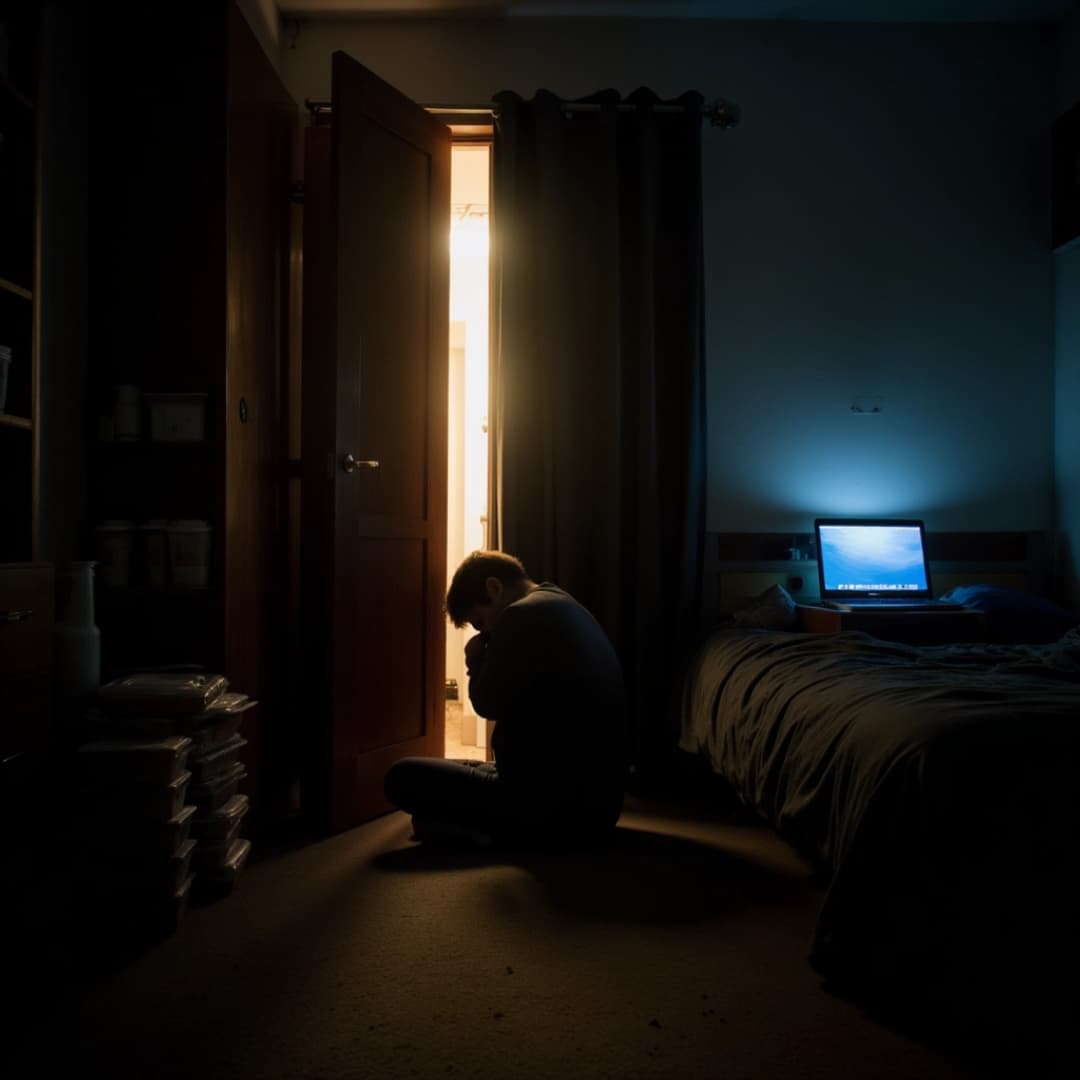
DESCRIPTION:
Hikikomori in Germany, too: extreme social withdrawal among young people. Understanding the condition and finding help.
Hikikomori in Germany too: extreme social withdrawal among young people and ways out of social isolation
Hikikomori was long regarded as a phenomenon of Japanese society. By 2026, this view is no longer tenable: the phenomenon of hikikomori is increasingly found worldwide, including in Germany. This article explains what it means clinically, how it differs from depression, phobias and other mental disorders, and what ways are available.
What does hikikomori mean?
The term was coined by the Japanese psychiatrist Tamaki Saitō, who introduced it in his 1998 book ‘Shakaiteki Hikikomori’. Literally, the word is composed of ‘hiku’ (to pull, to withdraw) and ‘komoru’ (to shut oneself in). Tamaki defined hikikomori as a condition in which predominantly young people withdraw completely from contact with the outside world over a prolonged period, without any other primary psychiatric diagnosis adequately accounting for this behaviour.
When one reads the word, one first thinks of young Japanese men who no longer leave their rooms, often in the age range between finishing school and starting work, who remain within the four walls of their parents’ home. This culturally narrow narrative no longer holds. What began as an image from Japan now describes a form of self-isolation observable globally, arising in modern societies under similar conditions.
Has the phenomenon of hikikomori also reached Germany?
Reliable data on the number of people affected has only recently become available. The validation study of the HQ-25-G was conducted in 2023 using a quota sample of 5,000 people aged between 18 and 74, distributed by age, gender, and federal state in a representative manner. The internal reliability of the German-language questionnaire was 0.93 on the Cronbach’s alpha scale. As expected, higher scores correlated with higher levels of depression, anxiety and loneliness. International meta-analyses involving over 58,000 participants estimate the global prevalence at around eight per cent.
The Hamburg-based research group led by a professor at the University of Applied Sciences published the first German standard work with Springer in July 2025: ‘Extreme social withdrawal among young people: Hikikomori in Germany?’. The professor and her team are analysing surveys from youth welfare, psychiatry and social work, and conducting in-depth interviews with relatives of so-called ‘invisibles’. The result: the number of young people with Hikikomori-like symptoms is rising, and the care system is not prepared for this.
How does this differ from depression, phobias and the autism spectrum?
In the ICD-11 and the DSM-5-TR, it is not a separate diagnosis, yet it does not fit into the established categories. Research and clinical practice distinguish between primary and secondary presentations. Primary refers to extreme social withdrawal without a sufficient alternative primary diagnosis to explain it; secondary refers to the condition occurring within the context of depression, early-stage schizophrenia, severe anxiety disorders or autism spectrum disorder.
In terms of differential diagnosis, hikikomori can be distinguished from related conditions by three key indicators. In major depression, a sense of hopelessness predominates; those affected lack drive and energy, and withdrawal is a consequence of this lack of drive, not the goal. In social anxiety disorder, the fear of being judged is central. Those affected would like to go out but are unable to. In autism spectrum disorders, withdrawal and ‘shutdown’ are adaptive regulatory strategies following sensory overload. Schizoid personality disorders, on the other hand, show a genuine preference for solitude alongside intact functioning. The condition described here overlaps with all these constellations without being subsumed by any of them.
How many young people are affected worldwide?
It is no longer just about Japan. The picture began to change as early as two decades ago: research groups from South Korea, Italy, Spain, France, the USA and, most recently, Germany report similar phenomena that hardly differ from what Tamaki has traditionally observed in Japan. Some authors therefore speak of a ‘modern, socially-bound syndrome’, no longer culture-bound but linked to structures that are widespread in modern societies.
In Germany, the number of people affected is difficult to quantify, as many families seek help without entering the standard care system. Those who experience the long-term isolation of a daughter or a son often go through a phase in which the problem is framed as a “bad patch” before the word is actually uttered. This delay explains why official figures underestimate the reality. It is plausible that here, too, hundreds of thousands of young people are experiencing similar situations.
Why does social isolation affect this generation in particular?
Hikikomori is never merely individual; it is always structural as well. Research and clinical practice identify three factors that today create a pronounced sense of being overwhelmed. Firstly, there is intense pressure to perform. School, vocational training and university increasingly operate according to an optimisation logic, in which a failed work placement, a failed exam or an abandoned apprenticeship is not treated as a life event but as a permanent exclusion from a legitimate CV. The fear of failure eats deep into self-esteem.
Secondly, a labour market that offers few entry points to many young people, who are not highly selective and are precarious. Anyone who falls off the track has a hard time finding alternative opportunities.
Thirdly: the coronavirus pandemic. Those who went through puberty or early adolescence during lockdown never had the chance to practise age-appropriate social activities in a stable environment; now the world outside seems stranger, noisier and more exhausting than it used to be.
The combination of these three factors has exacerbated the problem. A significant part of this dynamic does not stem from an inner flaw, but from life circumstances that make retreating to one’s room seem rational.
What role do families play?
Japanese culture recognises ‘Amae’ as a form of dependent attachment in which adult children are allowed to continue being cared for by their parents. This cultural framework is lacking in Germany. Parents who leave meals outside the door for their 24- or 28-year-old sons and daughters oscillate between guilt, exhaustion and the fear that confrontation will sever the last remaining thread. A silent routine of care emerges, in which the child shares only the bare essentials with the outside world.
Systemic therapists speak of a “co-regulation of avoidance”: the parents relieve the pressure so completely that the dynamic becomes comfortable in the long run. When families seek help, this is usually the step that makes change possible in the first place. Family work takes a structural rather than a moralising approach: which small confrontations can be reintroduced without damaging the bond? Which parental expectations can be re-articulated without the child shutting down completely? The CRAFT approach, which originates from addiction therapy, has proven to be applicable here.
What does a typical course of treatment look like?
The start is largely unspectacular. A poor mark, a missed appointment, a first depressive episode, and often early experiences of bullying at school. Those affected retreat to their rooms for a few days, cancel plans, and avoid the journey to school. Two weeks turn into two months, two months into two years, and the self-isolation becomes entrenched.
Daily routines are turned on their head. Young people live in an inverted rhythm, staying awake at night and sleeping during the day. Hygiene, diet and exercise are neglected. This leads to underweight or severe obesity, vitamin D deficiency and muscle wasting. The internet, gaming and digital media structure daily life, not because they are addictive, but because they are the only space where contact remains possible without physical confrontation. Those who live in extreme seclusion gradually lose their routine until even the thought of stepping outside feels physically oppressive.
What warning signs should families and professionals take seriously?
Parents, teachers, GPs and social workers overlook the situation when young adults frame their condition as a ‘phase’. However, there are warning signs: a persistent lack of social contact lasting more than three months, a complete abandonment of educational or professional structures, a reversed day-night rhythm, avoidance of all direct encounters outside the immediate family, neglect of personal hygiene, a significant decline in self-esteem and an increasingly depressive outlook.
These symptoms do not present uniformly and are not specific enough to serve as the basis for a diagnosis on their own. However, they should serve as a prompt to seek medical and psychotherapeutic assessment before the condition becomes entrenched over several years. Recognising the signs early on significantly increases the scope for treatment. Waiting, on the other hand, reduces it.
What treatment pathways lead out of isolation?
Traditional outpatient psychotherapy often fails due to the core symptom: those affected do not attend. Research has responded to this with three specialised approaches. Firstly, home-based therapy: therapists visit the patient’s home environment, initially just the living room, later the bedroom. Initial contact is often made in writing, via chat or behind closed doors. The aim of the first phase is not to change, but to build a relationship.
Secondly, vocational activation and gradual activation. Instead of returning directly to school or work, micro-steps are established: a ten-minute walk at night, a visit to a late-night shop, and later a sheltered workshop placement. In Japan, there are ‘Free Spaces’; in Germany, initial pilot projects on youth social work and integration support. Thirdly, family therapy and psychoeducational work with parents, for example, using the CRAFT approach. In cases of secondary onset, treatment of the underlying disorder, antidepressant medication, and autism- -friendly adjustments are added. In most documented cases, therapy lasts one to three years.
What distinguishes this picture from a normal phase?
With increased media visibility comes a greater risk of ‘pop-pathologisation’. Someone who has spent a long weekend in bed is not a hikikomori. Nor is someone who is exhausted after a tough exam period. Introversion is also something else entirely: a preference, not a clinical condition. The key difference is that hikikomori describes a complete withdrawal from public life over an extended period, involving the abandonment of social ties rather than their reduction.
Anyone who wants to honestly assess whether they are actually falling into such a dynamic can ask themselves three questions. Have I hardly left the house, or not at all, for more than six months? Have I ended, rather than reduced, active relationships outside my immediate family? Are important areas of my life – education, work, friendships, intimate relationships – closed off to me due to exhaustion? Anyone who answers ‘yes’ three times should contact a psychiatric or psychotherapeutic practice, not a hashtag.
How can society respond to the phenomenon of hikikomori?
On 19 May 2026, the American broadcaster Click2Houston warned of a “global wave” of Hikikomori-related phenomena. In 2026, Medscape Germany published its first major review article on symptoms, diagnosis and treatment. In Belgium, 20something.He is compiling European cases. This media attention is important, but it carries risks. If the topic is framed as a ‘trend’, there is a danger of trivialisation, which generates precisely the self-diagnosis reflex that clinicians warn against.
It would make more sense to interpret the phenomenon as a symptom of structural distortions rather than as a character flaw of a generation. A society in which a double-digit percentage of young adults exhibit such patterns has a problematic relationship with the liveability of its own structures. The education system, the labour market and the welfare network must ask themselves what they offer young people when they want to drop out before they have even got started. This, too, is a question of mental health, and it affects every social class, not just the middle class, where the first descriptions of Japanese hikikomori originated.
Who is more frequently affected, and from what age?
In early research in Hamburg, the participants were often male adolescents and young men from the middle class. Families whose social status allowed for long-term support without causing existential crises. This distribution has shifted. Such patterns are now also found among young women across various social classes and among those over 40, some of whom have been living in seclusion since late adulthood. The old narrative of ‘only young men in Japan’ is no longer empirically accurate.
In the long term, comorbid depressive and anxiety disorders often develop; in some cases, secondary personality disorders and chronic mental health problems may also arise. The danger is that what was originally a reactive dynamic becomes a stable self-image, in which ‘I don’t belong’ solidifies into an unquestioned truth. This is precisely where the key to any serious treatment lies: not in seeking to change the world, but in challenging the belief that it is closed off to the person affected.
Key findings at a glance
· Hikikomori describes a severe social withdrawal in young people lasting at least six months, involving a complete abandonment of work, school and social activities outside the immediate family.
· The term was coined in 1998 by the psychiatrist Tamaki Saitō. Today, the phenomenon is also evident in Germany and many other modern societies.
· On 19 May 2026, Click2Houston warned of a ‘global wave’; Medscape Germany published its first comprehensive report in 2026; the Springer book from the University of Hamburg provides the first systematic German approach. https://link.springer.com/book/10.1007/978-3-658-48160-5
· The HQ-25-G was validated in 2023 on a quota sample of 5,000 people, with a Cronbach’s alpha of 0.93. The global prevalence estimate is around eight per cent.
· In terms of differential diagnosis, the condition must be distinguished from depression, phobia, autism spectrum disorder and schizoid personality traits. However, it may occur secondarily in the context of these disorders.
· Structural drivers include intense academic pressure, a selective labour market, the consequences of the COVID-19 pandemic, and fragile family routines.
· Effective treatment pathways combine home-based therapy, gradual vocational activation, family therapy (CRAFT) and, in cases of secondary onset, pharmacotherapy for the underlying condition.
· Families should take early warning signs seriously and seek professional help together before the condition becomes entrenched over the years.
· Self-diagnosis via social media is not helpful. If there is reasonable cause for concern, medical and psychotherapeutic assessment is the only sensible next step.
Related
DESCRIPTION:
Hikikomori in Germany, too: extreme social withdrawal among young people. Understanding the condition and finding help.
Hikikomori in Germany too: extreme social withdrawal among young people and ways out of social isolation
Hikikomori was long regarded as a phenomenon of Japanese society. By 2026, this view is no longer tenable: the phenomenon of hikikomori is increasingly found worldwide, including in Germany. This article explains what it means clinically, how it differs from depression, phobias and other mental disorders, and what ways are available.
What does hikikomori mean?
The term was coined by the Japanese psychiatrist Tamaki Saitō, who introduced it in his 1998 book ‘Shakaiteki Hikikomori’. Literally, the word is composed of ‘hiku’ (to pull, to withdraw) and ‘komoru’ (to shut oneself in). Tamaki defined hikikomori as a condition in which predominantly young people withdraw completely from contact with the outside world over a prolonged period, without any other primary psychiatric diagnosis adequately accounting for this behaviour.
When one reads the word, one first thinks of young Japanese men who no longer leave their rooms, often in the age range between finishing school and starting work, who remain within the four walls of their parents’ home. This culturally narrow narrative no longer holds. What began as an image from Japan now describes a form of self-isolation observable globally, arising in modern societies under similar conditions.
Has the phenomenon of hikikomori also reached Germany?
Reliable data on the number of people affected has only recently become available. The validation study of the HQ-25-G was conducted in 2023 using a quota sample of 5,000 people aged between 18 and 74, distributed by age, gender, and federal state in a representative manner. The internal reliability of the German-language questionnaire was 0.93 on the Cronbach’s alpha scale. As expected, higher scores correlated with higher levels of depression, anxiety and loneliness. International meta-analyses involving over 58,000 participants estimate the global prevalence at around eight per cent.
The Hamburg-based research group led by a professor at the University of Applied Sciences published the first German standard work with Springer in July 2025: ‘Extreme social withdrawal among young people: Hikikomori in Germany?’. The professor and her team are analysing surveys from youth welfare, psychiatry and social work, and conducting in-depth interviews with relatives of so-called ‘invisibles’. The result: the number of young people with Hikikomori-like symptoms is rising, and the care system is not prepared for this.
How does this differ from depression, phobias and the autism spectrum?
In the ICD-11 and the DSM-5-TR, it is not a separate diagnosis, yet it does not fit into the established categories. Research and clinical practice distinguish between primary and secondary presentations. Primary refers to extreme social withdrawal without a sufficient alternative primary diagnosis to explain it; secondary refers to the condition occurring within the context of depression, early-stage schizophrenia, severe anxiety disorders or autism spectrum disorder.
In terms of differential diagnosis, hikikomori can be distinguished from related conditions by three key indicators. In major depression, a sense of hopelessness predominates; those affected lack drive and energy, and withdrawal is a consequence of this lack of drive, not the goal. In social anxiety disorder, the fear of being judged is central. Those affected would like to go out but are unable to. In autism spectrum disorders, withdrawal and ‘shutdown’ are adaptive regulatory strategies following sensory overload. Schizoid personality disorders, on the other hand, show a genuine preference for solitude alongside intact functioning. The condition described here overlaps with all these constellations without being subsumed by any of them.
How many young people are affected worldwide?
It is no longer just about Japan. The picture began to change as early as two decades ago: research groups from South Korea, Italy, Spain, France, the USA and, most recently, Germany report similar phenomena that hardly differ from what Tamaki has traditionally observed in Japan. Some authors therefore speak of a ‘modern, socially-bound syndrome’, no longer culture-bound but linked to structures that are widespread in modern societies.
In Germany, the number of people affected is difficult to quantify, as many families seek help without entering the standard care system. Those who experience the long-term isolation of a daughter or a son often go through a phase in which the problem is framed as a “bad patch” before the word is actually uttered. This delay explains why official figures underestimate the reality. It is plausible that here, too, hundreds of thousands of young people are experiencing similar situations.
Why does social isolation affect this generation in particular?
Hikikomori is never merely individual; it is always structural as well. Research and clinical practice identify three factors that today create a pronounced sense of being overwhelmed. Firstly, there is intense pressure to perform. School, vocational training and university increasingly operate according to an optimisation logic, in which a failed work placement, a failed exam or an abandoned apprenticeship is not treated as a life event but as a permanent exclusion from a legitimate CV. The fear of failure eats deep into self-esteem.
Secondly, a labour market that offers few entry points to many young people, who are not highly selective and are precarious. Anyone who falls off the track has a hard time finding alternative opportunities.
Thirdly: the coronavirus pandemic. Those who went through puberty or early adolescence during lockdown never had the chance to practise age-appropriate social activities in a stable environment; now the world outside seems stranger, noisier and more exhausting than it used to be.
The combination of these three factors has exacerbated the problem. A significant part of this dynamic does not stem from an inner flaw, but from life circumstances that make retreating to one’s room seem rational.
What role do families play?
Japanese culture recognises ‘Amae’ as a form of dependent attachment in which adult children are allowed to continue being cared for by their parents. This cultural framework is lacking in Germany. Parents who leave meals outside the door for their 24- or 28-year-old sons and daughters oscillate between guilt, exhaustion and the fear that confrontation will sever the last remaining thread. A silent routine of care emerges, in which the child shares only the bare essentials with the outside world.
Systemic therapists speak of a “co-regulation of avoidance”: the parents relieve the pressure so completely that the dynamic becomes comfortable in the long run. When families seek help, this is usually the step that makes change possible in the first place. Family work takes a structural rather than a moralising approach: which small confrontations can be reintroduced without damaging the bond? Which parental expectations can be re-articulated without the child shutting down completely? The CRAFT approach, which originates from addiction therapy, has proven to be applicable here.
What does a typical course of treatment look like?
The start is largely unspectacular. A poor mark, a missed appointment, a first depressive episode, and often early experiences of bullying at school. Those affected retreat to their rooms for a few days, cancel plans, and avoid the journey to school. Two weeks turn into two months, two months into two years, and the self-isolation becomes entrenched.
Daily routines are turned on their head. Young people live in an inverted rhythm, staying awake at night and sleeping during the day. Hygiene, diet and exercise are neglected. This leads to underweight or severe obesity, vitamin D deficiency and muscle wasting. The internet, gaming and digital media structure daily life, not because they are addictive, but because they are the only space where contact remains possible without physical confrontation. Those who live in extreme seclusion gradually lose their routine until even the thought of stepping outside feels physically oppressive.
What warning signs should families and professionals take seriously?
Parents, teachers, GPs and social workers overlook the situation when young adults frame their condition as a ‘phase’. However, there are warning signs: a persistent lack of social contact lasting more than three months, a complete abandonment of educational or professional structures, a reversed day-night rhythm, avoidance of all direct encounters outside the immediate family, neglect of personal hygiene, a significant decline in self-esteem and an increasingly depressive outlook.
These symptoms do not present uniformly and are not specific enough to serve as the basis for a diagnosis on their own. However, they should serve as a prompt to seek medical and psychotherapeutic assessment before the condition becomes entrenched over several years. Recognising the signs early on significantly increases the scope for treatment. Waiting, on the other hand, reduces it.
What treatment pathways lead out of isolation?
Traditional outpatient psychotherapy often fails due to the core symptom: those affected do not attend. Research has responded to this with three specialised approaches. Firstly, home-based therapy: therapists visit the patient’s home environment, initially just the living room, later the bedroom. Initial contact is often made in writing, via chat or behind closed doors. The aim of the first phase is not to change, but to build a relationship.
Secondly, vocational activation and gradual activation. Instead of returning directly to school or work, micro-steps are established: a ten-minute walk at night, a visit to a late-night shop, and later a sheltered workshop placement. In Japan, there are ‘Free Spaces’; in Germany, initial pilot projects on youth social work and integration support. Thirdly, family therapy and psychoeducational work with parents, for example, using the CRAFT approach. In cases of secondary onset, treatment of the underlying disorder, antidepressant medication, and autism- -friendly adjustments are added. In most documented cases, therapy lasts one to three years.
What distinguishes this picture from a normal phase?
With increased media visibility comes a greater risk of ‘pop-pathologisation’. Someone who has spent a long weekend in bed is not a hikikomori. Nor is someone who is exhausted after a tough exam period. Introversion is also something else entirely: a preference, not a clinical condition. The key difference is that hikikomori describes a complete withdrawal from public life over an extended period, involving the abandonment of social ties rather than their reduction.
Anyone who wants to honestly assess whether they are actually falling into such a dynamic can ask themselves three questions. Have I hardly left the house, or not at all, for more than six months? Have I ended, rather than reduced, active relationships outside my immediate family? Are important areas of my life – education, work, friendships, intimate relationships – closed off to me due to exhaustion? Anyone who answers ‘yes’ three times should contact a psychiatric or psychotherapeutic practice, not a hashtag.
How can society respond to the phenomenon of hikikomori?
On 19 May 2026, the American broadcaster Click2Houston warned of a “global wave” of Hikikomori-related phenomena. In 2026, Medscape Germany published its first major review article on symptoms, diagnosis and treatment. In Belgium, 20something.He is compiling European cases. This media attention is important, but it carries risks. If the topic is framed as a ‘trend’, there is a danger of trivialisation, which generates precisely the self-diagnosis reflex that clinicians warn against.
It would make more sense to interpret the phenomenon as a symptom of structural distortions rather than as a character flaw of a generation. A society in which a double-digit percentage of young adults exhibit such patterns has a problematic relationship with the liveability of its own structures. The education system, the labour market and the welfare network must ask themselves what they offer young people when they want to drop out before they have even got started. This, too, is a question of mental health, and it affects every social class, not just the middle class, where the first descriptions of Japanese hikikomori originated.
Who is more frequently affected, and from what age?
In early research in Hamburg, the participants were often male adolescents and young men from the middle class. Families whose social status allowed for long-term support without causing existential crises. This distribution has shifted. Such patterns are now also found among young women across various social classes and among those over 40, some of whom have been living in seclusion since late adulthood. The old narrative of ‘only young men in Japan’ is no longer empirically accurate.
In the long term, comorbid depressive and anxiety disorders often develop; in some cases, secondary personality disorders and chronic mental health problems may also arise. The danger is that what was originally a reactive dynamic becomes a stable self-image, in which ‘I don’t belong’ solidifies into an unquestioned truth. This is precisely where the key to any serious treatment lies: not in seeking to change the world, but in challenging the belief that it is closed off to the person affected.
Key findings at a glance
· Hikikomori describes a severe social withdrawal in young people lasting at least six months, involving a complete abandonment of work, school and social activities outside the immediate family.
· The term was coined in 1998 by the psychiatrist Tamaki Saitō. Today, the phenomenon is also evident in Germany and many other modern societies.
· On 19 May 2026, Click2Houston warned of a ‘global wave’; Medscape Germany published its first comprehensive report in 2026; the Springer book from the University of Hamburg provides the first systematic German approach. https://link.springer.com/book/10.1007/978-3-658-48160-5
· The HQ-25-G was validated in 2023 on a quota sample of 5,000 people, with a Cronbach’s alpha of 0.93. The global prevalence estimate is around eight per cent.
· In terms of differential diagnosis, the condition must be distinguished from depression, phobia, autism spectrum disorder and schizoid personality traits. However, it may occur secondarily in the context of these disorders.
· Structural drivers include intense academic pressure, a selective labour market, the consequences of the COVID-19 pandemic, and fragile family routines.
· Effective treatment pathways combine home-based therapy, gradual vocational activation, family therapy (CRAFT) and, in cases of secondary onset, pharmacotherapy for the underlying condition.
· Families should take early warning signs seriously and seek professional help together before the condition becomes entrenched over the years.
· Self-diagnosis via social media is not helpful. If there is reasonable cause for concern, medical and psychotherapeutic assessment is the only sensible next step.
Related
Newsletter
Would you like to be notified when I publish a new blog post? Sign up here.
Click "Subscribe for free" if you have read and accepted my privacy policy. You can revoke your consent at any time.
Newsletter
Would you like to be notified when I publish a new blog post? Sign up here.
Click "Subscribe for free" if you have read and accepted my privacy policy. You can revoke your consent at any time.