Burnout in ADHD and autism
Burnout in ADHD and autism: Are digital media a refuge or a risk of addiction?
Burnout in ADHD and autism: Are digital media a refuge or a risk of addiction?
DESCRIPTION:
Autism and ADHD, masking and the attempt to fit into the world, lead to burnout. Media consumption is sometimes a symptom, sometimes a solution, and when it can lead to media addiction, what helps in everyday life.
Burnout in ADHD and autism: Digital media as a refuge and a risk of addiction
The same person. The same screen. Two completely different states of the nervous system.
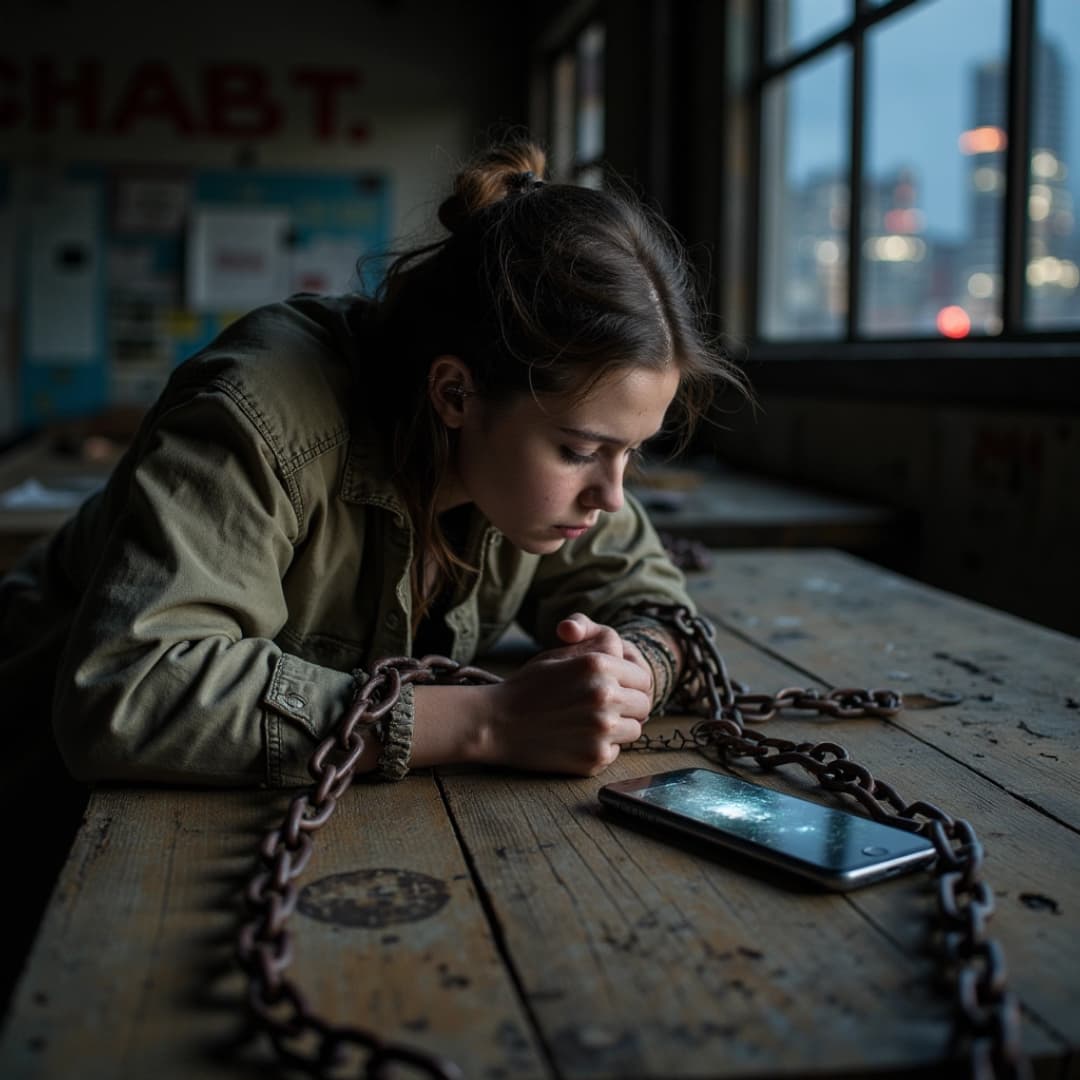
One time, they scroll because they can’t bring themselves to start an unpleasant task, and their brain, idling, is searching for a dopamine hit to press the start button. Another time, they scroll because, after eight hours of masking, sensory filtering and social adjustment, they are so exhausted that true silence would be more unbearable than any stimulation.
Both times, it looks the same from the outside. Neurobiologically, it is the opposite.
This is precisely where common assumptions about screen time, digital habits and ‘brain rot’ fail: they treat two opposing states with the same solution: less screen time. More discipline. That may be true for neurotypical adults. For adults with autism, ADHD or both, it is simply wrong – and, in the worst case, yet another stressor in a daily life that already demands too much.
TL;DR
· Burnout in autism and ADHD arises from years of conflict between external expectations and one’s own neurological capacities; masking is the central, usually invisible driver.
· Depending on the state of the nervous system, digital media fulfil opposite functions: avoidance during hyperarousal, and bridging during activation exhaustion.
· The skill that adults with autism and ADHD need is self-awareness, not prohibition.
· The risk lies not in the screen itself, but in the screen becoming the only remaining regulatory strategy.
What distinguishes AuDHS burnout from other states of exhaustion
Burnout in ADHD and autism is not burnout in the standard occupational health sense. It does not arise from workloads, overtime or poor management. It arises from the persistent mismatch between what neurotypical society takes for granted and what an AuDHS nervous system must expend to achieve it.
People with autism process visual stimuli, auditory impressions and social cues with greater intensity. The autistic system processes these impressions actively rather than passively. Every encounter, every meeting, every shopping trip is an act of self-regulation. ADHD, meanwhile, involves a struggle with structurally unstable attention and emotional regulation.
At the same time, those affected have often been trying since childhood to adapt their behaviour and reactions to neurotypical society – not of their own free will, but because social survival depended on it. This means chronic stress that builds up over the years until reserves are exhausted.
Masking: The cost of functioning invisibly
Masking is the most frequently underestimated source of exhaustion in AuDHS (and not only there). Those affected learn early on to suppress atypical behaviours, imitate neurotypical communication, force eye contact, and delay reactions. From the outside, this appears as competence. Neurobiologically, it is extremely exhausting for those affected – and this is a constant, not an occasional, strain.
The better the masking works, the less recognition there is from those close to them. Those who appear inconspicuous are regarded as stable. Misunderstandings from loved ones and society are therefore a further stressor: ‘You don’t look exhausted at all’ is no relief.
For many sufferers, burnout finally brought to light what had long been hidden: that their reserves were finally exhausted.
Two states, one screen, the crucial difference
In AuDHS, digital media fulfil completely different functions depending on the state of exhaustion. Anyone who fails to distinguish between these recommends the same thing in both cases and is systematically wrong in one.
State 1: Hyperarousal and avoidance
The racing engine of the ADHD brain struggles with a biological ignition trap: when executive function fails to kick in, the brain refuses to initiate difficult tasks. Endless scrolling is indeed a problem in this state. The nervous system seeks a dopamine impulse to initiate, but fails to find it because the feed is too fragmented to generate genuine activation.
App-hopping – switching between applications in a matter of seconds – is the digital equivalent of motor hyperactivity. Working memory, already limited in ADHD, is completely depleted by constant shifts in context. Dopamine binging through highly intense content raises the stimulus threshold: everyday demands, household chores, dealing with the authorities, and a simple phone call become subjectively unbearably difficult to start.
In this state, it is true: the screen exacerbates the problem.
State 2: Activation exhaustion
This is the state that neurotypical wellness guides are unfamiliar with and therefore cannot address.
Activation exhaustion means: worn out yet still wired. The nervous system is exhausted but not downregulated. It has no capacity left for demands and, at the same time, no capacity for true stillness. Anyone in this state after a long day of masking, sensory overload and social adjustment does not experience quiet as rest, but as an unbearable void.
“Go for a walk.” “Meditate.” “Put your phone away and read a book.” These are activities that demand attention, body awareness and decision-making. For a nervous system in a state of activation exhaustion, these are not offers of rest. There are further demands.
In this state, digital media provide what the nervous system needs: stimulation that can be meted out, controlled and paused, without social pressure. No eye contact, no expectations, no interpretation of body language. Stimuli that can be consumed without having to regulate oneself. Passive viewing is then not dissociation; it is a bridge. The nervous system stabilises, then winds down.
In this state, the usual advice is not only wrong but also counterproductive.
Sensory overload and audio input: Here, too, the distinction applies
Constant audio input (podcasts, music, background videos) is generally regarded as a factor that exacerbates exhaustion. This is true in some situations. For those with auditory processing disorders (AuDHS), however, background audio serves as active stimulus regulation: it dampens the chaotic inner monologue, creates a manageable channel and prevents the brain from getting lost in uncontrolled spirals of thought.
The questions are: What function is the audio input currently serving? An anchor or a distraction? Is it being used in a controlled manner? This requires self-awareness, not a blanket ban.
The same applies to late-night screen use. The AuDHS nervous system often has a delayed internal clock. Night-time is frequently the only period free from external demands. Anyone who frames this as a discipline issue ignores the fact that sleep disorders in AuDHS have a neurobiological basis, and that reaching for a screen at night serves the same function as during the day: keeping the nervous system at a manageable level until sleep comes.
The real risk: when the screen is the only strategy
The risk of digital media for those with AuDHS does not lie in the use itself. It lies in the narrowing of options. If excessive media consumption is the only remaining regulatory strategy because all others have been ruled out due to exhaustion, a lack of diagnosis or a lack of support, then it can lead to media addiction.
This is not an argument against screen time. It is an argument for a broader repertoire of regulation strategies and for an environment that supports those affected in building up this repertoire. The difficulties in everyday life, the barely remaining resilience to external stimuli, the severe concentration and memory problems – all these are signs of an underserved nervous system, not character flaws.
Professionals who focus exclusively on reducing media use without addressing the underlying burnout in AuDHS are treating the symptom and exacerbating the cause.
What actually helps: self-awareness as a core skill
The skill that adults with AuDHS need is the ability to read their own nervous system’s state.
Am I currently in avoidance mode, facing a task I can’t bring myself to start, and scrolling because I lack the initial impulse? Or am I in activation exhaustion, having given it my all, feeling exhausted and on edge, and needing a break until the system winds down?
Both states look the same from the outside. From the inside, they are different. And they require different responses.
This distinction can be learned through coaching, through self-observation, through an environment that takes needs and boundaries seriously, rather than counting screen time. People with autism are more than their diagnosis, and adults with ADHD are more than their symptoms. A healthy approach to digital media stems from self-awareness, not from bans.
RELATED ARTICLES:
DESCRIPTION:
Autism and ADHD, masking and the attempt to fit into the world, lead to burnout. Media consumption is sometimes a symptom, sometimes a solution, and when it can lead to media addiction, what helps in everyday life.
Burnout in ADHD and autism: Digital media as a refuge and a risk of addiction
The same person. The same screen. Two completely different states of the nervous system.
One time, they scroll because they can’t bring themselves to start an unpleasant task, and their brain, idling, is searching for a dopamine hit to press the start button. Another time, they scroll because, after eight hours of masking, sensory filtering and social adjustment, they are so exhausted that true silence would be more unbearable than any stimulation.
Both times, it looks the same from the outside. Neurobiologically, it is the opposite.
This is precisely where common assumptions about screen time, digital habits and ‘brain rot’ fail: they treat two opposing states with the same solution: less screen time. More discipline. That may be true for neurotypical adults. For adults with autism, ADHD or both, it is simply wrong – and, in the worst case, yet another stressor in a daily life that already demands too much.
TL;DR
· Burnout in autism and ADHD arises from years of conflict between external expectations and one’s own neurological capacities; masking is the central, usually invisible driver.
· Depending on the state of the nervous system, digital media fulfil opposite functions: avoidance during hyperarousal, and bridging during activation exhaustion.
· The skill that adults with autism and ADHD need is self-awareness, not prohibition.
· The risk lies not in the screen itself, but in the screen becoming the only remaining regulatory strategy.
What distinguishes AuDHS burnout from other states of exhaustion
Burnout in ADHD and autism is not burnout in the standard occupational health sense. It does not arise from workloads, overtime or poor management. It arises from the persistent mismatch between what neurotypical society takes for granted and what an AuDHS nervous system must expend to achieve it.
People with autism process visual stimuli, auditory impressions and social cues with greater intensity. The autistic system processes these impressions actively rather than passively. Every encounter, every meeting, every shopping trip is an act of self-regulation. ADHD, meanwhile, involves a struggle with structurally unstable attention and emotional regulation.
At the same time, those affected have often been trying since childhood to adapt their behaviour and reactions to neurotypical society – not of their own free will, but because social survival depended on it. This means chronic stress that builds up over the years until reserves are exhausted.
Masking: The cost of functioning invisibly
Masking is the most frequently underestimated source of exhaustion in AuDHS (and not only there). Those affected learn early on to suppress atypical behaviours, imitate neurotypical communication, force eye contact, and delay reactions. From the outside, this appears as competence. Neurobiologically, it is extremely exhausting for those affected – and this is a constant, not an occasional, strain.
The better the masking works, the less recognition there is from those close to them. Those who appear inconspicuous are regarded as stable. Misunderstandings from loved ones and society are therefore a further stressor: ‘You don’t look exhausted at all’ is no relief.
For many sufferers, burnout finally brought to light what had long been hidden: that their reserves were finally exhausted.
Two states, one screen, the crucial difference
In AuDHS, digital media fulfil completely different functions depending on the state of exhaustion. Anyone who fails to distinguish between these recommends the same thing in both cases and is systematically wrong in one.
State 1: Hyperarousal and avoidance
The racing engine of the ADHD brain struggles with a biological ignition trap: when executive function fails to kick in, the brain refuses to initiate difficult tasks. Endless scrolling is indeed a problem in this state. The nervous system seeks a dopamine impulse to initiate, but fails to find it because the feed is too fragmented to generate genuine activation.
App-hopping – switching between applications in a matter of seconds – is the digital equivalent of motor hyperactivity. Working memory, already limited in ADHD, is completely depleted by constant shifts in context. Dopamine binging through highly intense content raises the stimulus threshold: everyday demands, household chores, dealing with the authorities, and a simple phone call become subjectively unbearably difficult to start.
In this state, it is true: the screen exacerbates the problem.
State 2: Activation exhaustion
This is the state that neurotypical wellness guides are unfamiliar with and therefore cannot address.
Activation exhaustion means: worn out yet still wired. The nervous system is exhausted but not downregulated. It has no capacity left for demands and, at the same time, no capacity for true stillness. Anyone in this state after a long day of masking, sensory overload and social adjustment does not experience quiet as rest, but as an unbearable void.
“Go for a walk.” “Meditate.” “Put your phone away and read a book.” These are activities that demand attention, body awareness and decision-making. For a nervous system in a state of activation exhaustion, these are not offers of rest. There are further demands.
In this state, digital media provide what the nervous system needs: stimulation that can be meted out, controlled and paused, without social pressure. No eye contact, no expectations, no interpretation of body language. Stimuli that can be consumed without having to regulate oneself. Passive viewing is then not dissociation; it is a bridge. The nervous system stabilises, then winds down.
In this state, the usual advice is not only wrong but also counterproductive.
Sensory overload and audio input: Here, too, the distinction applies
Constant audio input (podcasts, music, background videos) is generally regarded as a factor that exacerbates exhaustion. This is true in some situations. For those with auditory processing disorders (AuDHS), however, background audio serves as active stimulus regulation: it dampens the chaotic inner monologue, creates a manageable channel and prevents the brain from getting lost in uncontrolled spirals of thought.
The questions are: What function is the audio input currently serving? An anchor or a distraction? Is it being used in a controlled manner? This requires self-awareness, not a blanket ban.
The same applies to late-night screen use. The AuDHS nervous system often has a delayed internal clock. Night-time is frequently the only period free from external demands. Anyone who frames this as a discipline issue ignores the fact that sleep disorders in AuDHS have a neurobiological basis, and that reaching for a screen at night serves the same function as during the day: keeping the nervous system at a manageable level until sleep comes.
The real risk: when the screen is the only strategy
The risk of digital media for those with AuDHS does not lie in the use itself. It lies in the narrowing of options. If excessive media consumption is the only remaining regulatory strategy because all others have been ruled out due to exhaustion, a lack of diagnosis or a lack of support, then it can lead to media addiction.
This is not an argument against screen time. It is an argument for a broader repertoire of regulation strategies and for an environment that supports those affected in building up this repertoire. The difficulties in everyday life, the barely remaining resilience to external stimuli, the severe concentration and memory problems – all these are signs of an underserved nervous system, not character flaws.
Professionals who focus exclusively on reducing media use without addressing the underlying burnout in AuDHS are treating the symptom and exacerbating the cause.
What actually helps: self-awareness as a core skill
The skill that adults with AuDHS need is the ability to read their own nervous system’s state.
Am I currently in avoidance mode, facing a task I can’t bring myself to start, and scrolling because I lack the initial impulse? Or am I in activation exhaustion, having given it my all, feeling exhausted and on edge, and needing a break until the system winds down?
Both states look the same from the outside. From the inside, they are different. And they require different responses.
This distinction can be learned through coaching, through self-observation, through an environment that takes needs and boundaries seriously, rather than counting screen time. People with autism are more than their diagnosis, and adults with ADHD are more than their symptoms. A healthy approach to digital media stems from self-awareness, not from bans.
RELATED ARTICLES:
Newsletter
Möchten Sie informiert werden, wenn ich einen neuen Blogbeitrag veröffentliche? Tragen Sie sich gern hier ein.
Klicken Sie auf „Kostenlos abonnieren“, wenn Sie meine Datenschutzerklärung gelesen und akzeptiert haben. Ihre Einwilligung können Sie jederzeit widerrufen.
Newsletter
Möchten Sie informiert werden, wenn ich einen neuen Blogbeitrag veröffentliche? Tragen Sie sich gern hier ein.
Klicken Sie auf „Kostenlos abonnieren“, wenn Sie meine Datenschutzerklärung gelesen und akzeptiert haben. Ihre Einwilligung können Sie jederzeit widerrufen.