Slowing down
Slowing down: Is ‘dusking’ the art of slowing down in a mindful life, or is it simply slowness as yet another trend towards greater well-being?
Slowing down: Is ‘dusking’ the art of slowing down in a mindful life, or is it simply slowness as yet another trend towards greater well-being?
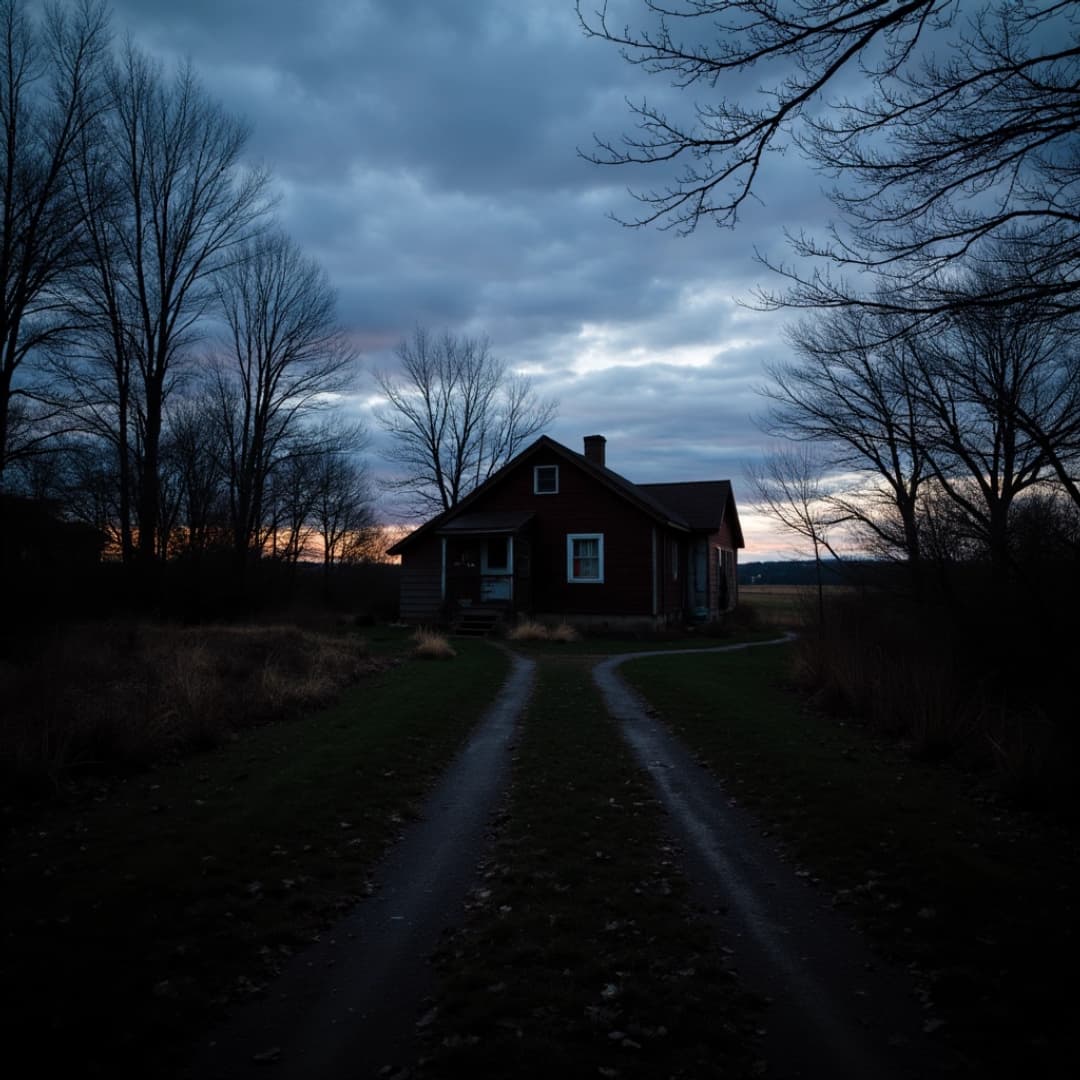
DESCRIPTION:
Slowing down: Dusking as a break for greater well-being? More and more people are consciously seeking a slower pace offline, wanting to slow down their lives and find greater mindfulness and quality of life.
Slowness as a commodity: Why ‘dusking’ is not a genuine art of slowing down in modern life
What it’s all about:
· Slowing down as a trend: Dusking promises slowness and well-being,
· That conscious pausing cannot be bought, and
· A critical analysis of modern ‘time-out’ rituals and their digital marketing.
The art of slowing down and its new hype
Rainer Maria Rilke: Evening (trans. Susan McLean, Amethyst Review, 2021)
The evening slowly changes its attire, held for it by a border of old trees. You watch the realms depart from you and veer away: one falls, and one ascends the skies.
They leave you, who do not quite belong to either, not quite as dark as the silent house, not quite as surely calling forth what lasts forever as that which turns to star and climbs each night.
They leave you inexpressibly unwinding your life—enormous, ripening, tinged with fear— now limited in scope, now comprehending, by turns becoming stone in you and star.
The subject stands in the twilight, neither with the living nor with the dead, neither in the day nor in the night. Life reveals itself as “fearful and immense and ripening”. This is not a sense of well-being. This is confrontation.
Now this moment is called ‘Dusking’ and has a festival programme.
Schemeren, meaning ‘to twilight’ or ‘to shimmer’ in German, has a close etymological connection to the German word schimmern and the word family centred on dämmern. The practice of schemeren has genuine cultural-historical roots in the Netherlands, but not only there. Farmers’ families would sit together in the evening, letting the daylight fade before lighting a candle: a collective pause between work and night, which was neither spiritually charged nor individually optimised. It was simply what people did when they were poor enough to save candles and wise enough to appreciate the silence.
Now it’s a trend. And that’s the problem.
What the evening meant in antiquity: a boundary, not a break
Before modern life turned twilight into a formula for relaxation, in ancient thought it was a threshold moment to be taken seriously in a philosophical sense – and that in the literal sense.
For the Stoics and Epicurus, the end of the day was not a passive winding down but an active prosoche: self-awareness and self-examination. Even the somewhat vain Emperor Marcus Aurelius recorded his evening reflections, both to calm himself and to examine himself in the spirit of Stoic philosophy: What have I done today? Where have I fallen short of my own standards? I do not wish to do him an injustice. But as a Roman emperor, it is easy to preach that, as a rational being, one must accept what the universe has deemed appropriate for one. This form of self-care, however, had nothing to do with modern well-being management: it was existential discipline.
The sunset in the west was, mythologically, the side of the end. Helios plunges into the sea; the world returns to darkness. In myths, there was no occasion for relaxation but for humility in the face of forces greater than human action. Twilight as a reminder of one’s own mortality: that is the exact opposite of a ‘slow living’ marketing strategy.
The symposium, as an evening social gathering of the elite, was first and foremost a civilised drinking session in a cosy setting on reclining couches, and certainly only occasionally an institutionalised philosophical debate. Regardless: wine, Eros, Logos – Plato sought in it a form of insight, not a relaxation technique. And in many cultures, twilight marked the moment when the boundary between the divine and human worlds became permeable: not pleasant, but uncanny in the literal sense: the familiar becomes alien.
In ancient thought, the evening was a conscious turning point that called for reflection: on the day’s actions, on the order of the world, on one’s own death. To pause consciously meant: to expose oneself to the gravity of the moment, not to be freed from it.
Slowing down as a lifestyle: the structural lie
Modern life constantly produces exhaustion and new promises of escaping it. More and more people are seeking breaks from digital daily life, ways to consciously live more slowly, to interrupt constant availability: switching off smartphones and social media for a while, turning off emails and notifications for hours, going offline. Lowering stress levels, bringing body and mind to rest.
The vocabulary is familiar: slow living, digital detox, mindfulness, niksen. And now: dusking.
What is striking about this vocabulary is its structural blindness. It diagnoses symptoms: hecticness, multitasking, constant availability, distraction, and everyday stress – without naming their causes. In a fast-paced society, the acceleration of modern life and hectic daily routines, small changes, short breaks, evening rituals, and walks in nature or forest bathing can help counteract them. We are told to set priorities, focus on one thing, and live more mindfully: consciously slower, if possible.
What is missing here is the question of who benefits from this exhaustion. And who benefits from its management?
Byung-Chul Han has described this logic precisely: meritocracy generates burnout not only through overwork but also through the complete colonisation of moments of rest. Doing nothing becomes a project: optimised, accompanied by apps, documented on social media, and marketed as a lifestyle. Rest becomes a productivity measure for the next working day. You don’t escape everyday stress: you manage it so that it can continue.
Studies show that brief encounters with nature promote general well-being, calm the mind and help reduce stress. That is true. It is also true that reducing notifications, going offline temporarily, and pausing emails and calls during the working day result in measurable physical relaxation. Studies demonstrate this time and again.
But: anyone who turns these insights into a trendy format, into a curated festival event with a soundscape and a ticket, has already betrayed them. Taking a deep breath becomes a habit one must acquire. Pausing becomes a service. Twilight becomes a product.
Symbols and their destruction
The psychoanalyst and cultural theorist Alfred Lorenzer borrows a term from Susanne Langer that is central to understanding dusking as a commodity form: presentational symbolism.
Unlike discursive symbolism—language, concepts, judgements—presentational symbolism is sensory, physical, and cannot be fully expressed in words. These are symbolically saturated forms of experience through which the subject relates to the world: rituals, gestures, aesthetic experiences, and perceptions of nature. The blue hour, twilight, the fading of daylight: these are, par excellence, experiences of presentational symbolism. They speak to the body through emotions, not merely to the mind. They are meaningful without being fully expressible.
Lorenzer’s thesis, developed in dialogue with Freud, Adorno and the Frankfurt School, was that capitalist consumer and meritocratic society systematically desymbolises. It hollows out presentational symbolism by severing it from sensory experience and leaving only clichés behind: stereotypical carriers of meaning that replace the living relationship between subject and world with prefabricated offerings of meaning – maximised exchange without use-value, the satisfaction of needs that can be consumed in the act of purchase, driven by supply, without one truly feeling oneself.
The cliché isn’t wrong in the sense that it’s a lie. It’s wrong because it mimics the form of lived experience, whilst the experience itself remains unfulfilled. Anyone who attends a Dusking event to ‘experience twilight’ gets exactly the kind of event they are looking for: curated, safe, and accompanied by an explanation. What they do not get is what twilight truly offers: self-determination in its indisponibility. Being at the mercy of a name that couldn’t care less about the observer.
Rilke’s ‘evoking the not-quite-so-certain eternal’ is no formula for well-being. It is the precise description of an experience that destabilises the subject and, in this destabilisation, reveals something that no event can produce.
Commodity Aesthetics and Desymbolisation
Wolfgang Fritz Haug’s Critique of Commodity Aesthetics (1971) and Alfred Lorenzer’s materialist-psychoanalytic theory of culture converge on a point that proves more precise for analysing the ‘dusking’ trend than any simple critique of the wellness industry: the rise of substitute gratification through the combination of symptom and template.
Haug explains how commodities do not simply satisfy needs but first create segments of need, then fill them with precisely tailored expressions. The commodity presents itself as a promise: within it, parts of an individual's unfulfilled being seem to find perfect expression and satisfaction. The promise is not empty or meaningless – it is finely tuned to the identified segment of need, like a key fitting a lock. What is sold is not just the product, but the illusion of a better life — and this illusion is already stolen from buyers the moment they make their purchase.
Lorenzer expands and deepens this analysis through the concept of presentational symbolism and its destruction. For Lorenzer, what is crucial is that what Haug describes at the level of commodity aesthetics occurs at the level of the subject: the commodity addresses not only a need but also a *form of interaction* – a bodily anchored, presentationally symbolic mode of experience that links the subject to the world. When this form is colonised by commodification, no genuine satisfaction occurs; instead, there is a transformation of the structure of need itself: what was originally a living relationship between the subject and the world becomes a cliché – an empty template that appears to contain meaning but lacks its substance.
The key idea here is that of the empty sign, which Lorenzer introduces in contrast to Susanne Langer’s distinction between presentational and discursive symbolism. Langer differentiates between symbolic forms arranged discursively and linguistically, and those that function presentationally and sensuously – music, ritual, aesthetic experience. Lorenzer agrees with this distinction but refines it: Not every sensory-presentational form is a symbol. That which aims at desymbolisation, used to stage prejudices and to sensually distort meaning, is no longer a symbol but an empty sign. It appears as symbolism but lacks its content – the living link between subject, body, and world has been removed from it.
This is precisely where Haug and Lorenzer converge: Lorenzer’s symptom template corresponds to Haug’s key-lock principle. A complex of needs – exhaustion, meaninglessness, alienation from one’s own body and from natural rhythms – is identified. A negative experience is pinpointed. It is then given a positive form in the commodity: the curated twilight, the soundscape, the event ticket. The exploited structure of needs is not satisfied but remoulded: what began as a real symptom of a social contradiction – exhaustion through constant acceleration, the erosion of natural rhythms of time, the colonisation of moments of rest by demands for performance – takes on a form in the commodity that makes it appear as an individually solvable problem.
Haug’s formulation here is of ruthless precision: the constant aesthetic innovation in the world of commodities corresponds to the ongoing upheaval of the system of needs. Dusking as a trend precisely embodies this upheaval: the need for a different relationship to time, nature, and one’s own body—a need that highlights real social contradictions—is transformed into a consumable format. The commodity gains sensory impact, conveying a meaning inherent in the object’s form, yet it does not create a satisfying experience of the world; rather, it exercises domination through the seductive presentation of a particular way of life.
To which Lorenzer adds: This domination operates not only at the level of consciousness, but also at the level of bodily interaction. The colonisation of the evening by the dusking event runs deeper than mere ideological illusion. It occupies a space of experience that is formed in a presentational-symbolic manner: the liminal experience of twilight, the transition from day to night, the bodily resonance of the fading light. By transforming this experience into a managed form, into an event with a presenter and soundscape, it turns presentational symbolism into an empty sign. The evening ceases to be a space of experience and becomes a consumer format.
This is what Lorenzer means by desymbolisation: not the absence of signs, but the presence of signs that resemble symbolism without fulfilling its purpose—that of creating a connection between the subject and the world in a lively, bodily anchored, meaning-filled experience. And it is exactly what Haug describes as the situationalisation of symbolisation in the interaction of presentational motifs with sensory-symbolic forms: the domain where commodity aesthetics functions, because it is the space where the subject is most vulnerable: where it does not judge discursively but resonates physically.
In this reading, the ‘dusking’ hype exemplifies how substitute gratification emerges through symptom and template: the symptom is the genuine exhaustion caused by a society that no longer recognises clear boundaries between work and rest. The template is the event format that frames this exhaustion as an individual fault and makes it seem more satisfying as a consumable experience. What is taken away in the process is not only lifetime and vitality but also the possibility of transforming the symptom into a social insight.
What twilight really offers: the uncanniness of the threshold
In Romanticism (in Eichendorff, Rilke, Novalis), twilight is not a setting for relaxation, but the preferred moment of intrusion: of the unconscious, the past, the unintegrated. The boundary between day and night is the boundary between the conscious and the unconscious, between the self and the non-self. The fact that many cultures have populated this moment with spirits, gods and threshold beings is not superstition: it is representational symbolism. Twilight reveals: this is where control ends.
Winnicott’s concept of transitional space is illuminating here: the transitional zone between inside and outside, between self and world, which is neither fully controlled nor entirely alien. A space for play, in the most literal sense. Creativity that presupposes genuine uncertainty. What the Dusking trend format does is to precisely define this scope: through narrative framing, the presence of a presenter, and a soundscape that explains what one is currently experiencing. The potentially destabilising becomes a managed experience. The uncanny is domesticated.
This is not harmless. It is the structural form in which meritocracy deals with everything that could pose a threat to it: it devalues it and turns it into a void of longing by selling it. And by selling the shell of genuine experience, it renders it unattainable.
The hype and its honest diagnosis
Dusking as a trend deserves honest appreciation and equally honest criticism.
Let’s be honest: this is a genuine concern. Constant availability, our digital daily lives, being connected round the clock, multitasking, and the ever-present emails and social media notifications: all of this leads to genuine exhaustion. The longing for slowness, for consciously pausing in the present moment, for experiencing the transition between day and night: rather than a neurotic escape, this is a legitimate reaction to conditions that constantly overwhelm the individual.
Studies show that experiencing nature, tranquillity, and a break from distractions and the flow of information provides mental and physical relief. This is key. And van Heemstra’s initiative to revive an old collective practice is therefore culturally valuable.
The criticism: if pausing becomes a habit one must train oneself to adopt, if time-out becomes a service one buys, if slowness becomes a lifestyle one optimises, then haste has already won. The hectic daily routine is not interrupted. It is expanded to include a wellness module that enables its continuation.
True deceleration would not ask, “How can I take better breaks?” It would ask: Why do I have to achieve so much that breaks need their own hype?
What remains: slowness without a ticket
The blue hour needs no instructions. It needs no app, no presenter, no festival format, no programme. Marjolijn van Heemstra says it herself: “A chair and a view: that’s all.” That is true. It is also the only truth in what has become of her practice.
What the ancient, the romantic, and the psychoanalytical aspects of twilight reveal: it is a moment in which the subject can become aware of their own limits, not as an imposition to be prolonged, but as an experience one can endure. Or perhaps not. Both possibilities are honest.
Rilke’s evening does not end in relaxation. Life becomes “by turns a stone within you” and “a star”: heavy and vast, limited and comprehending. That is the opposite of a wellness promise. It is the description of an experience that does not soothe the subject, but shows them how things really are.
This does not require slowness as a lifestyle. It requires a willingness to face the threshold: without a soundscape, without an event host, without anyone explaining what one is currently experiencing.
Twilight does that anyway. Every evening. Free of charge. And regardless of whether one is ready.
RELATED ARTICLES:
DESCRIPTION:
Slowing down: Dusking as a break for greater well-being? More and more people are consciously seeking a slower pace offline, wanting to slow down their lives and find greater mindfulness and quality of life.
Slowness as a commodity: Why ‘dusking’ is not a genuine art of slowing down in modern life
What it’s all about:
· Slowing down as a trend: Dusking promises slowness and well-being,
· That conscious pausing cannot be bought, and
· A critical analysis of modern ‘time-out’ rituals and their digital marketing.
The art of slowing down and its new hype
Rainer Maria Rilke: Evening (trans. Susan McLean, Amethyst Review, 2021)
The evening slowly changes its attire, held for it by a border of old trees. You watch the realms depart from you and veer away: one falls, and one ascends the skies.
They leave you, who do not quite belong to either, not quite as dark as the silent house, not quite as surely calling forth what lasts forever as that which turns to star and climbs each night.
They leave you inexpressibly unwinding your life—enormous, ripening, tinged with fear— now limited in scope, now comprehending, by turns becoming stone in you and star.
The subject stands in the twilight, neither with the living nor with the dead, neither in the day nor in the night. Life reveals itself as “fearful and immense and ripening”. This is not a sense of well-being. This is confrontation.
Now this moment is called ‘Dusking’ and has a festival programme.
Schemeren, meaning ‘to twilight’ or ‘to shimmer’ in German, has a close etymological connection to the German word schimmern and the word family centred on dämmern. The practice of schemeren has genuine cultural-historical roots in the Netherlands, but not only there. Farmers’ families would sit together in the evening, letting the daylight fade before lighting a candle: a collective pause between work and night, which was neither spiritually charged nor individually optimised. It was simply what people did when they were poor enough to save candles and wise enough to appreciate the silence.
Now it’s a trend. And that’s the problem.
What the evening meant in antiquity: a boundary, not a break
Before modern life turned twilight into a formula for relaxation, in ancient thought it was a threshold moment to be taken seriously in a philosophical sense – and that in the literal sense.
For the Stoics and Epicurus, the end of the day was not a passive winding down but an active prosoche: self-awareness and self-examination. Even the somewhat vain Emperor Marcus Aurelius recorded his evening reflections, both to calm himself and to examine himself in the spirit of Stoic philosophy: What have I done today? Where have I fallen short of my own standards? I do not wish to do him an injustice. But as a Roman emperor, it is easy to preach that, as a rational being, one must accept what the universe has deemed appropriate for one. This form of self-care, however, had nothing to do with modern well-being management: it was existential discipline.
The sunset in the west was, mythologically, the side of the end. Helios plunges into the sea; the world returns to darkness. In myths, there was no occasion for relaxation but for humility in the face of forces greater than human action. Twilight as a reminder of one’s own mortality: that is the exact opposite of a ‘slow living’ marketing strategy.
The symposium, as an evening social gathering of the elite, was first and foremost a civilised drinking session in a cosy setting on reclining couches, and certainly only occasionally an institutionalised philosophical debate. Regardless: wine, Eros, Logos – Plato sought in it a form of insight, not a relaxation technique. And in many cultures, twilight marked the moment when the boundary between the divine and human worlds became permeable: not pleasant, but uncanny in the literal sense: the familiar becomes alien.
In ancient thought, the evening was a conscious turning point that called for reflection: on the day’s actions, on the order of the world, on one’s own death. To pause consciously meant: to expose oneself to the gravity of the moment, not to be freed from it.
Slowing down as a lifestyle: the structural lie
Modern life constantly produces exhaustion and new promises of escaping it. More and more people are seeking breaks from digital daily life, ways to consciously live more slowly, to interrupt constant availability: switching off smartphones and social media for a while, turning off emails and notifications for hours, going offline. Lowering stress levels, bringing body and mind to rest.
The vocabulary is familiar: slow living, digital detox, mindfulness, niksen. And now: dusking.
What is striking about this vocabulary is its structural blindness. It diagnoses symptoms: hecticness, multitasking, constant availability, distraction, and everyday stress – without naming their causes. In a fast-paced society, the acceleration of modern life and hectic daily routines, small changes, short breaks, evening rituals, and walks in nature or forest bathing can help counteract them. We are told to set priorities, focus on one thing, and live more mindfully: consciously slower, if possible.
What is missing here is the question of who benefits from this exhaustion. And who benefits from its management?
Byung-Chul Han has described this logic precisely: meritocracy generates burnout not only through overwork but also through the complete colonisation of moments of rest. Doing nothing becomes a project: optimised, accompanied by apps, documented on social media, and marketed as a lifestyle. Rest becomes a productivity measure for the next working day. You don’t escape everyday stress: you manage it so that it can continue.
Studies show that brief encounters with nature promote general well-being, calm the mind and help reduce stress. That is true. It is also true that reducing notifications, going offline temporarily, and pausing emails and calls during the working day result in measurable physical relaxation. Studies demonstrate this time and again.
But: anyone who turns these insights into a trendy format, into a curated festival event with a soundscape and a ticket, has already betrayed them. Taking a deep breath becomes a habit one must acquire. Pausing becomes a service. Twilight becomes a product.
Symbols and their destruction
The psychoanalyst and cultural theorist Alfred Lorenzer borrows a term from Susanne Langer that is central to understanding dusking as a commodity form: presentational symbolism.
Unlike discursive symbolism—language, concepts, judgements—presentational symbolism is sensory, physical, and cannot be fully expressed in words. These are symbolically saturated forms of experience through which the subject relates to the world: rituals, gestures, aesthetic experiences, and perceptions of nature. The blue hour, twilight, the fading of daylight: these are, par excellence, experiences of presentational symbolism. They speak to the body through emotions, not merely to the mind. They are meaningful without being fully expressible.
Lorenzer’s thesis, developed in dialogue with Freud, Adorno and the Frankfurt School, was that capitalist consumer and meritocratic society systematically desymbolises. It hollows out presentational symbolism by severing it from sensory experience and leaving only clichés behind: stereotypical carriers of meaning that replace the living relationship between subject and world with prefabricated offerings of meaning – maximised exchange without use-value, the satisfaction of needs that can be consumed in the act of purchase, driven by supply, without one truly feeling oneself.
The cliché isn’t wrong in the sense that it’s a lie. It’s wrong because it mimics the form of lived experience, whilst the experience itself remains unfulfilled. Anyone who attends a Dusking event to ‘experience twilight’ gets exactly the kind of event they are looking for: curated, safe, and accompanied by an explanation. What they do not get is what twilight truly offers: self-determination in its indisponibility. Being at the mercy of a name that couldn’t care less about the observer.
Rilke’s ‘evoking the not-quite-so-certain eternal’ is no formula for well-being. It is the precise description of an experience that destabilises the subject and, in this destabilisation, reveals something that no event can produce.
Commodity Aesthetics and Desymbolisation
Wolfgang Fritz Haug’s Critique of Commodity Aesthetics (1971) and Alfred Lorenzer’s materialist-psychoanalytic theory of culture converge on a point that proves more precise for analysing the ‘dusking’ trend than any simple critique of the wellness industry: the rise of substitute gratification through the combination of symptom and template.
Haug explains how commodities do not simply satisfy needs but first create segments of need, then fill them with precisely tailored expressions. The commodity presents itself as a promise: within it, parts of an individual's unfulfilled being seem to find perfect expression and satisfaction. The promise is not empty or meaningless – it is finely tuned to the identified segment of need, like a key fitting a lock. What is sold is not just the product, but the illusion of a better life — and this illusion is already stolen from buyers the moment they make their purchase.
Lorenzer expands and deepens this analysis through the concept of presentational symbolism and its destruction. For Lorenzer, what is crucial is that what Haug describes at the level of commodity aesthetics occurs at the level of the subject: the commodity addresses not only a need but also a *form of interaction* – a bodily anchored, presentationally symbolic mode of experience that links the subject to the world. When this form is colonised by commodification, no genuine satisfaction occurs; instead, there is a transformation of the structure of need itself: what was originally a living relationship between the subject and the world becomes a cliché – an empty template that appears to contain meaning but lacks its substance.
The key idea here is that of the empty sign, which Lorenzer introduces in contrast to Susanne Langer’s distinction between presentational and discursive symbolism. Langer differentiates between symbolic forms arranged discursively and linguistically, and those that function presentationally and sensuously – music, ritual, aesthetic experience. Lorenzer agrees with this distinction but refines it: Not every sensory-presentational form is a symbol. That which aims at desymbolisation, used to stage prejudices and to sensually distort meaning, is no longer a symbol but an empty sign. It appears as symbolism but lacks its content – the living link between subject, body, and world has been removed from it.
This is precisely where Haug and Lorenzer converge: Lorenzer’s symptom template corresponds to Haug’s key-lock principle. A complex of needs – exhaustion, meaninglessness, alienation from one’s own body and from natural rhythms – is identified. A negative experience is pinpointed. It is then given a positive form in the commodity: the curated twilight, the soundscape, the event ticket. The exploited structure of needs is not satisfied but remoulded: what began as a real symptom of a social contradiction – exhaustion through constant acceleration, the erosion of natural rhythms of time, the colonisation of moments of rest by demands for performance – takes on a form in the commodity that makes it appear as an individually solvable problem.
Haug’s formulation here is of ruthless precision: the constant aesthetic innovation in the world of commodities corresponds to the ongoing upheaval of the system of needs. Dusking as a trend precisely embodies this upheaval: the need for a different relationship to time, nature, and one’s own body—a need that highlights real social contradictions—is transformed into a consumable format. The commodity gains sensory impact, conveying a meaning inherent in the object’s form, yet it does not create a satisfying experience of the world; rather, it exercises domination through the seductive presentation of a particular way of life.
To which Lorenzer adds: This domination operates not only at the level of consciousness, but also at the level of bodily interaction. The colonisation of the evening by the dusking event runs deeper than mere ideological illusion. It occupies a space of experience that is formed in a presentational-symbolic manner: the liminal experience of twilight, the transition from day to night, the bodily resonance of the fading light. By transforming this experience into a managed form, into an event with a presenter and soundscape, it turns presentational symbolism into an empty sign. The evening ceases to be a space of experience and becomes a consumer format.
This is what Lorenzer means by desymbolisation: not the absence of signs, but the presence of signs that resemble symbolism without fulfilling its purpose—that of creating a connection between the subject and the world in a lively, bodily anchored, meaning-filled experience. And it is exactly what Haug describes as the situationalisation of symbolisation in the interaction of presentational motifs with sensory-symbolic forms: the domain where commodity aesthetics functions, because it is the space where the subject is most vulnerable: where it does not judge discursively but resonates physically.
In this reading, the ‘dusking’ hype exemplifies how substitute gratification emerges through symptom and template: the symptom is the genuine exhaustion caused by a society that no longer recognises clear boundaries between work and rest. The template is the event format that frames this exhaustion as an individual fault and makes it seem more satisfying as a consumable experience. What is taken away in the process is not only lifetime and vitality but also the possibility of transforming the symptom into a social insight.
What twilight really offers: the uncanniness of the threshold
In Romanticism (in Eichendorff, Rilke, Novalis), twilight is not a setting for relaxation, but the preferred moment of intrusion: of the unconscious, the past, the unintegrated. The boundary between day and night is the boundary between the conscious and the unconscious, between the self and the non-self. The fact that many cultures have populated this moment with spirits, gods and threshold beings is not superstition: it is representational symbolism. Twilight reveals: this is where control ends.
Winnicott’s concept of transitional space is illuminating here: the transitional zone between inside and outside, between self and world, which is neither fully controlled nor entirely alien. A space for play, in the most literal sense. Creativity that presupposes genuine uncertainty. What the Dusking trend format does is to precisely define this scope: through narrative framing, the presence of a presenter, and a soundscape that explains what one is currently experiencing. The potentially destabilising becomes a managed experience. The uncanny is domesticated.
This is not harmless. It is the structural form in which meritocracy deals with everything that could pose a threat to it: it devalues it and turns it into a void of longing by selling it. And by selling the shell of genuine experience, it renders it unattainable.
The hype and its honest diagnosis
Dusking as a trend deserves honest appreciation and equally honest criticism.
Let’s be honest: this is a genuine concern. Constant availability, our digital daily lives, being connected round the clock, multitasking, and the ever-present emails and social media notifications: all of this leads to genuine exhaustion. The longing for slowness, for consciously pausing in the present moment, for experiencing the transition between day and night: rather than a neurotic escape, this is a legitimate reaction to conditions that constantly overwhelm the individual.
Studies show that experiencing nature, tranquillity, and a break from distractions and the flow of information provides mental and physical relief. This is key. And van Heemstra’s initiative to revive an old collective practice is therefore culturally valuable.
The criticism: if pausing becomes a habit one must train oneself to adopt, if time-out becomes a service one buys, if slowness becomes a lifestyle one optimises, then haste has already won. The hectic daily routine is not interrupted. It is expanded to include a wellness module that enables its continuation.
True deceleration would not ask, “How can I take better breaks?” It would ask: Why do I have to achieve so much that breaks need their own hype?
What remains: slowness without a ticket
The blue hour needs no instructions. It needs no app, no presenter, no festival format, no programme. Marjolijn van Heemstra says it herself: “A chair and a view: that’s all.” That is true. It is also the only truth in what has become of her practice.
What the ancient, the romantic, and the psychoanalytical aspects of twilight reveal: it is a moment in which the subject can become aware of their own limits, not as an imposition to be prolonged, but as an experience one can endure. Or perhaps not. Both possibilities are honest.
Rilke’s evening does not end in relaxation. Life becomes “by turns a stone within you” and “a star”: heavy and vast, limited and comprehending. That is the opposite of a wellness promise. It is the description of an experience that does not soothe the subject, but shows them how things really are.
This does not require slowness as a lifestyle. It requires a willingness to face the threshold: without a soundscape, without an event host, without anyone explaining what one is currently experiencing.
Twilight does that anyway. Every evening. Free of charge. And regardless of whether one is ready.
RELATED ARTICLES:
Newsletter
Would you like to be notified when I publish a new blog post? Sign up here.
Click "Subscribe for free" if you have read and accepted my privacy policy. You can revoke your consent at any time.
Newsletter
Would you like to be notified when I publish a new blog post? Sign up here.
Click "Subscribe for free" if you have read and accepted my privacy policy. You can revoke your consent at any time.