Alpha waves
DESCRIPTION:
A Swedish-French research team published in Nature Communications that alpha brain waves control our body awareness – the perceived boundary between "me" and "not me".
Alpha waves in the brain: How brain waves control your body awareness
New research shows that so-called alpha waves in the parietal cortex determine where the self ends and the outside world begins. This has far-reaching consequences – from the treatment of dissociative disorders to the development of intelligent prostheses. An overview of the study, its neurobiological basis, and its implications for clinical practice.
What are alpha waves, and what role do they play in our experience of self?
Alpha waves are rhythmic electrical oscillations in the brain with a frequency of about 8 to 13 hertz. They were first described at the beginning of the 20th century by German psychiatrist Hans Berger and have since been considered a marker of relaxed alertness. In clinical practice, they are routinely measured in EEGs, and changes in them can indicate a wide variety of neurological and psychiatric conditions. But their significance goes far beyond simple relaxation or diagnostics: recent research shows that alpha waves play a central role in processing sensory information and integrating bodily perceptions.
Especially in the parietal cortex – the area of the brain responsible for mapping our own body and processing sensory stimuli – alpha waves seem to have a significant influence on how we experience our body as "belonging to us". A study published in Nature Communications in January 2026 by a Swedish-French research team was the first to show that the speed of these waves directly determines how sharply or permeably we perceive our body boundaries.
How was the study conducted? The rubber hand experiment
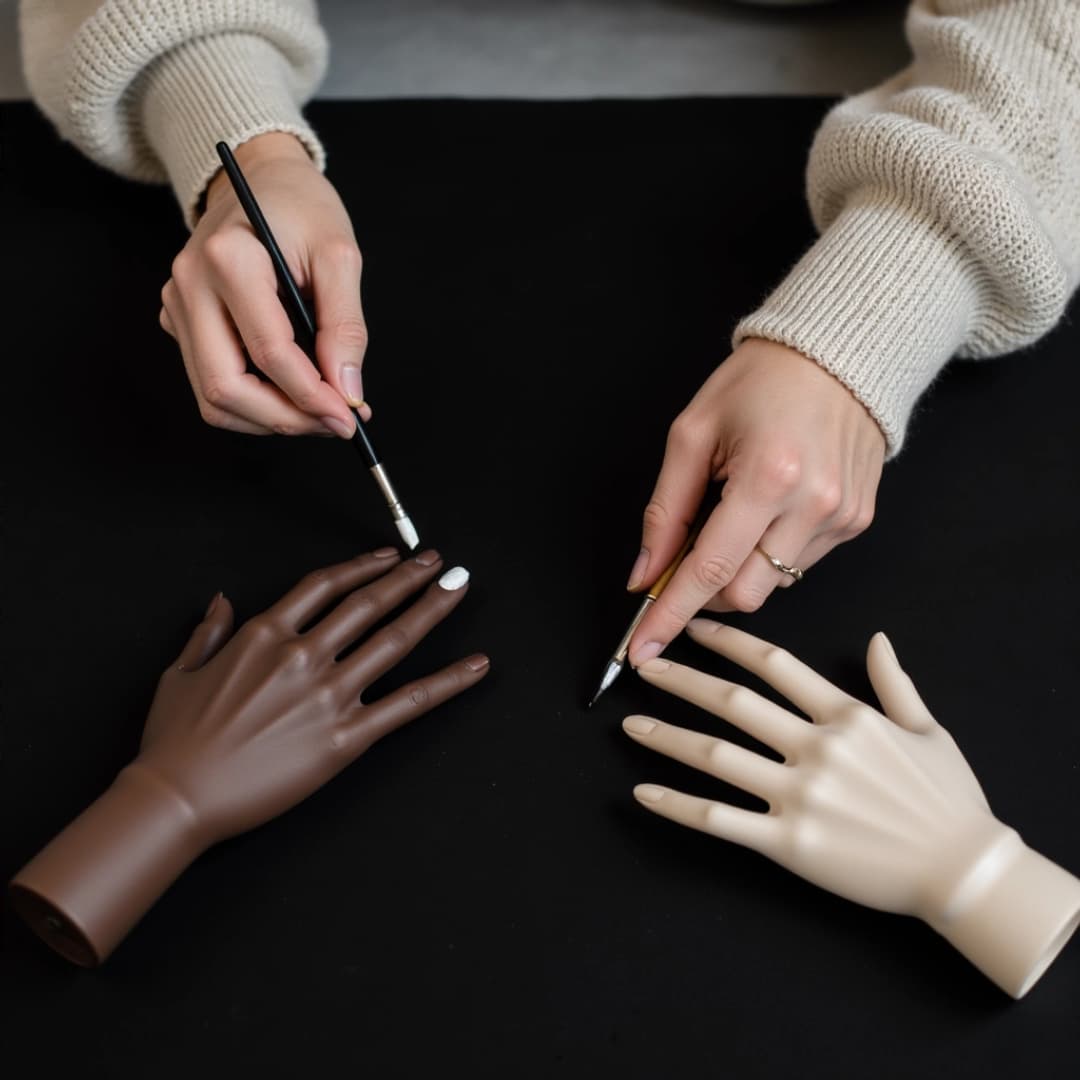
The researchers used a classic and elegantly simple experimental psychology paradigm: the rubber hand illusion. In this experiment, the test subject's real hand is hidden behind a screen, while a lifelike rubber hand is placed in front of them. Both hands – the real one and the artificial one – are then touched simultaneously with a brush.
The study involved 106 participants whose brain activity was recorded during the experiment using EEG (electroencephalography). The key finding was that many participants began to perceive the touch on the rubber hand as their own. They experienced a sense of ownership over an object that clearly did not belong to their body. The analysis of temporal synchronisation was particularly revealing: when the touches on the real and artificial hands occurred at the same time, the illusion was strongest. Even slight delays of a few hundred milliseconds could weaken it – but not equally in all participants, and this is where alpha waves come into play.
Which region of the brain controls the feeling of body ownership?
The EEG data clearly showed that alpha-wave activity in the parietal cortex correlated with the rubber hand illusion. The parietal cortex is a key region for what is known as multisensory integration – the brain's ability to combine information from different sensory channels (vision, touch, proprioception) into a unified body image.
Specifically, subjects with faster alpha waves detected even minimal delays between the rubber hand's perceived touch and the real hand's felt touch. Their brains were, in a sense, more "alert" to sensory discrepancies and were more likely to reject the illusion. Test subjects with slower alpha waves, on the other hand, were significantly more susceptible to the illusion – their body boundaries were more permeable.
Can body boundaries be specifically altered? The role of transcranial stimulation
The most remarkable aspect of the study lies in a second experimental step: the researchers used transcranial alternating current stimulation (tACS) to manipulate the speed of alpha waves specifically. tACS is a non-invasive procedure in which weak electrical currents are applied via electrodes on the scalp to influence the natural oscillation frequency of certain brain regions.
The result was clear: when the alpha frequency was accelerated, the subjects' body boundaries became more pronounced – they were less susceptible to the rubber hand illusion. When the frequency was slowed, the boundaries loosened, and the test subjects accepted the rubber hand more easily as part of their body. This proved not only a correlation but also a causal relationship ( ): the speed of alpha waves actively controls how the brain distinguishes between "I" and "not-I".
Why is body self-image so important for mental health?
The question of where the self ends and the world begins is not just a philosophical thought experiment – it has immediate clinical relevance. A stable body self-image forms the basis for numerous mental functions: emotional regulation, social interaction, action planning, and the fundamental sense of being a coherent person in the world.
Disturbances in this body self-image are found in a whole range of psychiatric disorders. In depersonalisation/derealisation disorder, those affected experience their own body as alien or unreal – as if they were observing themselves through a pane of glass. In dissociative disorders, often as a result of severe trauma, the connection between bodily sensation and self-experience can be completely severed. A distorted body image also plays a central role in eating disorders, although the question of the neurobiological basis of this distortion has not yet been adequately answered. The new study now provides a neurobiological mechanism that could underlie these phenomena.
What significance do the results have for schizophrenia and dissociative disorders?
In schizophrenia, the experience of one's own body and self-boundaries is often fundamentally disturbed. Those affected may have difficulty distinguishing their own thoughts from external influences or experience parts of their body as not belonging to them. Research on alpha waves and bodily boundaries offers a concrete neurophysiological explanation: altered alpha-wave dynamics in the parietal cortex could contribute to characteristic ego disturbances.
The findings are also highly relevant for dissociative disorders, which often occur in the context of complex trauma. Dissociation can be understood as a state in which the normally automatic integration of bodily sensations, emotions and self-experience breaks down. If alpha waves do indeed function as a kind of "clock" for this integration, this opens up new therapeutic perspectives – for example, through neurofeedback-based interventions that specifically target the stabilisation of alpha oscillations.
In the case of trauma-related depersonalisation, it is also conceivable that chronic dysregulation of alpha waves in the parietal cortex contributes to the typical feeling of observing one's own body "from the outside" or feeling disconnected from one's own experience. In psychotherapeutic work with traumatised patients, we regularly encounter these phenomena: the feeling of standing next to oneself, not experiencing one's own arm as belonging to oneself, or the conviction that one's own body is "not real". These experiences are often deeply disturbing for those affected, and new research shows they have a demonstrable neurobiological basis.
What does the rubber hand illusion have to do with phantom pain?
Another clinical application concerns phantom limb syndrome. After an amputation, many patients continue to experience vivid sensations – including pain – in the part of the body that is no longer physically present. This phenomenon clearly shows that the brain's body schema is not simply a passive representation of physical reality, but an active construction.
The realisation that alpha waves regulate the boundaries of the body's self-image could enable new approaches to treating phantom pain. If the brain can accept a rubber hand as its own through targeted modulation of alpha waves, it may also be possible to promote the integration of a prosthesis into the body schema. The goal would be to provide neurobiological support for the transition from "foreign object" to "part of me." Previous approaches, such as Ramachandran's mirror therapy, already work on a similar principle – they use visual feedback to update the body schema. Alpha-wave research could explain why these approaches work better for some patients than others: individual differences in alpha dynamics may influence susceptibility to these interventions.
What opportunities does this research offer for prosthetics and virtual reality?
The practical implications extend beyond psychiatry. In prosthetics, a central problem is that many amputees never fully experience their artificial limbs as part of their body. This not only causes discomfort but also significantly impairs the prosthesis's functional use. If tACS or similar methods can modulate alpha oscillations in such a way that the brain more easily "adopts" the prosthesis, this could fundamentally change rehabilitation.
The results are also significant for virtual reality technology. VR systems face the challenge that users often experience their virtual body as alien – a phenomenon that limits immersion and thus the therapeutic or educational benefits of the technology. A better understanding of the neurobiological basis of body ownership could help design VR experiences that are more naturally accepted by the brain.
This is particularly interesting for exposure-based therapy, where VR is already being used today – for example, in the treatment of phobias or post-traumatic stress disorder. The more the brain accepts the virtual body as its own, the more effective the therapeutic exposure could be. The combination of VR technology and targeted alpha-wave modulation could initiate a paradigm shift.
What does "embodiment" mean from a neuroscientific perspective?
The term "embodiment" refers to the idea that our experience is fundamentally tied to a physical body. In philosophy, this concept was developed primarily by phenomenologists such as Maurice Merleau-Ponty, who argued that the body is not merely an object among objects, but rather the basis for all understanding of the world.
The new study adds a concrete neurobiological dimension to this philosophical understanding. Embodiment is not a fixed state, but a dynamic process that depends on measurable brain rhythms and can even be influenced from outside. This has profound consequences for our understanding of identity and subjectivity: the feeling of "being someone" who lives in "this body" is not an immutable fact – it is actively constructed and maintained by the brain ten times per second.
For psychotherapeutic practice, this underscores the importance of body-oriented approaches. Methods that specifically address body awareness – from somatic trauma therapies to mindfulness-based techniques – may work precisely at the interface that has now become neurobiologically tangible. In schema therapy, for example, working with bodily sensations is increasingly important, especially for identifying early maladaptive schemas that manifest as physical patterns. The realisation that the self-body boundary is a modifiable neurobiological process could put such approaches on an even more solid scientific footing in the future.
What are the limitations of the study, and what are the next steps?
As with any individual study, caution should be exercised when making hasty generalisations. The study was conducted on healthy subjects, and it remains unclear whether the results can be directly transferred to clinical populations. The long-term effects of tACS on body perception are also not yet clear; findings to date pertain to short-term changes in a laboratory context.
Furthermore, although the rubber hand illusion is an elegant paradigm, it is only one aspect of the complex phenomenon of self-perception. How the findings relate to other dimensions of self-experience – such as the narrative self, autobiographical memory or the social self – is a subject for future research. The question of whether individual differences in alpha-wave frequency are related to personality traits or psychological vulnerabilities remains largely unexplored.
Nevertheless, the study marks an important step forward: it shows that the feeling of possessing a body is not only measurable but also experimentally manipulable. This opens up promising perspectives for both basic research and clinical applications. At a time when popular science publications often offer simplified or even pseudoscientific explanations of bodily phenomena, this study shows how careful neuroscientific research can gradually answer complex questions – without making premature promises, yet with genuine gains in knowledge.
The most important facts at a glance
· Alpha waves (8–13 Hz) in the parietal cortex significantly determine how sharply the brain distinguishes between its own body and the outside world.
· Faster alpha waves lead to a more precise delineation of the body's self-image; slower alpha waves make the body's boundaries more permeable.
· The study used the rubber hand illusion with 106 subjects and EEG measurements to demonstrate the connection between alpha waves and body ownership.
· Transcranial alternating current stimulation (tACS) was used to specifically alter the speed of alpha waves – evidence of a causal relationship, not just a correlation.
· The results are clinically relevant for schizophrenia, dissociative disorders, depersonalisation and phantom pain.
· Practical applications include improving prosthesis integration and optimising virtual reality systems.
· The feeling of having a body is not a fixed state, but a dynamic, neurobiologically regulated process that can be influenced therapeutically.
· Body-oriented therapeutic approaches could be neurobiologically captured through insights into alpha waves.
Source: Chancel, M. et al. (2026). Alpha oscillations in parietal cortex causally shape body ownership. Nature Communications.
RELATED ARTICLES:
Self-Perception, Identity and Mirror Images
Understanding and Coping with Dissociation – A Guide to Therapeutic and Everyday Support
Window of Tolerance – Nervous System, Emotion Regulation and Trauma Therapy
Neurobiological Foundations – Controlling Emotions with Emotion Regulation
DESCRIPTION:
A Swedish-French research team published in Nature Communications that alpha brain waves control our body awareness – the perceived boundary between "me" and "not me".
Alpha waves in the brain: How brain waves control your body awareness
New research shows that so-called alpha waves in the parietal cortex determine where the self ends and the outside world begins. This has far-reaching consequences – from the treatment of dissociative disorders to the development of intelligent prostheses. An overview of the study, its neurobiological basis, and its implications for clinical practice.
What are alpha waves, and what role do they play in our experience of self?
Alpha waves are rhythmic electrical oscillations in the brain with a frequency of about 8 to 13 hertz. They were first described at the beginning of the 20th century by German psychiatrist Hans Berger and have since been considered a marker of relaxed alertness. In clinical practice, they are routinely measured in EEGs, and changes in them can indicate a wide variety of neurological and psychiatric conditions. But their significance goes far beyond simple relaxation or diagnostics: recent research shows that alpha waves play a central role in processing sensory information and integrating bodily perceptions.
Especially in the parietal cortex – the area of the brain responsible for mapping our own body and processing sensory stimuli – alpha waves seem to have a significant influence on how we experience our body as "belonging to us". A study published in Nature Communications in January 2026 by a Swedish-French research team was the first to show that the speed of these waves directly determines how sharply or permeably we perceive our body boundaries.
How was the study conducted? The rubber hand experiment
The researchers used a classic and elegantly simple experimental psychology paradigm: the rubber hand illusion. In this experiment, the test subject's real hand is hidden behind a screen, while a lifelike rubber hand is placed in front of them. Both hands – the real one and the artificial one – are then touched simultaneously with a brush.
The study involved 106 participants whose brain activity was recorded during the experiment using EEG (electroencephalography). The key finding was that many participants began to perceive the touch on the rubber hand as their own. They experienced a sense of ownership over an object that clearly did not belong to their body. The analysis of temporal synchronisation was particularly revealing: when the touches on the real and artificial hands occurred at the same time, the illusion was strongest. Even slight delays of a few hundred milliseconds could weaken it – but not equally in all participants, and this is where alpha waves come into play.
Which region of the brain controls the feeling of body ownership?
The EEG data clearly showed that alpha-wave activity in the parietal cortex correlated with the rubber hand illusion. The parietal cortex is a key region for what is known as multisensory integration – the brain's ability to combine information from different sensory channels (vision, touch, proprioception) into a unified body image.
Specifically, subjects with faster alpha waves detected even minimal delays between the rubber hand's perceived touch and the real hand's felt touch. Their brains were, in a sense, more "alert" to sensory discrepancies and were more likely to reject the illusion. Test subjects with slower alpha waves, on the other hand, were significantly more susceptible to the illusion – their body boundaries were more permeable.
Can body boundaries be specifically altered? The role of transcranial stimulation
The most remarkable aspect of the study lies in a second experimental step: the researchers used transcranial alternating current stimulation (tACS) to manipulate the speed of alpha waves specifically. tACS is a non-invasive procedure in which weak electrical currents are applied via electrodes on the scalp to influence the natural oscillation frequency of certain brain regions.
The result was clear: when the alpha frequency was accelerated, the subjects' body boundaries became more pronounced – they were less susceptible to the rubber hand illusion. When the frequency was slowed, the boundaries loosened, and the test subjects accepted the rubber hand more easily as part of their body. This proved not only a correlation but also a causal relationship ( ): the speed of alpha waves actively controls how the brain distinguishes between "I" and "not-I".
Why is body self-image so important for mental health?
The question of where the self ends and the world begins is not just a philosophical thought experiment – it has immediate clinical relevance. A stable body self-image forms the basis for numerous mental functions: emotional regulation, social interaction, action planning, and the fundamental sense of being a coherent person in the world.
Disturbances in this body self-image are found in a whole range of psychiatric disorders. In depersonalisation/derealisation disorder, those affected experience their own body as alien or unreal – as if they were observing themselves through a pane of glass. In dissociative disorders, often as a result of severe trauma, the connection between bodily sensation and self-experience can be completely severed. A distorted body image also plays a central role in eating disorders, although the question of the neurobiological basis of this distortion has not yet been adequately answered. The new study now provides a neurobiological mechanism that could underlie these phenomena.
What significance do the results have for schizophrenia and dissociative disorders?
In schizophrenia, the experience of one's own body and self-boundaries is often fundamentally disturbed. Those affected may have difficulty distinguishing their own thoughts from external influences or experience parts of their body as not belonging to them. Research on alpha waves and bodily boundaries offers a concrete neurophysiological explanation: altered alpha-wave dynamics in the parietal cortex could contribute to characteristic ego disturbances.
The findings are also highly relevant for dissociative disorders, which often occur in the context of complex trauma. Dissociation can be understood as a state in which the normally automatic integration of bodily sensations, emotions and self-experience breaks down. If alpha waves do indeed function as a kind of "clock" for this integration, this opens up new therapeutic perspectives – for example, through neurofeedback-based interventions that specifically target the stabilisation of alpha oscillations.
In the case of trauma-related depersonalisation, it is also conceivable that chronic dysregulation of alpha waves in the parietal cortex contributes to the typical feeling of observing one's own body "from the outside" or feeling disconnected from one's own experience. In psychotherapeutic work with traumatised patients, we regularly encounter these phenomena: the feeling of standing next to oneself, not experiencing one's own arm as belonging to oneself, or the conviction that one's own body is "not real". These experiences are often deeply disturbing for those affected, and new research shows they have a demonstrable neurobiological basis.
What does the rubber hand illusion have to do with phantom pain?
Another clinical application concerns phantom limb syndrome. After an amputation, many patients continue to experience vivid sensations – including pain – in the part of the body that is no longer physically present. This phenomenon clearly shows that the brain's body schema is not simply a passive representation of physical reality, but an active construction.
The realisation that alpha waves regulate the boundaries of the body's self-image could enable new approaches to treating phantom pain. If the brain can accept a rubber hand as its own through targeted modulation of alpha waves, it may also be possible to promote the integration of a prosthesis into the body schema. The goal would be to provide neurobiological support for the transition from "foreign object" to "part of me." Previous approaches, such as Ramachandran's mirror therapy, already work on a similar principle – they use visual feedback to update the body schema. Alpha-wave research could explain why these approaches work better for some patients than others: individual differences in alpha dynamics may influence susceptibility to these interventions.
What opportunities does this research offer for prosthetics and virtual reality?
The practical implications extend beyond psychiatry. In prosthetics, a central problem is that many amputees never fully experience their artificial limbs as part of their body. This not only causes discomfort but also significantly impairs the prosthesis's functional use. If tACS or similar methods can modulate alpha oscillations in such a way that the brain more easily "adopts" the prosthesis, this could fundamentally change rehabilitation.
The results are also significant for virtual reality technology. VR systems face the challenge that users often experience their virtual body as alien – a phenomenon that limits immersion and thus the therapeutic or educational benefits of the technology. A better understanding of the neurobiological basis of body ownership could help design VR experiences that are more naturally accepted by the brain.
This is particularly interesting for exposure-based therapy, where VR is already being used today – for example, in the treatment of phobias or post-traumatic stress disorder. The more the brain accepts the virtual body as its own, the more effective the therapeutic exposure could be. The combination of VR technology and targeted alpha-wave modulation could initiate a paradigm shift.
What does "embodiment" mean from a neuroscientific perspective?
The term "embodiment" refers to the idea that our experience is fundamentally tied to a physical body. In philosophy, this concept was developed primarily by phenomenologists such as Maurice Merleau-Ponty, who argued that the body is not merely an object among objects, but rather the basis for all understanding of the world.
The new study adds a concrete neurobiological dimension to this philosophical understanding. Embodiment is not a fixed state, but a dynamic process that depends on measurable brain rhythms and can even be influenced from outside. This has profound consequences for our understanding of identity and subjectivity: the feeling of "being someone" who lives in "this body" is not an immutable fact – it is actively constructed and maintained by the brain ten times per second.
For psychotherapeutic practice, this underscores the importance of body-oriented approaches. Methods that specifically address body awareness – from somatic trauma therapies to mindfulness-based techniques – may work precisely at the interface that has now become neurobiologically tangible. In schema therapy, for example, working with bodily sensations is increasingly important, especially for identifying early maladaptive schemas that manifest as physical patterns. The realisation that the self-body boundary is a modifiable neurobiological process could put such approaches on an even more solid scientific footing in the future.
What are the limitations of the study, and what are the next steps?
As with any individual study, caution should be exercised when making hasty generalisations. The study was conducted on healthy subjects, and it remains unclear whether the results can be directly transferred to clinical populations. The long-term effects of tACS on body perception are also not yet clear; findings to date pertain to short-term changes in a laboratory context.
Furthermore, although the rubber hand illusion is an elegant paradigm, it is only one aspect of the complex phenomenon of self-perception. How the findings relate to other dimensions of self-experience – such as the narrative self, autobiographical memory or the social self – is a subject for future research. The question of whether individual differences in alpha-wave frequency are related to personality traits or psychological vulnerabilities remains largely unexplored.
Nevertheless, the study marks an important step forward: it shows that the feeling of possessing a body is not only measurable but also experimentally manipulable. This opens up promising perspectives for both basic research and clinical applications. At a time when popular science publications often offer simplified or even pseudoscientific explanations of bodily phenomena, this study shows how careful neuroscientific research can gradually answer complex questions – without making premature promises, yet with genuine gains in knowledge.
The most important facts at a glance
· Alpha waves (8–13 Hz) in the parietal cortex significantly determine how sharply the brain distinguishes between its own body and the outside world.
· Faster alpha waves lead to a more precise delineation of the body's self-image; slower alpha waves make the body's boundaries more permeable.
· The study used the rubber hand illusion with 106 subjects and EEG measurements to demonstrate the connection between alpha waves and body ownership.
· Transcranial alternating current stimulation (tACS) was used to specifically alter the speed of alpha waves – evidence of a causal relationship, not just a correlation.
· The results are clinically relevant for schizophrenia, dissociative disorders, depersonalisation and phantom pain.
· Practical applications include improving prosthesis integration and optimising virtual reality systems.
· The feeling of having a body is not a fixed state, but a dynamic, neurobiologically regulated process that can be influenced therapeutically.
· Body-oriented therapeutic approaches could be neurobiologically captured through insights into alpha waves.
Source: Chancel, M. et al. (2026). Alpha oscillations in parietal cortex causally shape body ownership. Nature Communications.
RELATED ARTICLES:
Self-Perception, Identity and Mirror Images
Understanding and Coping with Dissociation – A Guide to Therapeutic and Everyday Support
Window of Tolerance – Nervous System, Emotion Regulation and Trauma Therapy
Neurobiological Foundations – Controlling Emotions with Emotion Regulation
Newsletter
Möchten Sie informiert werden, wenn ich einen neuen Blogbeitrag veröffentliche? Tragen Sie sich gern hier ein.
Klicken Sie auf „Kostenlos abonnieren“, wenn Sie meine Datenschutzerklärung gelesen und akzeptiert haben. Ihre Einwilligung können Sie jederzeit widerrufen.
Newsletter
Möchten Sie informiert werden, wenn ich einen neuen Blogbeitrag veröffentliche? Tragen Sie sich gern hier ein.
Klicken Sie auf „Kostenlos abonnieren“, wenn Sie meine Datenschutzerklärung gelesen und akzeptiert haben. Ihre Einwilligung können Sie jederzeit widerrufen.