Brain activity reveals
Brain activity reveals: How people adapt their thinking to others
Brain activity reveals: How people adapt their thinking to others
DESCRIPTION:
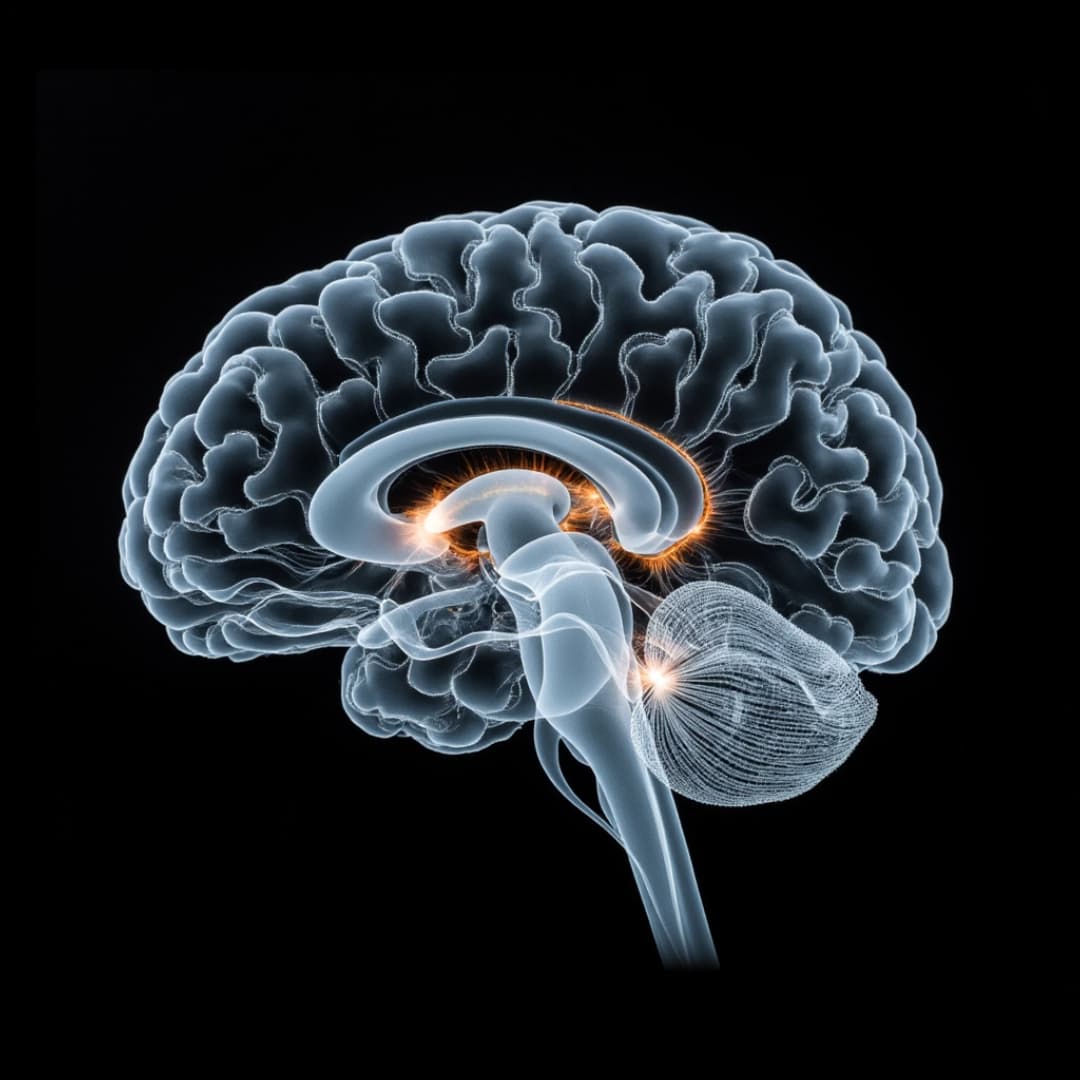
A new study by the University of Zurich shows how the brain recognises that an interlocutor is thinking and continuously adapts its own strategy.
Brain activity reveals how people adapt their social thinking
We’ve all been there: you’re chatting to someone and quickly realise whether the other person is paying attention, whether they understand you, or whether they’re steering the conversation in a completely different direction than expected. This silent assessment of others happens all the time, and usually without us even thinking about it. A new study by the University of Zurich has now investigated what happens in the brain during this process.
Why is it important to assess others correctly
Recognising how a person thinks and what they will do next is one of the most important skills in social life. Whether in a friendship, within the family or at work, it is crucial to assess the other person correctly.
Sometimes it works well. You read the other person’s signals correctly, adapt, and the conversation or collaboration runs smoothly. Sometimes it doesn’t work. Then expectations are dashed: you thought you knew how the other person would react, and you were completely wrong.
It is precisely this moment that the University of Zurich study investigated: what happens in the brain when someone realises that a reassessment is needed – in other words, when the previous picture of the other person is no longer accurate and needs to be adjusted?
The experiment: Rock, Paper, Scissors as a mirror of social cognition
To investigate these questions, Niklas Buergi, Gökhan Aydogan, Arkady Konovalov and Christian Ruff had more than 550 people play a simple game: rock, paper, scissors. That sounds trivial, but it isn’t. When playing against another person, the whole point is to recognise how they are thinking. Those who recognise this quickly win more often.
What made this experiment unique was that the opponents changed their strategy without the participants knowing. Sometimes the opponent played predictably; sometimes in a highly calculated, strategic manner. The question was: do the participants notice this change, and do they adapt?
The answer: most reacted flexibly. Around eight out of ten participants realised during the course of the game when their opponent’s strategy had changed, and adjusted their own approach accordingly. Some took longer to do so, others were quicker. These individual differences were clearly measurable.
What becomes visible in the brain
The research group simultaneously examined some of the participants using a brain scanner. This allowed them to observe which areas of the brain were active whilst the participants were playing, and, crucially, at which moments.
The University of Zurich study shows that when someone revises their view of an opponent, several areas of the brain become active simultaneously. Particularly striking was an area on the side of the brain known as the temporoparietal junction, a region long associated with understanding other people. Additionally, areas associated with attention and situation assessment were active.
Researchers, therefore, do not speak of a single mentalisation centre, but rather of an interplay between different brain areas: brain networks work together when people revise their image of another person.
A neural trace of social cognition
The research team went one step further. Using a computational model and statistical learning methods, they attempted to predict, based solely on brain data, when a person significantly altered their image of the other person, and when they did so only slightly.
They succeeded with remarkable accuracy. Brain activity displays such a characteristic pattern at these moments that it could be reliably detected, even in people whose brain data had not been used to train the model.
The ability to continuously adjust one’s own social judgment can be measured in the brain regions mentioned, says Niklas Bürgi, co-first author of the study. The pattern was not limited to a single region but was distributed across several areas, demonstrating that social thinking is an ongoing process of adaptation throughout the entire brain.
Why do some adapt more quickly?
Not all participants adapted at the same speed. Some recognised their opponent’s change of strategy immediately, whilst others took significantly longer. These differences were evident not only in the game results but also in the brain.
In people who reacted more quickly and accurately to the other person, the brain areas involved worked more closely together. The connection between them was stronger. In people who took longer, this connection was less pronounced.
This suggests that the individual‘s ability to assess another person correctly depends less on individual brain regions than on the quality of their cooperation, explains Gökhan Aydogan, co-author of the study.
What does playing games have to do with everyday life?
A valid objection: what does a game experiment tell us about real social life? The research team has considered this point. The game scenario was chosen to be more closely aligned with everyday life than with typical laboratory tasks. There are no pre-determined correct answers. There is genuine uncertainty. And the other person really does behave differently, not according to a fixed script.
Social interaction always means dealing with someone whose thinking changes, says Ruff, lead author of the study. Our experiment captures precisely that: the need to learn how a person is constantly thinking.
Possible implications for mental health conditions
The University of Zurich study also shows that the pattern identified re-emerged in a second, independent group of participants, even though this group had a different composition, with more women, older participants and a variety of educational backgrounds.
This is relevant for potential clinical applications. In certain mental health conditions, such as autism or borderline personality disorder, it is more difficult to assess other people accurately. Whether the brain pattern described differs across these groups, and whether this can provide insights for targeted support, is a question for future research. Arkady Konovalov, co-author of the study, emphasises: “We are often good at recognising when someone is very good or very bad at assessing others. What we do not yet know is how we can provide targeted help in this regard.”
What the study means, and what it leaves open
What was measured in this experiment is a form of social learning: the brain observes, compares and corrects. It is not a one-off process, but an ongoing one, step by step, round by round.
This study does not yet say anything about how this learning takes place in truly stressful social situations, when fear, shame or mistrust are involved. But it lays a foundation: it shows where and how the brain begins the task that is central to social life – understanding others.
Reference: Buergi, N., Aydogan, G., Konovalov, A. & Ruff, C. C. (2026). A neural signature of adaptive mentalisation. Nature Neuroscience. DOI: 10.1038/s41593-026-02219-x
RELATED ARTICLES:
DESCRIPTION:
A new study by the University of Zurich shows how the brain recognises that an interlocutor is thinking and continuously adapts its own strategy.
Brain activity reveals how people adapt their social thinking
We’ve all been there: you’re chatting to someone and quickly realise whether the other person is paying attention, whether they understand you, or whether they’re steering the conversation in a completely different direction than expected. This silent assessment of others happens all the time, and usually without us even thinking about it. A new study by the University of Zurich has now investigated what happens in the brain during this process.
Why is it important to assess others correctly
Recognising how a person thinks and what they will do next is one of the most important skills in social life. Whether in a friendship, within the family or at work, it is crucial to assess the other person correctly.
Sometimes it works well. You read the other person’s signals correctly, adapt, and the conversation or collaboration runs smoothly. Sometimes it doesn’t work. Then expectations are dashed: you thought you knew how the other person would react, and you were completely wrong.
It is precisely this moment that the University of Zurich study investigated: what happens in the brain when someone realises that a reassessment is needed – in other words, when the previous picture of the other person is no longer accurate and needs to be adjusted?
The experiment: Rock, Paper, Scissors as a mirror of social cognition
To investigate these questions, Niklas Buergi, Gökhan Aydogan, Arkady Konovalov and Christian Ruff had more than 550 people play a simple game: rock, paper, scissors. That sounds trivial, but it isn’t. When playing against another person, the whole point is to recognise how they are thinking. Those who recognise this quickly win more often.
What made this experiment unique was that the opponents changed their strategy without the participants knowing. Sometimes the opponent played predictably; sometimes in a highly calculated, strategic manner. The question was: do the participants notice this change, and do they adapt?
The answer: most reacted flexibly. Around eight out of ten participants realised during the course of the game when their opponent’s strategy had changed, and adjusted their own approach accordingly. Some took longer to do so, others were quicker. These individual differences were clearly measurable.
What becomes visible in the brain
The research group simultaneously examined some of the participants using a brain scanner. This allowed them to observe which areas of the brain were active whilst the participants were playing, and, crucially, at which moments.
The University of Zurich study shows that when someone revises their view of an opponent, several areas of the brain become active simultaneously. Particularly striking was an area on the side of the brain known as the temporoparietal junction, a region long associated with understanding other people. Additionally, areas associated with attention and situation assessment were active.
Researchers, therefore, do not speak of a single mentalisation centre, but rather of an interplay between different brain areas: brain networks work together when people revise their image of another person.
A neural trace of social cognition
The research team went one step further. Using a computational model and statistical learning methods, they attempted to predict, based solely on brain data, when a person significantly altered their image of the other person, and when they did so only slightly.
They succeeded with remarkable accuracy. Brain activity displays such a characteristic pattern at these moments that it could be reliably detected, even in people whose brain data had not been used to train the model.
The ability to continuously adjust one’s own social judgment can be measured in the brain regions mentioned, says Niklas Bürgi, co-first author of the study. The pattern was not limited to a single region but was distributed across several areas, demonstrating that social thinking is an ongoing process of adaptation throughout the entire brain.
Why do some adapt more quickly?
Not all participants adapted at the same speed. Some recognised their opponent’s change of strategy immediately, whilst others took significantly longer. These differences were evident not only in the game results but also in the brain.
In people who reacted more quickly and accurately to the other person, the brain areas involved worked more closely together. The connection between them was stronger. In people who took longer, this connection was less pronounced.
This suggests that the individual‘s ability to assess another person correctly depends less on individual brain regions than on the quality of their cooperation, explains Gökhan Aydogan, co-author of the study.
What does playing games have to do with everyday life?
A valid objection: what does a game experiment tell us about real social life? The research team has considered this point. The game scenario was chosen to be more closely aligned with everyday life than with typical laboratory tasks. There are no pre-determined correct answers. There is genuine uncertainty. And the other person really does behave differently, not according to a fixed script.
Social interaction always means dealing with someone whose thinking changes, says Ruff, lead author of the study. Our experiment captures precisely that: the need to learn how a person is constantly thinking.
Possible implications for mental health conditions
The University of Zurich study also shows that the pattern identified re-emerged in a second, independent group of participants, even though this group had a different composition, with more women, older participants and a variety of educational backgrounds.
This is relevant for potential clinical applications. In certain mental health conditions, such as autism or borderline personality disorder, it is more difficult to assess other people accurately. Whether the brain pattern described differs across these groups, and whether this can provide insights for targeted support, is a question for future research. Arkady Konovalov, co-author of the study, emphasises: “We are often good at recognising when someone is very good or very bad at assessing others. What we do not yet know is how we can provide targeted help in this regard.”
What the study means, and what it leaves open
What was measured in this experiment is a form of social learning: the brain observes, compares and corrects. It is not a one-off process, but an ongoing one, step by step, round by round.
This study does not yet say anything about how this learning takes place in truly stressful social situations, when fear, shame or mistrust are involved. But it lays a foundation: it shows where and how the brain begins the task that is central to social life – understanding others.
Reference: Buergi, N., Aydogan, G., Konovalov, A. & Ruff, C. C. (2026). A neural signature of adaptive mentalisation. Nature Neuroscience. DOI: 10.1038/s41593-026-02219-x
RELATED ARTICLES:
Newsletter
Möchten Sie informiert werden, wenn ich einen neuen Blogbeitrag veröffentliche? Tragen Sie sich gern hier ein.
Klicken Sie auf „Kostenlos abonnieren“, wenn Sie meine Datenschutzerklärung gelesen und akzeptiert haben. Ihre Einwilligung können Sie jederzeit widerrufen.
Newsletter
Möchten Sie informiert werden, wenn ich einen neuen Blogbeitrag veröffentliche? Tragen Sie sich gern hier ein.
Klicken Sie auf „Kostenlos abonnieren“, wenn Sie meine Datenschutzerklärung gelesen und akzeptiert haben. Ihre Einwilligung können Sie jederzeit widerrufen.